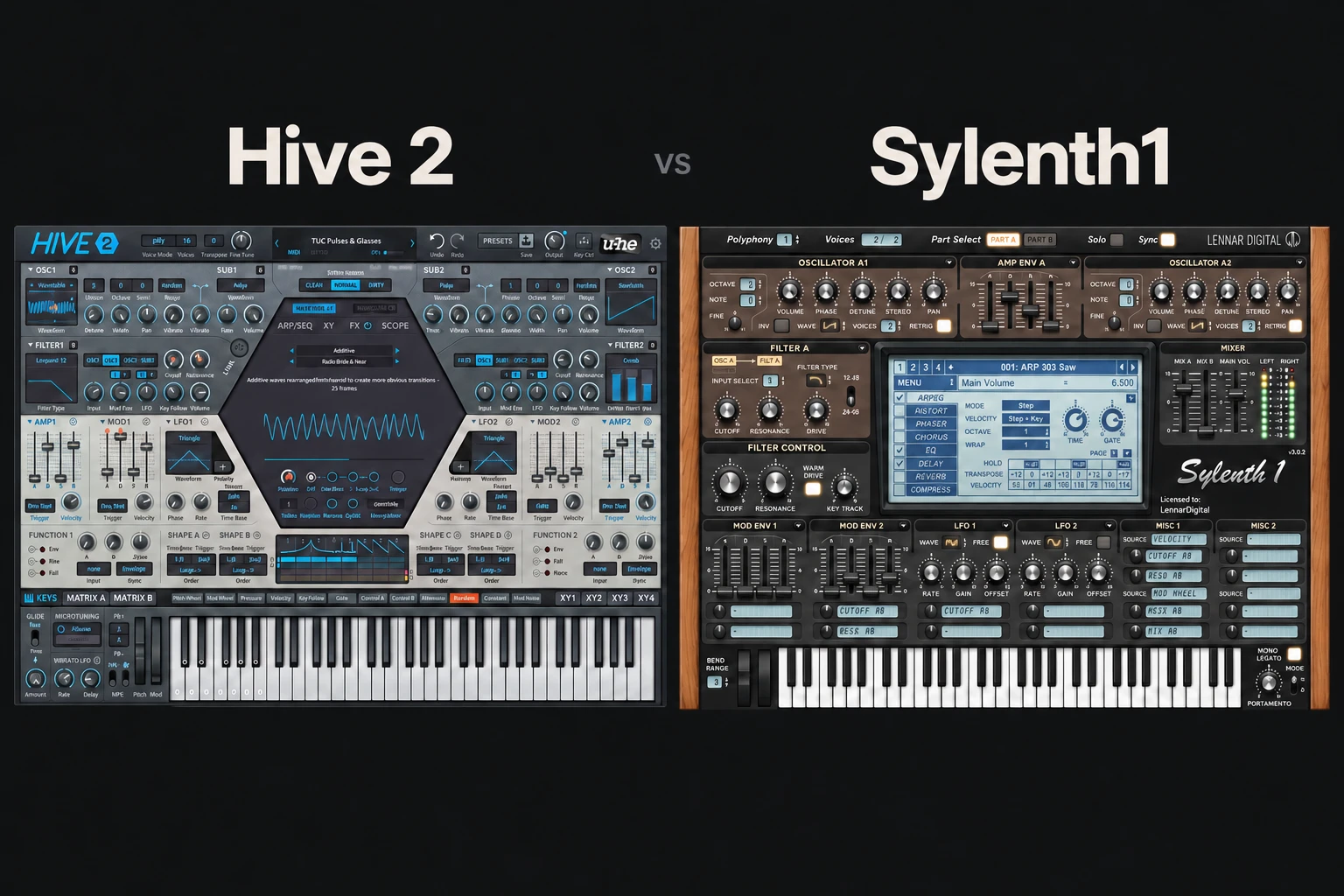

Choose Hive 2 if you want conventional synth sounds plus wavetable movement, deeper modulation and flexible performance controls. Choose Sylenth1 if you prefer a focused virtual-analog instrument for building sounds from classic waveforms, unison and filters.
For a new purchase covering more kinds of patch design, Hive 2 is our first demo recommendation. Sylenth1 deserves a trial when its particular workflow or a preset library you intend to use is the reason for buying.
This is an editorial comparison based on u-he and LennarDigital documentation. We have not conducted a controlled listening comparison or measured CPU performance. Product details were checked on 29 October 2026.
The buying difference at a glance
| Priority | Hive 2 | Sylenth1 |
|---|---|---|
| Core sound sources | Standard waveforms and wavetables | Virtual-analog waveforms |
| Movement | Matrix, Shape Sequencer and function generators | Envelopes, LFOs and modulation slots |
| Performance tools | Arp/sequencer and four XY pads | Arpeggiator with step controls |
| Our first demo use | An evolving patch with controlled movement | A direct bass, pluck or unison lead |
| Buying reason | More room to grow within one instrument | A preferred sound-design or preset workflow |
The table does not mean Sylenth1 only makes basic sounds, or that Hive needs complex patches. It identifies where the feature sets differ meaningfully.
Hive 2: familiar synthesis with more routes to movement
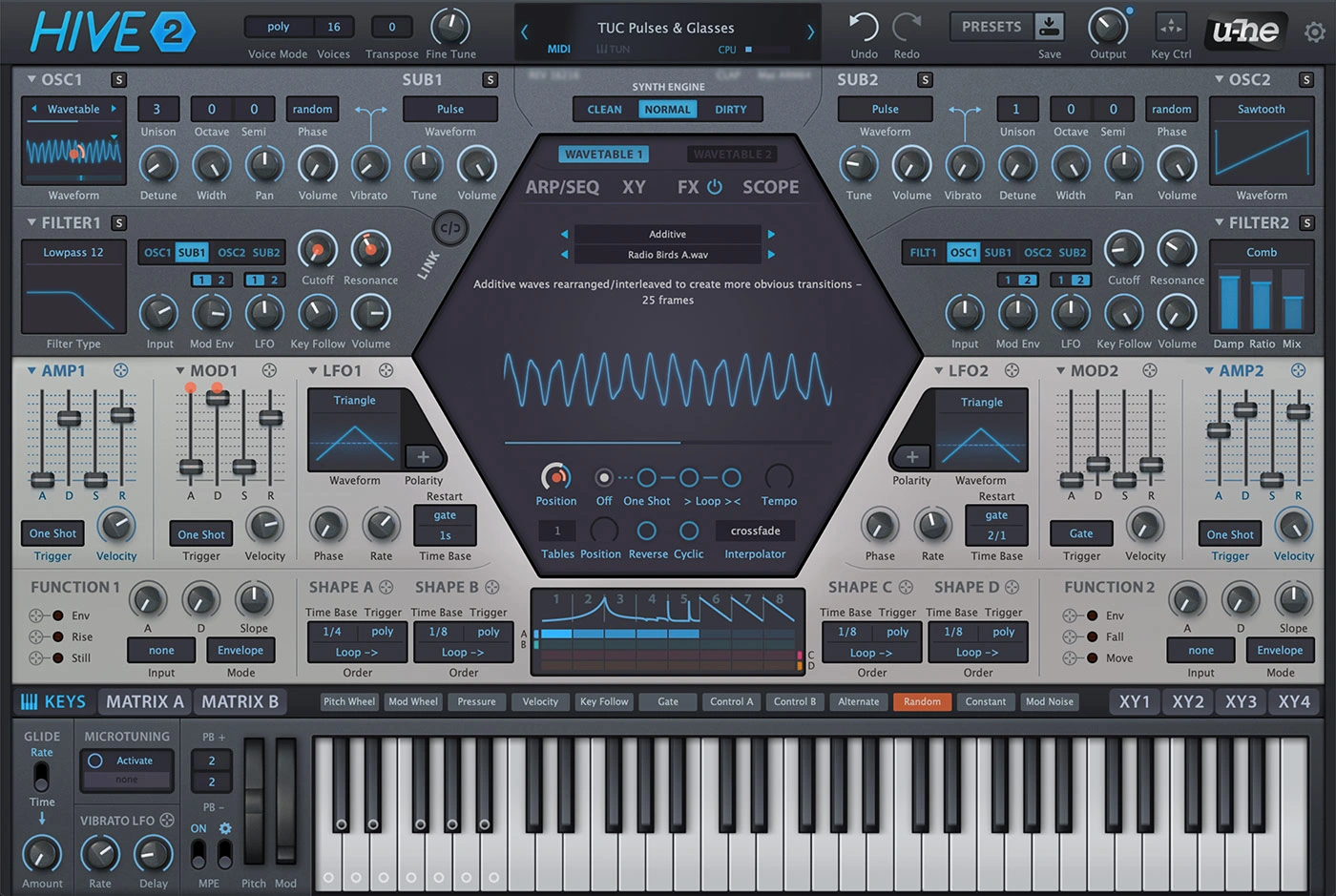
Hive 2 combines two main oscillators and sub-oscillators with conventional waveforms or 2D wavetables. It has three engine characters, flexible oscillator/filter routing, a modulation matrix, function generators and a Shape Sequencer. Seven effects can be reordered.
The useful buying argument is flexibility around a familiar starting point. You can begin with a simple subtractive patch, then investigate changing waveform character or more detailed modulation when the arrangement needs it.
Try it when you often reach a point where an ordinary filter sweep is no longer the movement you want. Choose one extra dimension to explore and keep the rest of the patch restrained.
For the individual guide, read our Hive 2 review.
Sylenth1: a focused virtual-analog architecture
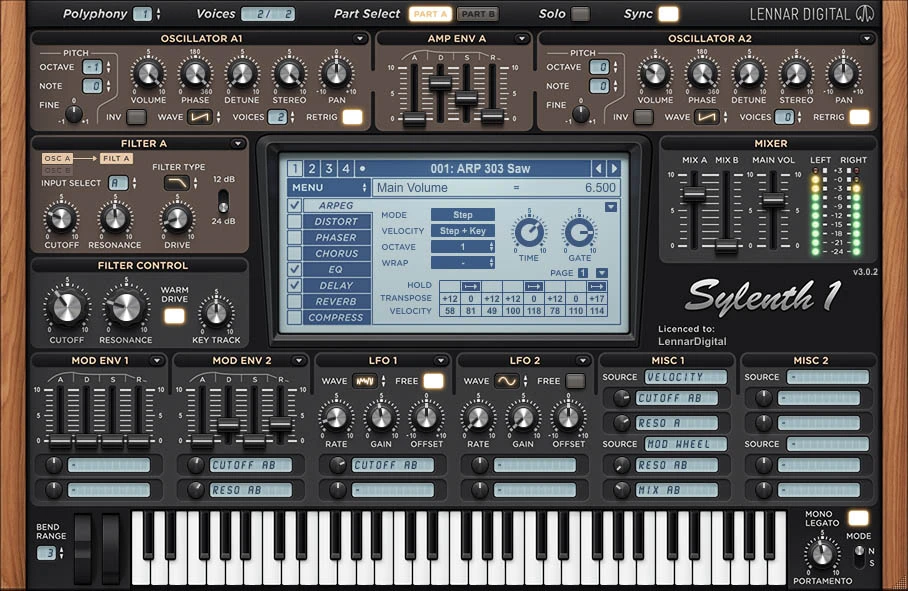
Sylenth1 uses four unison oscillators, organized across two parts, with analog-shaped waveforms and two filter sections. Envelopes and LFOs provide modulation, and its central panel contains effects and an arpeggiator.
Its appeal is a clear set of building blocks. If you enjoy shaping a saw-based lead, a pluck or a layered bass through oscillator balance, envelopes and filters, there is a specific workflow to audition.
The lack of a wavetable workflow does not prevent expressive patches. It does matter if scanning through changing waveforms is a recurring part of your sound design. Buy Sylenth1 because you want what it offers, rather than expecting a different kind of synthesis environment.
Our Sylenth1 review covers the individual buying decision.
For basses: make the low-end job clear
Use the same short bass phrase in both demos. Include different notes and note lengths, then listen with the kick playing. A patch that impresses on one held note may behave differently across the actual line.
For a stable bass, start without large stereo effects or long reverb. Adjust the envelope and brightness before adding more layers. The best result may use fewer oscillators or less unison than the preset suggests.
We would try Sylenth1 when a direct virtual-analog patch is the goal, and Hive when the bass needs a changing timbre or more elaborate motion. That is a task-based shortlist, not a claim that one has inherently better low end.
See how to mix kick and 808 for the balance around the instrument.
For unison leads and plucks
Compare a short melody with the effects reduced. Listen to the note attack, the amount of detuning and the space around the lead. A wider patch can seem larger while leaving less room for the vocal.
Sylenth1 is a sensible demo for producers who want to work within its oscillator-and-filter architecture. Hive is a sensible demo if you want those conventional tasks alongside more varied waveform options.
Do not decide from reputation alone. If you have a particular Sylenth1 preset bank in mind, audition it where possible and check whether the required version is included in your setup. A library can be a buying reason, but its existence does not guarantee the sounds fit your tracks.
For pads and evolving parts
Hive is our first candidate when detailed movement is the main task. Its wavetable and modulation tools provide clear features to investigate for a sound that develops over a phrase.
Start with one change you can describe: a brighter second half, a different attack at the end of the bar or a slow timbre shift behind the chorus. Then check the transition between chords.
Sylenth1 can still make pads and animated parts. The question is whether its available modulation gets you to the result quickly. If it already does, another synth may add options without solving a problem.
Which is easier to learn?
We would try Sylenth1 first if limiting the available synthesis choices helps you understand a patch. We would try Hive first if you want that foundation with more scope for wavetable and modulation work later.
A useful learning exercise is to build the same small patch in each: one oscillator, a filter envelope, then one controlled movement. Save it, reopen it and explain each active section. That tells you more about the workflow than browsing a hundred finished presets.
CPU claims need a fair test
Both manufacturers emphasize efficiency. We have not benchmarked them, and oscillator count, unison, polyphony, effects and patch design all affect a practical comparison.
Test the type of sound you expect to use, duplicate it to a realistic session size and play your actual MIDI. Use the same buffer and sample rate. Check playback, project recall and automation before buying.
If performance is the immediate problem, our FL Studio crackling guide and buffer-size guide cover the surrounding setup.
Price, formats and ownership
Compare current checkout totals rather than assuming the headline prices include the same tax treatment. Check any upgrade or bundle offers and verify the formats supported by the installer you plan to use.
Sylenth1 is sold through LennarDigital, which also offers an installment purchase option. Read its current terms if that matters to the decision. Check your licence and activation needs before treating a payment plan as equivalent to an offline purchase.
If you already own either synth, make the missing task concrete before buying the other. For a different kind of comparison, see Sylenth1 vs Serum 2 or MiniFreak V vs Pigments 7.
SoundShaper opinion
Hive 2 is our broader first-demo recommendation for a new purchase. It covers familiar synthesis while leaving room for more varied timbre and modulation work.
Sylenth1 is the more focused recommendation when its workflow or specific sounds are what you want. A smaller feature set can still be the better working environment for a particular producer.
Conclusion
Try Hive for breadth and movement. Try Sylenth1 for a focused virtual-analog workflow. Build a bass, a lead and a slower texture in the demos, then choose according to the useful results and the controls you understand—not an unsupported claim that one is universally better.
Sources
u-he: Hive 2 features and demo; LennarDigital: Sylenth1 architecture and features; Sylenth1 user manual; LennarDigital: purchasing and installment terms. Checked 29 October 2026.