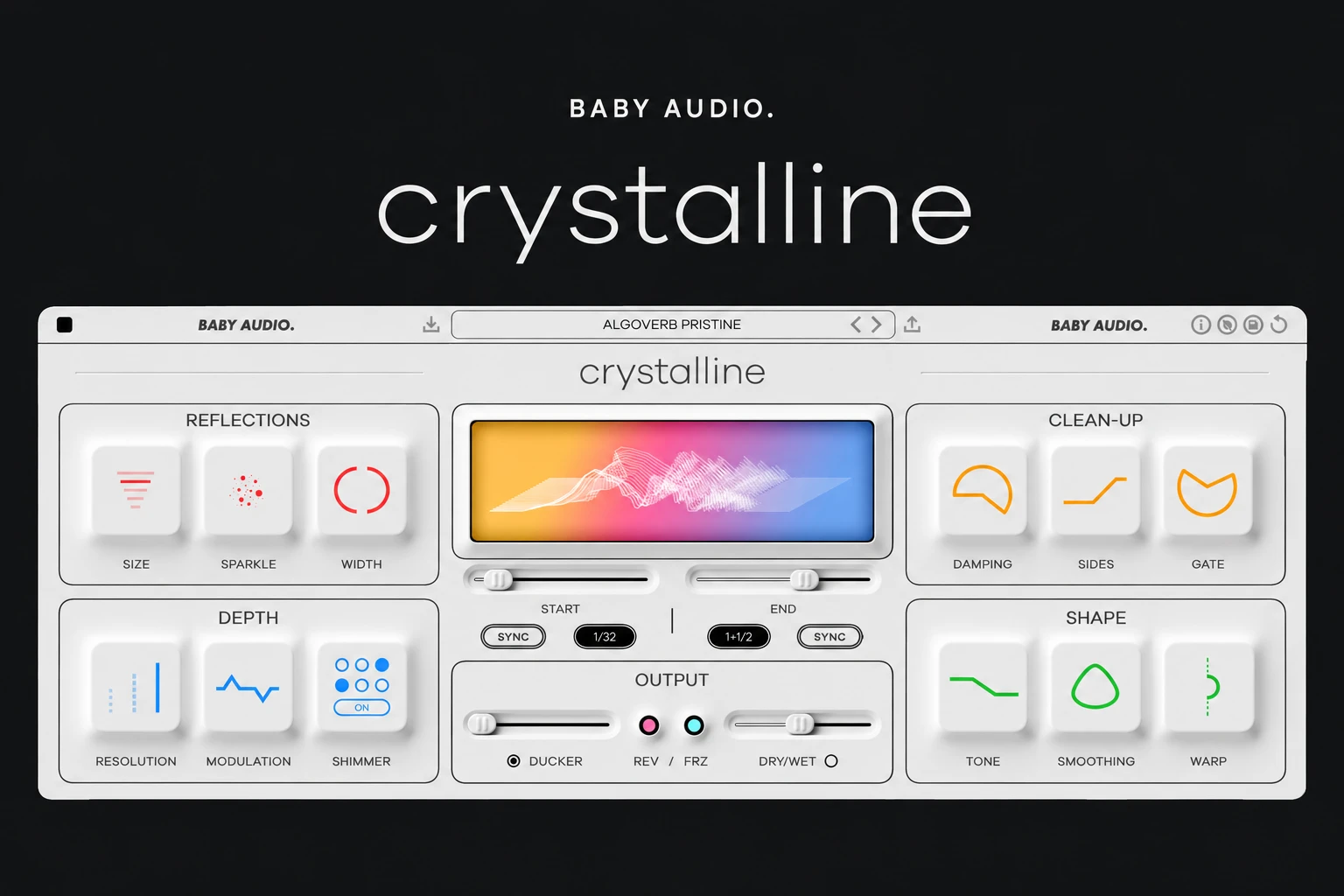

Crystalline is a reverb to shortlist when you want deliberate control over the shape, timing and behaviour of an artificial space. Baby Audio combines tempo-aware timing with tools for keeping the reverb out of the way, plus creative options for textures and transitions.
Its most convincing buying argument is that combination. Another long reverb tail may not add much to your setup. A workflow that helps you decide when the tail begins, how it develops and when it should step back can be more useful.
This review assesses Crystalline's published features and documentation. It does not claim a hands-on listening test or measured performance comparison.
What kind of reverb is Crystalline?
Crystalline is an algorithmic reverb rather than a library of sampled spaces. Baby Audio positions it as a modern studio reverb, with independent room-size and decay controls. It includes more than 300 presets, alongside modulation, filtering, ducking and creative processing.
We would consider it for vocals, synths, guitars and percussion when the aim is to shape a useful space around the arrangement. If the main requirement is a specific recorded room or a detailed recreation of one vintage device, we would make that requirement central to the search instead.
Timing is central to the workflow
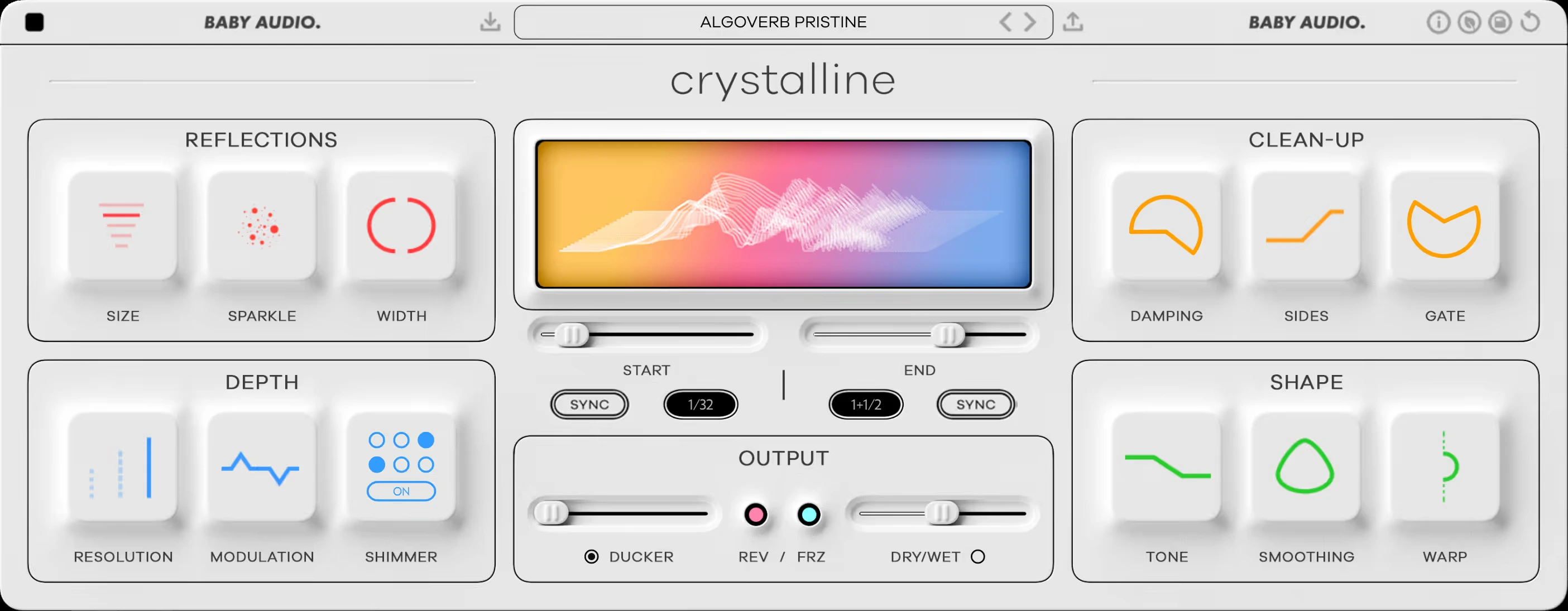
The Start and End controls govern pre-delay and decay. Both can follow the DAW tempo or use millisecond values. Size is independent of decay, so choosing a larger space does not force you to accept a long tail.
That is a useful design choice for rhythmic material. You might want a sense of scale behind a snare without allowing the ambience to occupy the next hit. Equally, a sparse instrumental passage may have room for a longer decay without needing a larger apparent space.
Tempo sync gives you clear starting points, but we would not treat a note division as an automatic mix decision. Listen through the whole phrase. A setting that fits the grid can still obscure a fast lyric or leave an awkward gap before the next chord.
Keeping the dry part clear
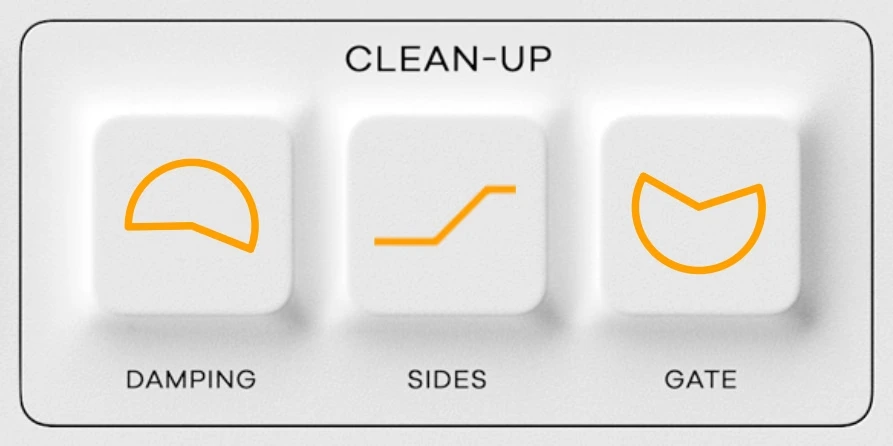
The onboard Ducker reduces the reverb while the incoming signal is playing. Damping filters the reflections, while Sides removes low-frequency stereo content from the reverb without removing its mono component.
For a vocal, those controls address different problems. Ducking changes the relationship between the phrase and its ambience. Filtering changes what the ambience contains. Neither should be used as a reason to keep turning up a tail that has already become distracting.
Our suggested approach is to set a modest reverb level, judge the wording with the backing track playing and then decide whether ducking helps. Listen to the spaces between phrases as well. A tail that suddenly becomes too obvious during every pause may need less level or a different decay.
We would make the same distinction on low instruments. Reducing wide low-frequency reflections may be helpful, but it does not automatically solve a clash between a bass line and a kick. Keep the source balance in mind while adjusting the space.
Shimmer works differently here
Crystalline's Shimmer extends the decay of high frequencies relative to the rest of the tail. It is not the familiar pitch-shifting shimmer effect that adds an octave above the reverb. With Shimmer active, the highs can continue beyond the main End setting.
This distinction matters before buying. If you specifically want obvious pitched harmonies in the tail, do not assume the Shimmer label guarantees that result. Judge the feature against what it actually does.
For sustained material, we would explore it as a way of changing how the space fades. Check whether that extended high-frequency energy still supports the next chord or phrase. A beautiful isolated tail can become tiring when it repeats through an entire arrangement.
Creative features and everyday use
Reverse changes the playback direction of the reverb, while Freeze holds a captured reverb texture. These make Crystalline relevant to transitions and sound design as well as conventional ambience.
We see those as useful extras when the basic reverb workflow already suits you. A transition texture can be valuable, but it is a weaker reason to purchase if you rarely enjoy using the plugin for normal mixing tasks.
Wet Lock keeps the wet/dry balance while browsing presets. That is a small workflow feature with a clear purpose: a preset change does not have to reset the amount of effect you were evaluating.
For a shared send, a fully wet setup is a sensible starting point, with the send controlling how much source reaches the reverb. For an insert, judge the dry/wet balance in context. These are different routing choices, so compare them deliberately rather than applying the same mix setting everywhere.
Where the purchase needs more thought
Crystalline is less urgent if a reverb you already own gives you the timing, tone and clarity you want without much effort. Extra controls are valuable only when they help you reach a result or solve a recurring problem.
We would also check how comfortably you navigate the interface. The controls use compact visual designs, and the important test is whether you can find and revisit the settings you use most. A plugin can look inviting while still needing some learning time.
Try the demo at your usual sample rate inside a real project. We do not have measured CPU figures for this review. Also check the current compatibility information and any account-specific offer before paying.
SoundShaper opinion
Crystalline is a convincing shortlist option for producers who want to make the behaviour of a reverb part of the arrangement. Tempo-aware timing, independent size and decay, and the built-in cleanup controls give it a practical identity beyond a large preset library.
We would prioritise the demo for vocal and electronic productions where the space needs to remain controlled while the track keeps moving. We would be more cautious about buying it simply because another reverb promises a cleaner or more impressive sound. That claim needs to translate into something useful in your own music.
Conclusion
Crystalline is worth considering when you want a flexible algorithmic space with accessible control over timing, clarity and creative behaviour. Its strongest appeal is how those choices work together.
Use the demo on one vocal phrase and one instrumental part. If you can give both the space they need with less effort than your current setup, the purchase has a clear purpose. If your existing tools already do that comfortably, it can stay on the wish list.
Product references: Baby Audio Crystalline and the official Crystalline user manual.