

Choose Diva when you want an instrument built around modelled analogue oscillators, filters and envelopes. Choose Serum 2 when you want a broader hybrid synth for wavetable editing, sampled material and detailed modulation. The decision is less about old music versus new music than the kind of sound-building process you enjoy.
Diva can make an electronic bass that belongs in a contemporary track. Serum can make a restrained pad that sits quietly behind a vocal. Neither product limits you to one genre. What differs is the set of controls that encourages you to shape the part.
Quick Comparison
| Buying question | Diva | Serum 2 |
|---|---|---|
| Main focus | Mix-and-match analogue-modelled components | Hybrid oscillator modes and extensive digital sound design |
| Starting attraction | A particular oscillator and filter response | Editing and transforming the sound source |
| Sample-based synthesis | Not its role | Sample, multisample, granular and spectral modes |
| Modulation direction | Classic synth controls with modern flexibility | Detailed envelopes, LFOs, matrix routing and macros |
| Best reason to own both | A contrasting analogue-style workflow | A broader source-manipulation workflow |
Why Diva can be the more focused purchase
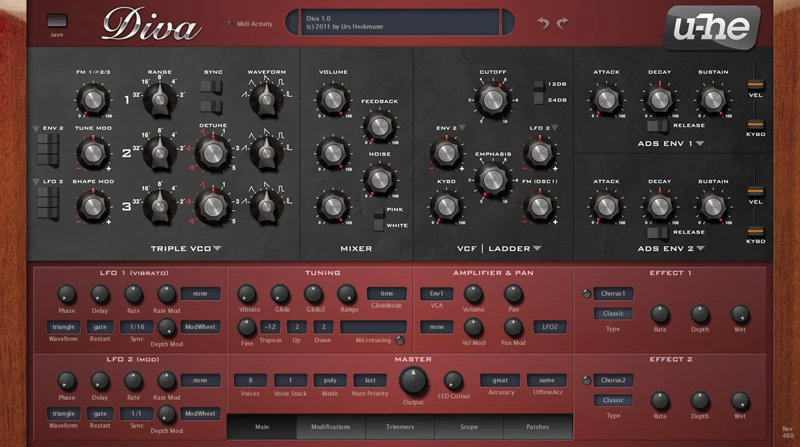
Diva brings together oscillator, filter and envelope models inspired by different analogue designs. Its mix-and-match approach lets you combine components rather than simply choosing one fixed emulation.
That gives you a focused way to explore a familiar musical part. For a bassline, work on the oscillator balance, filter and envelope before reaching for a large effects chain. For a chord sound, start with the attack and release so the part occupies the right amount of space.
For a Diva exercise, hold the oscillator and filter steady and switch only the envelope model. In ADS, Decay also determines release time when RELEASE is enabled; with it disabled, the note stops at key-up. Compare a short note and a sustained one before adding modulation. That reveals a practical component difference rather than another version of the same preset.
It is still possible to overcomplicate the patch. An extra layer or more detuning can make the solo sound wider while weakening the centre of a bass or crowding a vocal. Listen with the rest of the track before deciding the richer version is the better one.
Our Diva review looks more closely at its workflow and buying value. If another u-he instrument is on your list, the Repro vs Diva comparison addresses a more closely related choice.
Where Serum 2 opens more directions
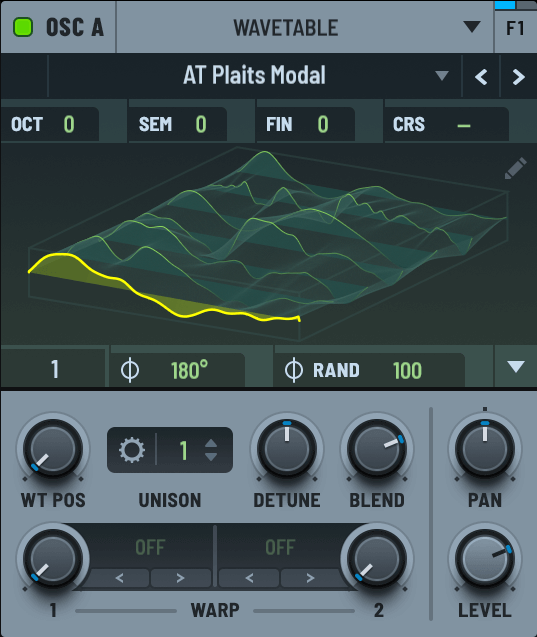
Serum 2 lets its three main oscillators use wavetable, sample, multisample, granular and spectral modes. That makes it useful when the idea begins with a source you want to reshape, rather than an analogue-style signal path.
For a Serum 2 exercise, load one short recording in Sample mode, establish its root note and amplitude envelope, then explore a granular version of the same material. Keep other oscillators muted. Compare whether the attack remains useful and whether the sustained texture fits the chord: changing the source method should solve a sound-design problem, not just make the patch more complicated.
Those are sound-design problems that call for different tools from choosing between modelled oscillator and filter circuits. Serum’s wider palette makes it the more obvious candidate to investigate for that kind of work.
The Serum 2 review covers the expanded instrument beyond its wavetable reputation.
Bass: character or a changing source?
For a rounded bass with a clear envelope and a controlled filter movement, we would start the comparison in Diva. Its component choices are relevant to that brief, and the limited task keeps the purchase decision grounded.
For a heavily transforming bass, we would start in Serum. Try designing the movement in the source before adding distortion or a large effects chain. That helps you hear whether the oscillator workflow is the part you want.
Neither recommendation is a verdict that one plugin has better low end. The notes, envelope, output level and arrangement can change the result dramatically. Keep the same MIDI phrase and compare at a similar listening level.
Also check the part with the kick playing. An impressive solo bass can still leave no useful space for the kick. Our kick and bass mixing guide covers decisions that a different synth purchase will not make for you.
Leads and pads: listen to the whole phrase
For leads, decide how the note should begin and how it should respond to the performance. A changing tone can create expression, but too much movement can make the hook harder to follow.
Diva is worth trying when the oscillator blend, filter response and envelope give the phrase enough interest. Serum is worth trying when you want several linked changes under one performance control or a more unusual source texture.
For pads, shorten the release before comparing elaborate presets. Then bring the release back until it supports the progression without covering the next chord. Judge both synths in the section where the pad is supposed to work, including any vocal that shares the space.
A more restrained patch can be the better arrangement choice in either instrument. You do not need to choose between “warm” and “cold” as if they were permanent properties of two plugin names.
Learning curve and computer performance
Diva presents an analogue-style set of decisions; Serum 2 exposes a wider set of synthesis methods. Which is easier depends partly on what you already understand. Someone familiar with wavetable modulation may find Serum more natural than selecting Diva’s component models.
Give each demo the same small brief. Make one bass, one chord sound and one lead without browsing indefinitely. Note where you have to stop and search for a control. That tells you more about the learning cost than a screenshot of a dense interface.
Do the performance check inside your normal DAW project. Chord size, voice count, unison and processing settings can change the load. We would not choose a universal CPU winner without matching those conditions and measuring the result.
If a sound works but uses more resources than your session allows, rendering it to audio may be a practical option. The relevant question is whether that fits your workflow, especially while you are still changing the notes.
Price and what you already own
Sweetwater lists Diva at $179, and Xfer lists Serum 2 at $249. Compare the current checkout totals and any eligible personal upgrade before buying.
Serum 1 owners should check the free Serum 2 upgrade first. If you already have access to the broader instrument, there is little reason to treat it as a new full-price purchase.
For an existing Serum owner, Diva becomes interesting as a contrasting way to work. For a Diva owner, Serum becomes interesting when sampled material, wavetable editing or other hybrid methods are the missing part. Owning both can make sense, but each should have a recognisable job.
Conclusion
Diva is the more targeted recommendation when analogue-style patch building is what you want to spend time doing. Choose it because the component models and controls appeal to you, rather than because you expect every sound to become better automatically.
Serum 2 is the broader recommendation for a producer who wants to explore changing sources, sampled material and more extensive digital synthesis. If you are buying your first main synth and those directions interest you, that range is a strong reason to start there.
Still undecided? Compare Diva with Pigments 7 for another view of the analogue-focused versus hybrid choice. Then return to a musical brief and choose the interface you would actually open tomorrow.
Sources
u-he: Diva features and price; u-he: Diva manual; Xfer: Serum 2; Xfer: Serum 2 feature guide. Product details checked 2 November 2026.


