

Choose Crystalline if you want to shape reverb around the groove with tempo-synced start and end times, reverse effects and a compact set of creative controls. Choose FabFilter Pro-R 2 if you want detailed control over how different frequencies decay, alongside Modern, Vintage and Plate styles. Both can handle everyday mix reverb as well as more obvious effects.
The useful question is what you find yourself adjusting. If you keep asking when a tail should begin and finish, Crystalline deserves a trial. If you keep trying to shorten a muddy part of the tail without losing its upper detail, Pro-R 2's visual editing has a clear purpose.
Quick Comparison
| Buying question | Crystalline | FabFilter Pro-R 2 |
|---|---|---|
| Standout workflow | Shape timing and character through grouped controls | Edit the space, decay behaviour and output tone visually |
| Tempo-based controls | Sync both Start and End to the project | Tempo-sync options for Predelay and Auto Gate |
| Frequency shaping | Damping, Tone, Smoothing and low-end stereo cleanup | Separate six-band Decay Rate EQ and six-band Post EQ |
| Ducking and held tails | Ducker and Freeze | Ducking and Freeze |
| Creative attraction | Reverse, Shimmer and independent size/length settings | Modern, Vintage and Plate styles with detailed tail shaping |
| Our first trial | Rhythmic effects, transitions and electronic parts | Mix spaces that need precise control across the spectrum |
Crystalline: start with the timing
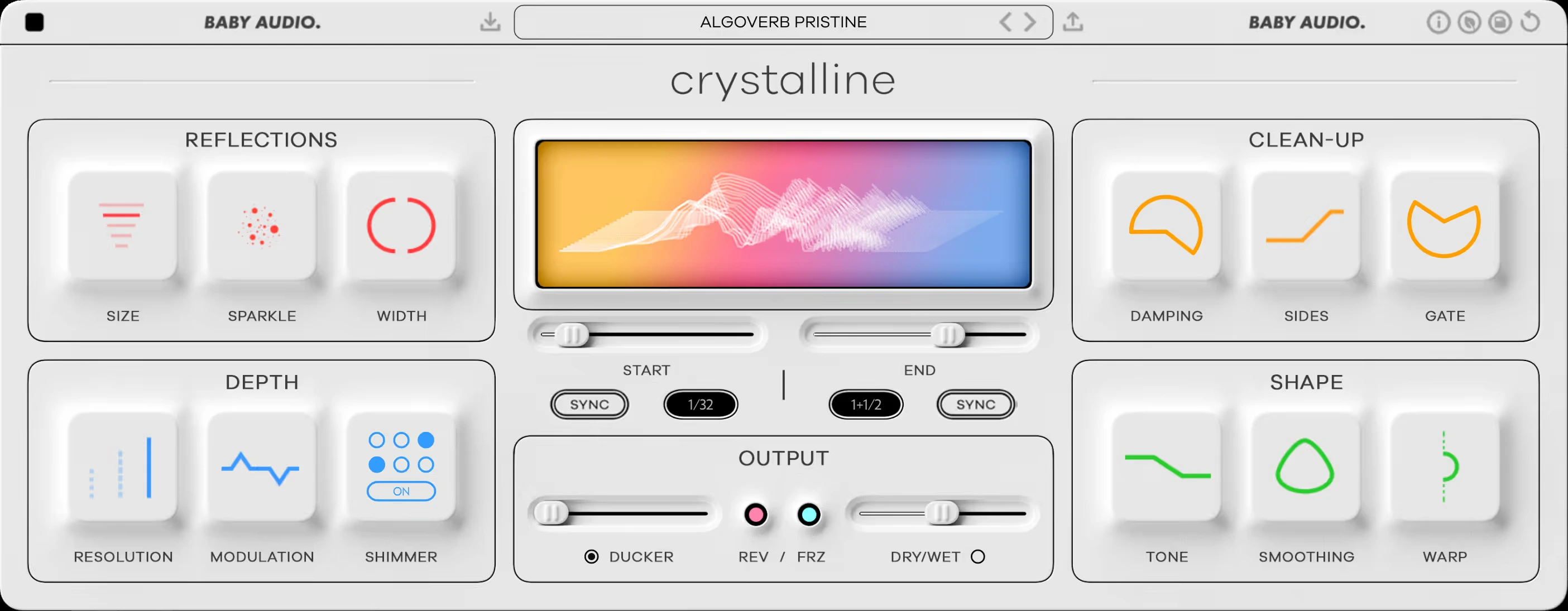
Crystalline puts Start and End near the centre of its interface. These control pre-delay and decay, with tempo sync available for both. You can also switch to time-based settings.
That makes a useful starting point for a snare, vocal accent or short synth phrase. Try a tail that leaves space before the next important hit, then compare it with a longer version. Listen to the rhythm rather than assuming the longest setting creates the most impressive result.
Room size and decay length are separate controls. You can explore the character of a large space while keeping the tail short, or use a smaller space with a longer decay. The combination does not need to resemble a real room.
For transitions, Reverse and Freeze offer other directions. We would try them on an isolated accent or a duplicate effect track before putting them across an entire lead part. A special moment often has more impact when it has a clear beginning and ending.
Our Crystalline review covers the full control layout and its practical tradeoffs.
Pro-R 2: decide which parts of the tail should last
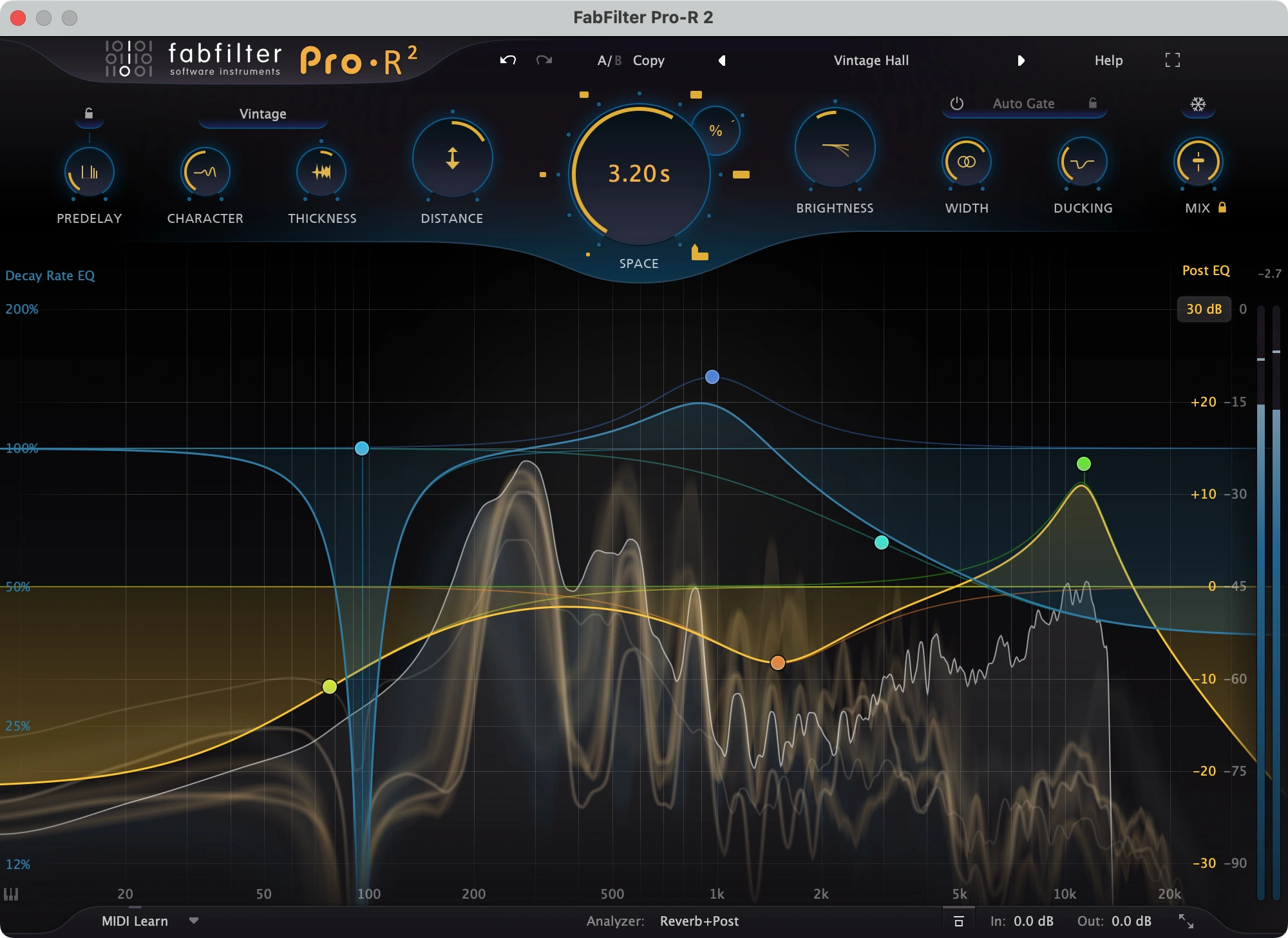
Pro-R 2 gives you broad controls for the space and character, then lets you go deeper through two different EQ-style curves. Understanding the difference between them is one of the clearest reasons to consider this plugin.
Decay Rate EQ changes how long different frequency areas ring. You might shorten the lower part of a pad's reverb while leaving the upper tail longer. That changes the way the space develops over time.
Post EQ changes the tone of the final reverb output. Cutting a low-frequency area here reduces its level; it does not perform the same job as shortening its decay.
For example, if a snare’s low-mid ring hangs on after the upper tail has cleared, lower a broad Decay Rate EQ band around that ring while leaving the overall time fixed. If the same range is too loud from the beginning but fades at the right time, cut it with Post EQ instead. Compare the first hit and the gap before the next: that reveals whether the problem is level, duration or both.
Pro-R 2 also includes Modern, Vintage and Plate styles. We would audition those with roughly comparable tail length and level before doing detailed editing. Find a promising starting character first, then refine it.
Vocals: both have ducking, so test the whole phrase
Ducking is not a reason to choose one automatically: both plugins can reduce the reverb while the incoming sound is active. Both also provide pre-delay, giving you another way to separate a vocal from its reflections.
Start by getting the dry vocal clear. Then add enough reverb to hear the space, and adjust the tail through a complete verse or chorus. Listen to the ends of lines as well as the words themselves.
Crystalline would be our first trial when we want the timing to follow the song and prefer working through its grouped controls. Pro-R 2 would move ahead when the vocal reverb needs a particular frequency area to disappear sooner than the rest.
Keep an ear on gaps between phrases. Strong ducking can leave an unexpectedly large swell after the singer stops. That may suit a spacious production, but it can distract from a close, restrained vocal.
For the wider chain, read how to make vocals sit in the mix. Reverb cannot correct every balance problem earlier in the track.
Drums: gated space or a more tailored room?
Crystalline has a Gate in its Clean-Up section, while Pro-R 2 offers Auto Gate. The presence of gating alone does not settle this comparison.
For an obvious snare effect, we would start with Crystalline's timing, Size and Gate controls. Build a tail that feels like part of the pattern, then bring the effect level down until the dry hit keeps its place.
For a drum room that needs more careful tonal behaviour, try Pro-R 2. Its decay curve gives you a way to reduce lingering low-frequency energy without shortening every part of the space equally.
Check the next kick and snare after each tail. If the room makes those hits feel less distinct, shorten or reshape it before adding more compression to compensate.
Pads and transitions: do not confuse Shimmer with an octave effect
Crystalline's Shimmer extends the decay of higher frequencies. Baby Audio describes it as making the upper part of the tail last longer than the rest. Do not buy it expecting that label alone to mean an octave-up pitch-shifting reverb.
For a sustained pad, try the effect with simple chords first. A long, bright tail that sounds attractive on one chord can make the next change unclear. Reduce the send or tail length before adding another layer.
Pro-R 2 also has Freeze, so holding a reverb is not exclusive to Crystalline. Its appeal here is being able to shape which frequencies remain prominent as the space evolves.
We would choose Crystalline for an idea centred on reverse movement or its particular timing workflow, and Pro-R 2 for a texture that needs more deliberate decay shaping.
Keep the reverb clear before making it wider
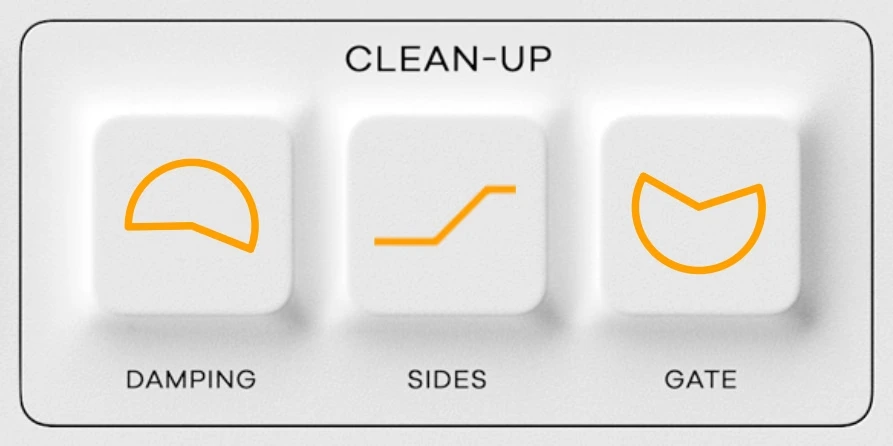
Crystalline's Damping filters, Tone and Smoothing offer several ways to change the reflections. Its Sides control removes low-frequency stereo information while keeping the mono component.
These controls address different problems. A brighter tail may need tonal adjustment; a tail that feels too wide in the low end calls for a different decision. Change one thing at a time so you know what helped.
With Pro-R 2, use the distinction between decay shaping and Post EQ before drawing a complicated curve. A few purposeful changes are easier to understand when you return to the session.
In either plugin, check the complete mix at a quiet level and in mono. If the source loses its place, turn the reverb down before assuming it needs a more elaborate preset. Our muddy mix guide covers other sources of low-mid buildup.
Price and value: buy the workflow you will use
Compare current checkout totals in USD, including tax and any account offers. Check the exact licence and whether an existing-customer discount applies before buying.
If your current reverb already gives you good mix spaces, Crystalline needs a reason beyond adding another general reverb. Its timing and creative controls are worth a focused trial.
If you regularly fight the frequency balance of a reverb tail, Pro-R 2's editing approach is a more specific reason to investigate it. Its larger feature list has value only if you use those controls.
You can also keep using stock tools. For alternatives at a lower budget, see our reverb plugins under $50. For another Pro-R 2 comparison, read VintageVerb vs Pro-R 2.
Conclusion
Crystalline is our first shortlist choice when timing and creative effects drive the purchase. Pro-R 2 is our first choice when detailed decay shaping is the missing tool. Neither is a universal upgrade over every reverb you already own.
Sources
This is editorial buying advice based on documented controls, rather than a matched listening test. Sources checked 2 November 2026: Baby Audio Crystalline, its user manual, and FabFilter's Pro-R 2 overview, main controls, Decay Rate EQ guide and Post EQ guide.


