
The best reverb plugins under 50 euros should give you a useful space, a faster workflow or a character your stock effects do not already cover. Spending more is not the first step: choosing the right kind of reverb is.
Our shortlist is pure:verb for quick setup, BLEASS Reverb for creative processing, TENS for studio spring character and MReverb for deeper control. We also include the free Valhalla Supermassive for large ambient textures.
The four paid choices fit the budget at their checked reference prices. They are different approaches to reverb, so this guide focuses on why you would choose each one rather than pretending there is one winner for every track.
Best reverb VST plugins under €50: quick comparison
| Reverb | EUR reference | USD reference | Why consider it? |
|---|---|---|---|
| sonible pure:verb | €39 | US$39 | A quick, assisted starting point |
| BLEASS Reverb | €19.83 | Check store | Creative processing with ducking |
| Klanghelm TENS | €24 | EUR checkout | A distinctive studio spring character |
| MeldaProduction MReverb | €39 | US$43 regular | Spatial positioning and deeper modulation |
| Valhalla Supermassive | Free | Free | Large ambient delays and reverbs |
Prices checked on 1 November 2026. pure:verb, TENS and MReverb use developer-listed regular EUR prices; BLEASS Reverb uses the displayed Plugin Boutique EUR price. MReverb was also discounted at the developer when checked, but the shortlist does not rely on that temporary offer. Prices are for individual full desktop licenses, not upgrades or iOS apps. USD references are verified listings rather than conversions. Check local pricing, taxes and the final checkout total.
Decide what the reverb needs to do
For everyday mixing: listen for how the effect places the source without blurring the performance. A quick workflow may matter more than hundreds of presets.
For character: compare the texture of the decay. TENS is the more specific studio spring choice, while the other options address different kinds of space and processing.
For sound design: freeze, ducking, modulation and unusual tails become part of the creative decision. BLEASS Reverb, MReverb and Supermassive give you different ways to explore it.
Our recommendations are based on current documentation, full-license prices and intended uses. They are editorial buying advice rather than claims that we have personally tested every plugin. Use the available demos to judge the result in your own DAW.
1. sonible pure:verb
€39 · A quick, assisted starting point

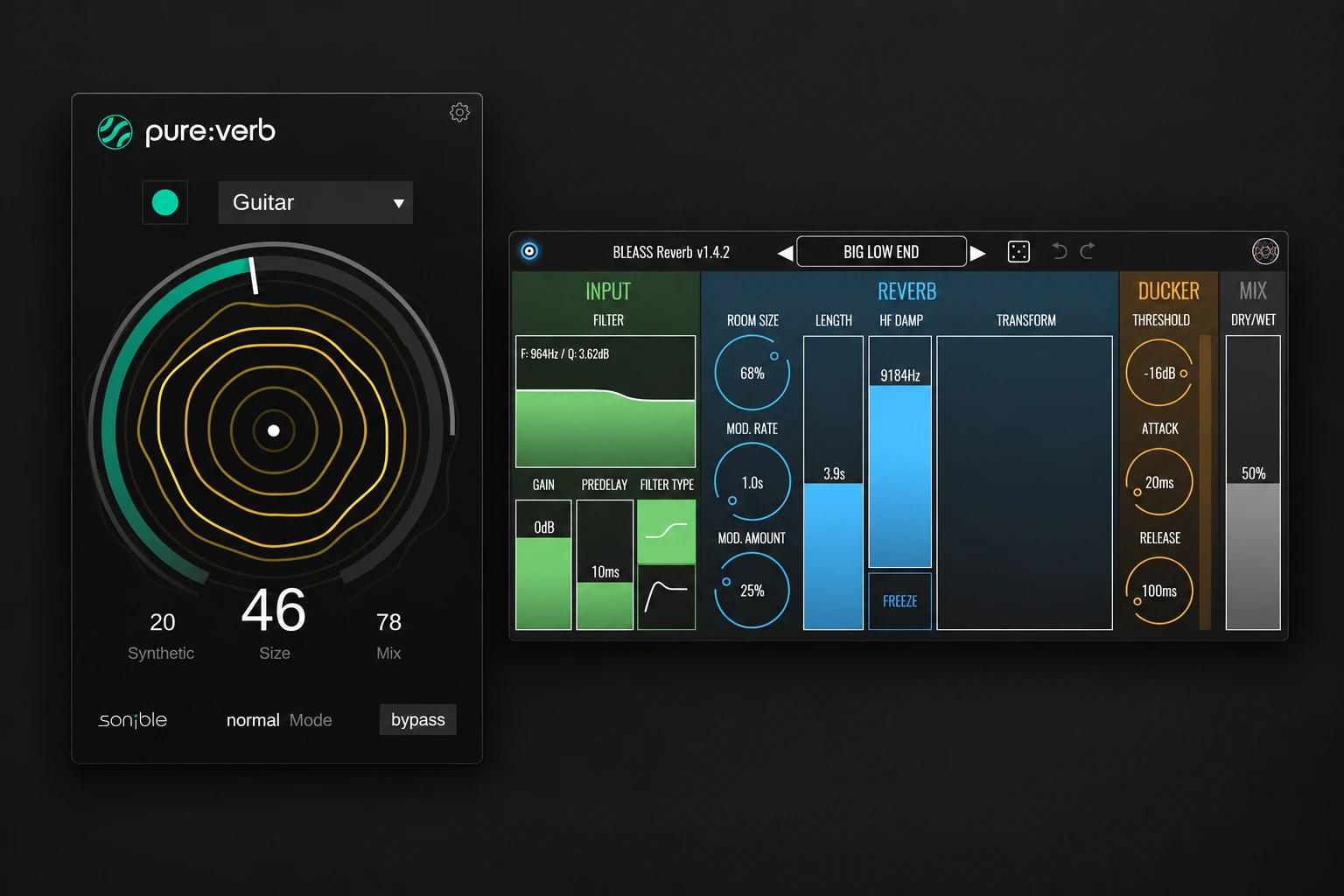
pure:verb analyses your source using an input profile, then creates a reverb setting around it. Size, Synthetic and Mix controls let you shape the result, with additional Infinite, Reverse and Bounce modes for more unusual effects.
The buying argument is getting a useful starting space quickly. If you keep losing momentum while scrolling through presets, a smaller set of controls can be a benefit. We would try it on a dry lead vocal and a short percussion part, because each makes different demands on the tail.
The analysis cannot choose the emotional role of the sound for you. A vocal might need an obviously artificial reverb, or almost no audible space at all. Judge the suggested setting against the song rather than assuming that an analysed result must be the right result.
Choose it for: compact controls and fast assisted setup. Choose something else when: you want extensive manual editing of the reverb structure.
SoundShaper take: our first paid demo here for someone who wants to keep writing rather than spend the session programming an effect.
2. BLEASS Reverb
€19.83 · Creative processing with ducking
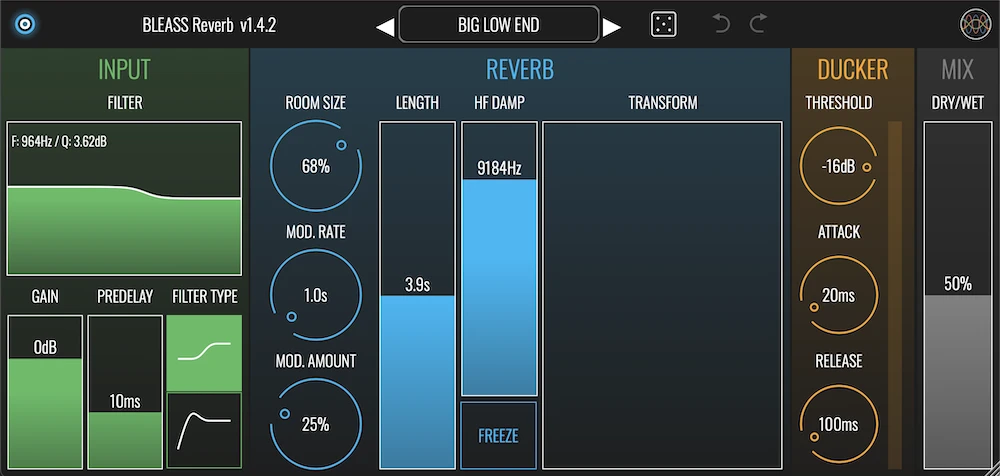
BLEASS Reverb combines input filtering, reverb controls, a freeze function, frequency-shifting and waveshaping options, plus a built-in ducker. Those features make it an interesting small-budget option for treating the reverb as part of the sound design.
Consider a synth stab that needs a long tail without losing its initial impact. Ducking gives you a way to reduce the effect around the incoming sound and let it return afterward. The timing still needs to fit the rhythm, but having that control inside the reverb can simplify the setup.
The transformation tools are another reason to compare it with your stock effects. Instead of shopping for a barely different hall, you can explore changing the tail into a separate texture. That is useful when the effect needs to be heard.
Choose it for: creative tails, freeze experiments and integrated ducking. Look elsewhere when: you mainly want a particular vintage reverb emulation.
SoundShaper take: shortlist this when the effects are part of the hook. Compare the desktop license, rather than confusing its price or formats with the separate iOS app.
3. Klanghelm TENS
€24 · A distinctive studio spring character
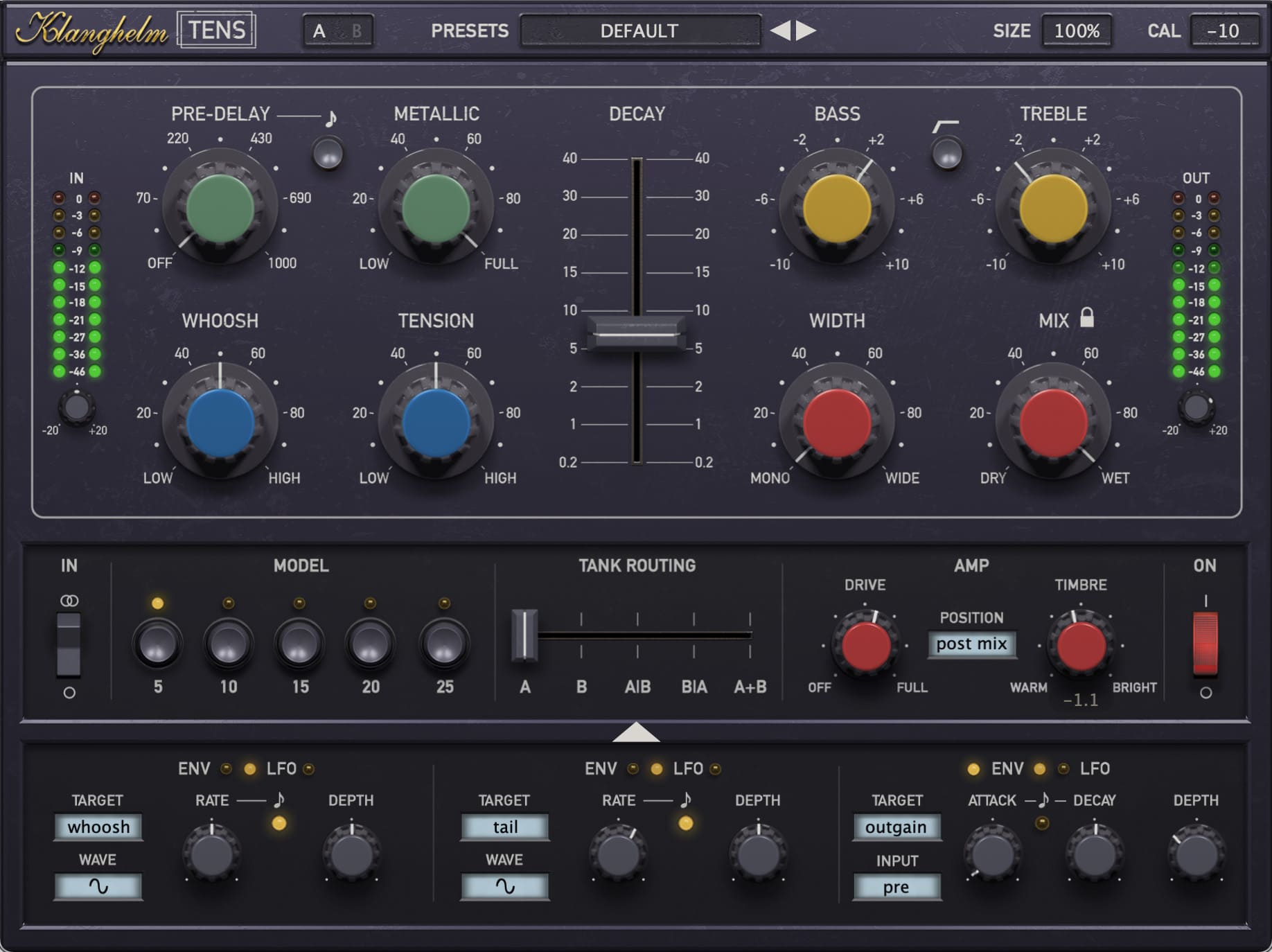
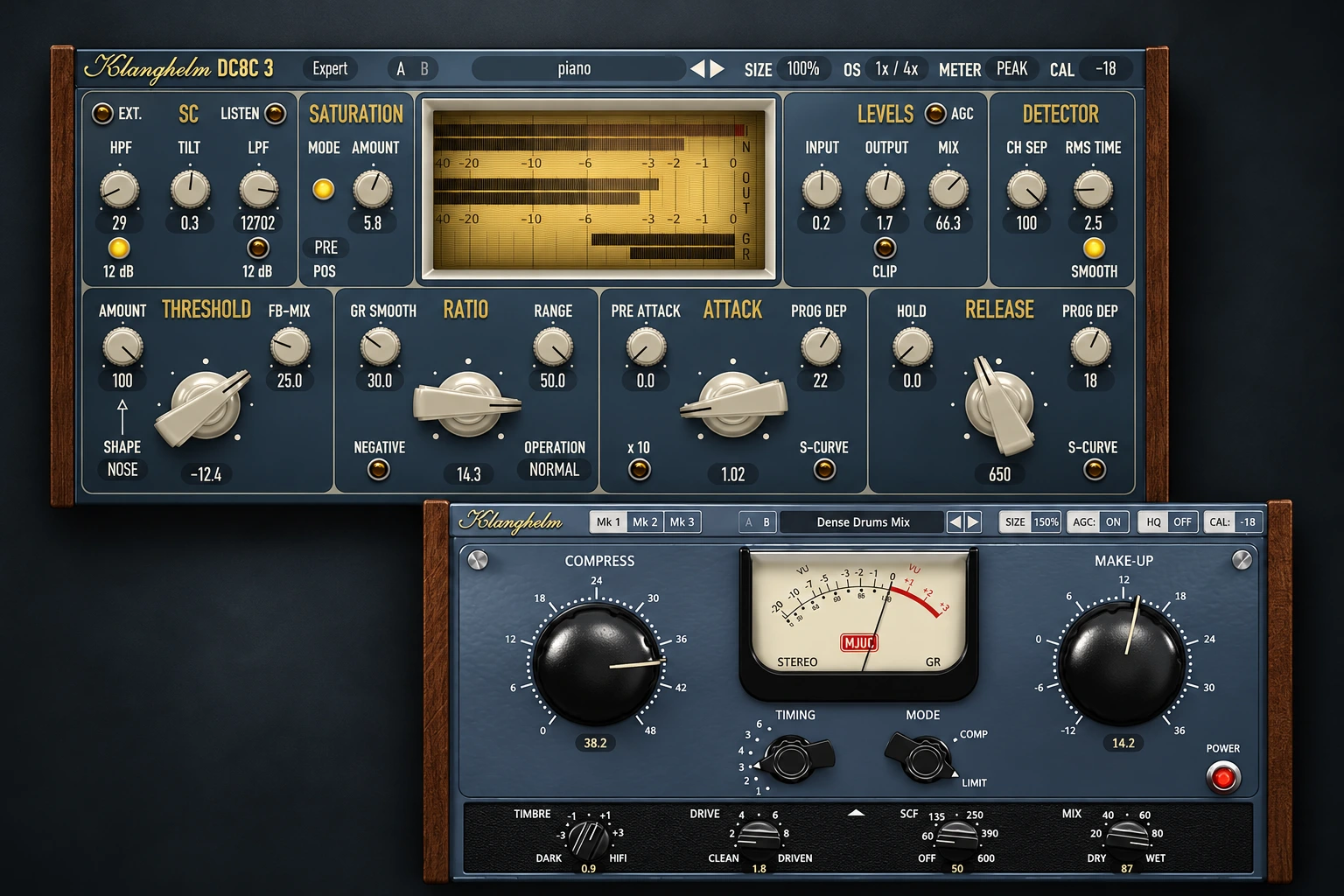
TENS is modelled on studio spring reverbs, rather than a basic spring tank from a guitar amplifier. It includes broad decay control, adjustable tank character, optional saturation and modulation.
We would consider it when you already have a serviceable room or hall and want a different texture. A vocal throw, percussion return or sustained synth part is a useful place to compare it with what you own. Start with the return fairly quiet, then decide whether the character helps the arrangement.
That specificity is also its limitation as a first purchase. If you are trying to recreate a particular room or need to load an impulse response, a studio spring model answers a different question. Do not buy it merely because the price is low.
Choose it for: a dedicated studio spring sound with creative control. Look elsewhere when: you need a general room-simulation toolbox or an impulse-response loader.
SoundShaper take: this is our character choice, especially for someone whose stock reverb already covers ordinary space but leaves them wanting a recognisably different effect.
4. MeldaProduction MReverb
€39 · Spatial positioning and deeper modulation

MReverb combines a spatial-positioning viewer with a parametric EQ, gate and four modulators. It is the option to examine here when you want more detailed editing rather than a deliberately minimal interface.
Its positioning approach is worth exploring if you want instruments to occupy different places within a shared sense of space. For creative work, the modulation tools offer ways to make the processing move over time instead of leaving the tail static.
The trade-off is how much time you want to spend learning the controls. More flexibility can be useful, but it can also slow down a straightforward mix decision. During the trial, start with a normal room-like sound before moving into complicated modulation.
Choose it for: deeper parameter control, positioning and modulated effects. Choose a simpler option when: a few quick controls are more valuable to you than an extensive feature set.
SoundShaper take: compare it with pure:verb based on working style. Their different levels of control are more important than their similar regular euro prices. MReverbMB is a separate product.
5. Valhalla Supermassive
Free · Large ambient delays and reverbs

Valhalla Supermassive is a free delay-and-reverb effect built around large, spacious sounds. Delay, feedback, density and modulation controls let you explore the transition between distinct repeats and a more continuous wash.
It is the first download we would suggest if the goal is an ambient pad, a long transition or a spacious vocal effect. Try it on a short sound and listen through the whole tail. The way the effect develops after the original note can become part of the composition.
A dramatic tail is not the same job as a discreet everyday room. You may still prefer a stock reverb for keeping a spoken vocal natural or giving a drum kit a small shared space. Supermassive is useful without needing to replace those tools.
Choose it for: expansive ambience and delay/reverb experiments at no cost. Look elsewhere when: your priority is a focused small-room workflow or a specific studio spring model.
SoundShaper take: try this before paying for another big atmospheric effect. If it already supplies the texture your track needs, keep the budget for a different gap.
SoundShaper opinion: choose the missing space
We would make this purchase around one unfinished track. Reverb is easy to enjoy in solo, especially when the tail is long and wide. The harder question is whether it helps the song once the vocal, bass and drums are all playing.
For someone who wants a usable starting point quickly, pure:verb would be our first paid demo. We would compare the learned setting with a familiar stock preset and ask how much work each needs before the source feels placed. If both get there equally easily, the purchase needs another reason.
For a producer who likes shaping the effect itself, BLEASS Reverb and MReverb are the stronger comparisons. BLEASS puts transformation and ducking close to the main reverb controls; MReverb offers deeper positioning and modulation tools. We would choose based on the kind of editing we actually want to do, rather than trying to own both immediately.
TENS has the clearest specialist role. We would buy it for a studio spring texture that adds something distinct to an existing set of effects. If your current problem is simply finding an ordinary short space, that is a weaker reason to choose it.
For big atmospheric sounds, Supermassive should enter the comparison before your card does. A free tool that supplies the right tail is already a useful answer.
Our recommendation: first choose whether you need speed, character or creative control. Then compare two suitable options on the same phrase at a similar effect level. One reverb you understand and use well is a better budget purchase than several overlapping ones.
How to audition a reverb without getting fooled by the preset
- Use a dry phrase from your project. Include a pause so you can hear the decay after the performance stops.
- Compare a similar amount of effect. A louder return or much longer tail can dominate the comparison without being more useful.
- Listen in the arrangement. Check whether consonants, drum attacks and the groove remain clear.
- Try reducing the effect first. Less send level or a shorter decay may solve the problem without another plugin.
- Check the setup. Confirm plugin formats, system support and performance in your DAW. When using an auxiliary send, a fully wet reverb return is a common starting point; the send level then controls the amount.
Frequently asked questions
What is the best free alternative?
Supermassive is our free option for expansive ambience. For other jobs, compare your stock room, hall or plate before buying. Our free reverb plugin guide covers more alternatives.
Which budget reverb should I choose for vocals?
Start by deciding how audible the space should be. pure:verb is the compact assisted option here; BLEASS Reverb is worth considering if ducking and creative tails are important. The better choice is the one that preserves the vocal’s role in your mix.
Can one reverb handle every job?
A flexible reverb can cover many tasks, but these choices have different strengths. A large atmospheric tail, a studio spring texture and a discreet room are different goals. You may already have one of those jobs covered in your DAW.
Do I need a plate, spring or hall reverb?
Choose by the texture and sense of space you want, rather than a fixed rule for an instrument. Try a short and a long setting on the same phrase. If the decay competes with the next note, adjust it before deciding the entire reverb type is wrong.
Are the dollar prices just converted euro prices?
No. The listed USD figures come from published prices where verified. Regional pricing and taxes vary, so an instrument or effect priced at US$50 is not automatically guaranteed to cost less than €50 at checkout.
Final thoughts
Choose pure:verb for quick assisted setup, BLEASS Reverb for creative processing, TENS for studio spring character or MReverb for deeper control. Download Supermassive before spending on another expansive ambient effect.
If you want to compare more expensive options, our VintageVerb vs Pro-R 2 guide explores a broader buying decision. And if your reverb is making the track cloudy, start with our guide to fixing a muddy mix.