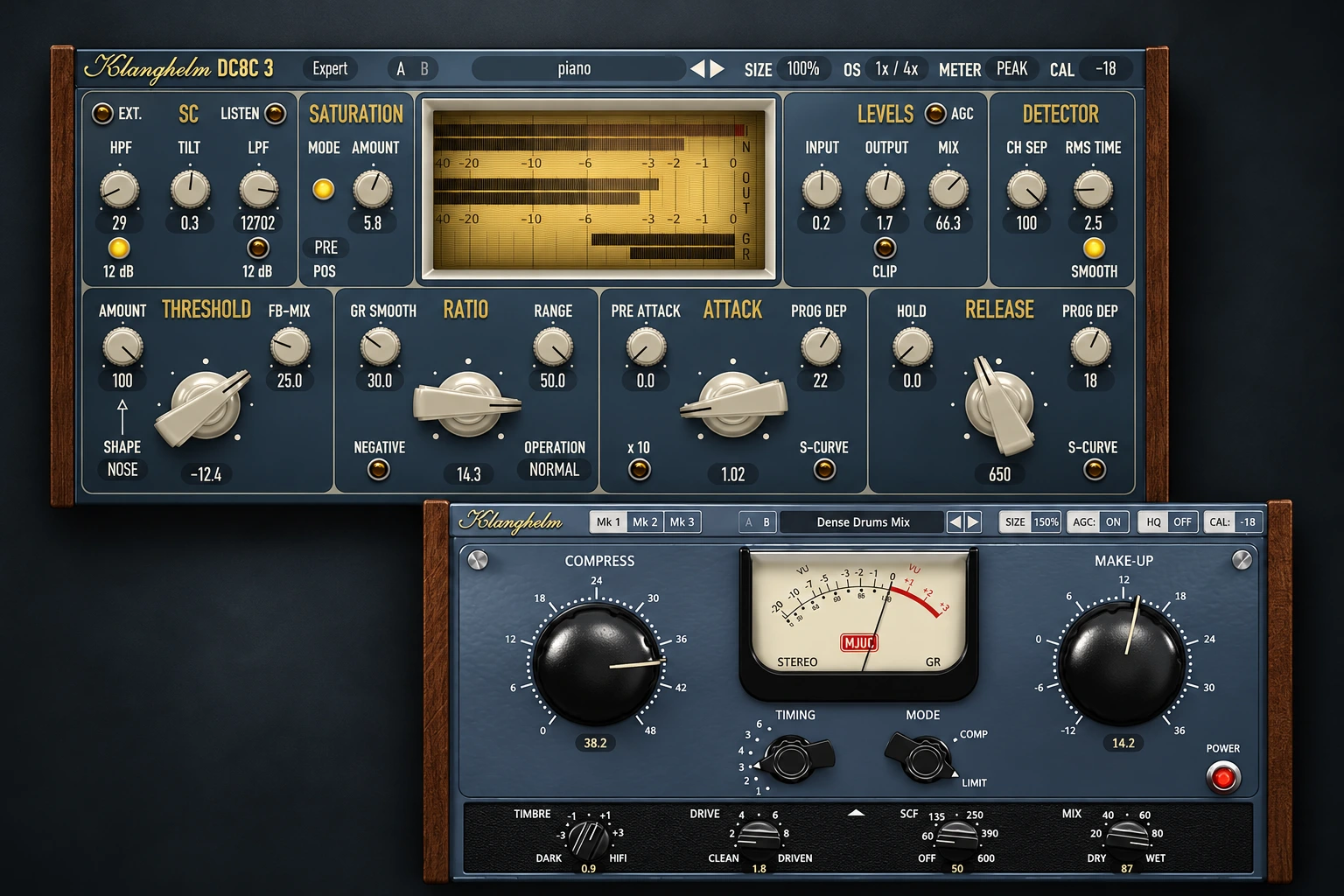

The best compressor plugins under 50 euros can cover everything from straightforward vocal control to character processing and stereo bus compression. The right choice depends on how you want to work and what you want the compression to contribute.
Our first paid pick for flexibility is DC8C. Choose MJUC when character is part of the goal, pure:comp for assisted setup or BLEASS Compressor for visual manual control and sidechain work. The free TDR Kotelnikov is our alternative for clean stereo bus processing.
These are four paid full-license options and one free compressor. Each has a specific reason to enter your shortlist, rather than simply being another inexpensive plugin to collect.
Best compressor VST plugins under €50: quick comparison
| Compressor | EUR reference | USD reference | Main reason to choose it |
|---|---|---|---|
| Klanghelm DC8C | €23 | EUR checkout | Flexible manual compression |
| Klanghelm MJUC | €24 | EUR checkout | Compression with tube-style character |
| sonible pure:comp | €39 | US$39 | Fast assisted setup |
| BLEASS Compressor | €19.83 | US$19.99 | Visual manual control and sidechain |
| TDR Kotelnikov | Free | Free | Clean stereo bus compression |
Checked on 1 November 2026. DC8C, MJUC and pure:comp use developer-listed full-license EUR prices; BLEASS Compressor uses the displayed Plugin Boutique EUR price. USD references are published prices, not conversions. Klanghelm lists these products in euros. Prices, taxes and promotions can differ by region, so check the final checkout amount. The €50 limit applies to each plugin individually.
Which compressor suits your next project?
For a vocal: decide whether you mainly want steadier level, a particular character or a faster setup. DC8C, MJUC and pure:comp offer different ways into those decisions. Large changes between phrases can also benefit from level automation before compression.
For drums: listen to the attack and recovery of the groove. DC8C and BLEASS Compressor are the manual-control options to compare; MJUC is worth a look when the colour is part of the appeal.
For a stereo bus: try Kotelnikov when the goal is clean dynamics control. A bus compressor affects several instruments at once, so judge the complete arrangement.
The selection is based on current documentation, license prices and intended uses. The recommendations are editorial buying advice. Use the demos on your own material to check the sound, controls and performance before purchasing.
1. Klanghelm DC8C
€23 · Flexible manual compression
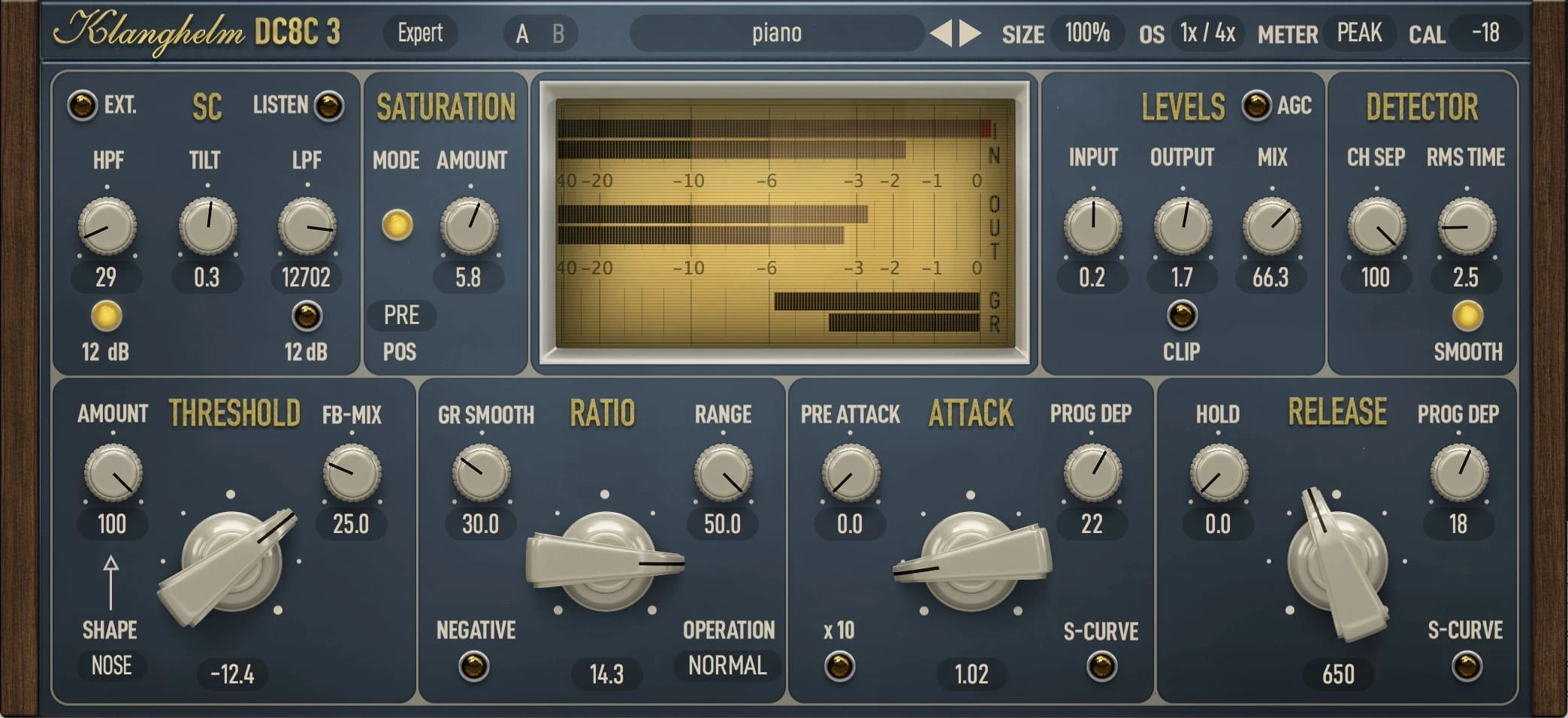
DC8C gives you a wide range of control over compression behaviour, including detector settings, attack and release shaping, feedback/feedforward behaviour and optional saturation. Easy mode provides four compression styles when you want a simpler starting point.
At €23, this is our first paid shortlist option for producers who want to understand and shape the compressor’s behaviour themselves. A drum loop is a useful demo source: try preserving the initial hit, then use the timing controls to change how the body moves after it.
The appeal is flexibility, but you do not have to start with every Expert control. Choose an Easy mode, adjust the amount and listen to the groove. Open the deeper controls when you can name the behaviour you want to change.
Buy it for: broad manual control across different compression jobs. Consider a simpler option if: you want most settings chosen for you.
SoundShaper take: a strong learning-and-mixing choice if you enjoy understanding the tools. Try the free DC1A first if a smaller control set may already be enough.
2. Klanghelm MJUC
€24 · Compression with tube-style character
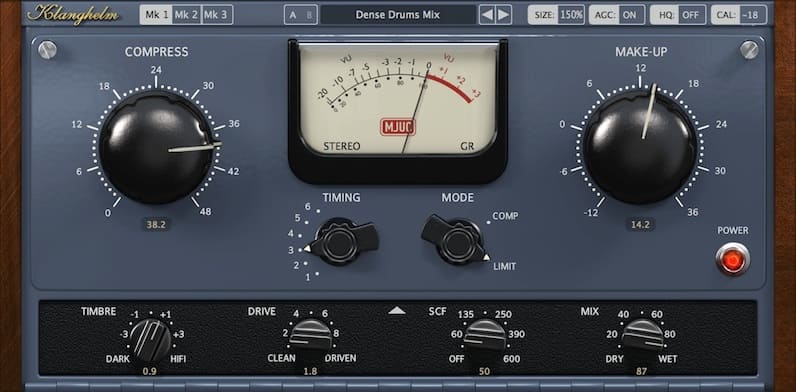
MJUC contains three variable-tube compressor models, each with its own signal path and controls. Drive and Timbre let you explore the tonal side of the processing alongside the gain reduction.
We would shortlist it for a vocal or drum bus when compression should contribute some character. During a demo, listen to the shape of the phrase or groove: does the vocal hold its place more comfortably, or does the drum bus move in a way that supports the track?
That is a different reason to buy from simply making peaks smaller. If you want the original tone to change as little as possible, DC8C or the free Kotelnikov may be the more relevant starting point.
Buy it for: character compression and several model choices in an inexpensive package. Look elsewhere for: a deliberately neutral processor whose main attraction is detailed detector control.
SoundShaper take: compare it with DC8C as a different approach, rather than assuming you need both. The free MJUC jr offers a smaller entry point into this family.
3. sonible pure:comp
€39 · Fast assisted setup
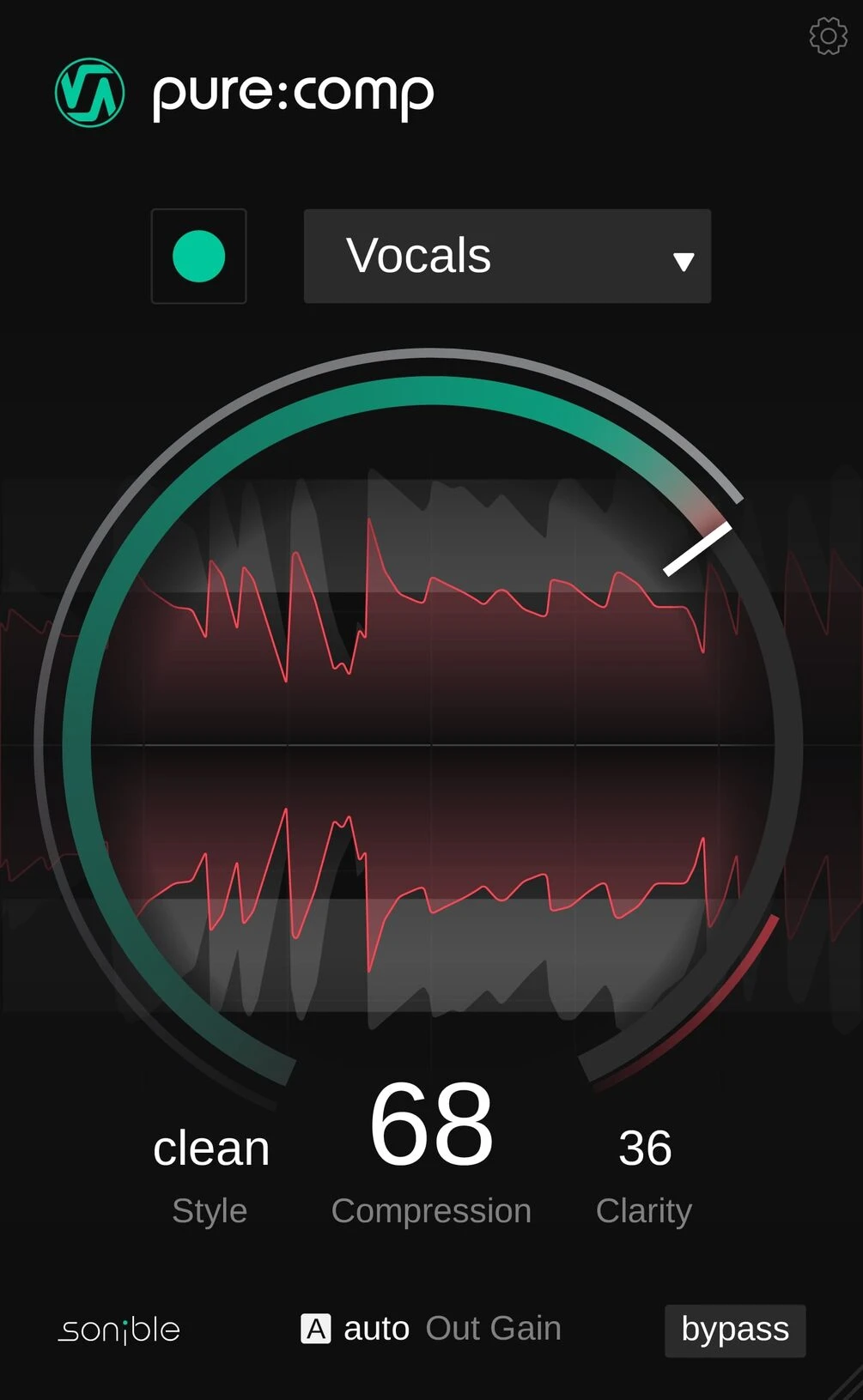
pure:comp analyses the source using an input profile and sets up the compression automatically. You can adjust the compression strength, choose Clean, Mixed or Dirty style settings, and use Clarity to bring in spectral compression.
Its reason to exist is speed. For a producer who keeps interrupting a writing session to experiment with ratios and release times, this can be a more useful purchase than a compressor with another page of advanced controls.
The demo should still happen in the full mix. A smoother vocal in solo might lose too much energy in the chorus, while a drum loop can need some deliberate movement. Use the analysis as the start of your decision and adjust the amount to fit the performance.
Buy it for: quick assisted compression with simple character controls. Choose another option if: direct manual access to detailed timing and detector settings is your priority.
SoundShaper take: the clearest workflow purchase here. It is worth considering when the time saved matters more to you than having every parameter exposed.
4. BLEASS Compressor
€19.83 · Visual manual control and sidechain
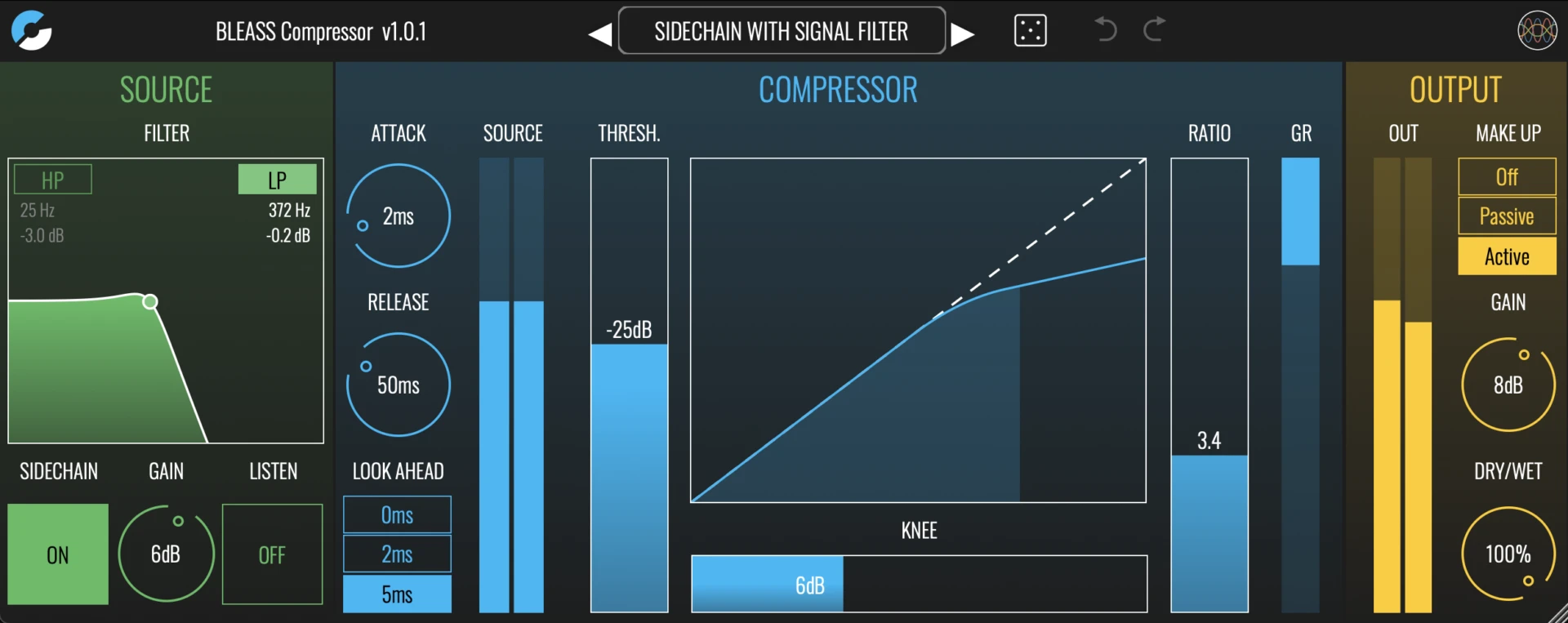
BLEASS Compressor provides threshold, ratio, knee, attack and release controls alongside a visual compression curve. External sidechain input, detector filters, look-ahead and a dry/wet control extend it beyond a basic level-reduction tool.
The sidechain section is a useful reason to try it. For example, you can investigate whether filtering low frequencies out of the detector stops a bus compressor reacting too strongly to the kick. The audible mix still contains that low end; you are changing the signal used to trigger compression.
It also suits a more deliberate ducking setup, where another track drives the gain reduction. The exact routing depends on your DAW, so test that workflow during the demo rather than choosing only from the specification list.
Buy it for: manual compression with clear visual feedback and flexible sidechain control. Keep your stock compressor if: it already gives you the same controls in a layout you prefer.
SoundShaper take: a focused low-cost option for producers who want to see and adjust what the compressor is doing.
5. TDR Kotelnikov
Free · Clean stereo bus compression
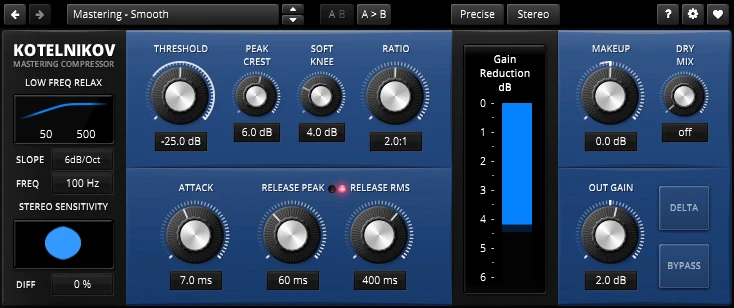
The free TDR Kotelnikov is a digital dynamics processor designed around clean control, including stereo bus applications. It offers separate release controls for peak and RMS events, sidechain high-pass filtering and stereo-linking options.
We would try it first when the goal is a more controlled mix bus while retaining the source’s tonal identity. Start gently and listen to what happens to the kick, snare and vocal together. A reduction in the meter is only useful when the musical result improves.
This is not an analogue hardware model, and that is part of the buying distinction. If you want compression to add a recognisable colour, MJUC addresses a different goal. If you want to learn about clean dynamics control, Kotelnikov gives you a substantial free starting point.
Download it for: clean bus processing and learning more detailed compression controls. Do not confuse it with: Kotelnikov GE, the separate paid edition.
SoundShaper take: the first download here for someone whose main need is transparent bus compression. You do not need a paid alternative before learning what it can do.
SoundShaper opinion: what makes a budget compressor worth buying?
We would choose a compressor by the decisions it helps us make. Does it make a vocal easier to place, give a drum loop the movement we want or control a bus without changing its role? Those are stronger reasons to buy than a large preset count.
DC8C is our first paid shortlist choice for someone who wants room to learn. Its value is the combination of a simpler Easy mode and deeper behaviour controls. We would begin with the smaller control set, then explore the Expert view when a specific problem calls for it.
MJUC is the more interesting comparison when compression and tone are meant to work together. We would listen for how the phrase or groove changes at a matched output level. If that character is the reason the part works better, it is a meaningful difference from another neutral processor.
pure:comp solves a different problem: time spent setting up the compressor. For a songwriter or producer moving quickly through a session, that can matter more than detailed timing controls. BLEASS is the choice to compare when you prefer to make those decisions manually and want clear visual feedback.
For a clean bus job, Kotelnikov deserves the first attempt because it is free and designed for that area of work. A paid plugin can still be worthwhile, but it should add something you can identify.
Our recommendation: demo the two options closest to your actual task. Match their output levels and compare the same phrase in the full arrangement. Choose the compressor whose behaviour helps the track, then learn it properly before shopping for another.
A useful five-minute compressor comparison
- Choose one job. Use a vocal phrase with changing intensity, a drum loop with clear attacks or a short section of a complete mix.
- Set a comparable amount of processing. Avoid comparing gentle gain reduction in one plugin with an obviously crushed setting in another.
- Match the output level. Extra make-up gain can make the processed result seem better simply because it is louder.
- Listen to the behaviour. Check whether vocal words stay clear, drum attacks retain the desired impact and the gain recovers in a way that suits the rhythm.
- Check the practical fit. Confirm your DAW format, system support, latency and automation during the demo.
If the controls are still unfamiliar, our guide to what a compressor does in music production is a useful starting point.
Frequently asked questions
Which cheap compressor should a beginner choose?
For assisted setup, compare pure:comp with your stock compressor. For learning manual control, try DC8C’s Easy mode or BLEASS Compressor. If you want a free option, Kotelnikov is useful for clean bus work, while Klanghelm’s DC1A and MJUC jr offer simpler entry points into its compressor family.
Is a compressor the same as a limiter?
They are related dynamics tools, but the intended behaviour and settings differ. A mixing compressor is not automatically the best way to catch final output peaks. Our compressor vs limiter guide explains the distinction.
Do I need separate compressors for vocals, drums and the master?
Not necessarily. A flexible compressor can cover several tasks. Different tools become useful when their behaviour, colour or workflow gives you a reason to choose them. Start with one you understand rather than buying a separate plugin for every track type.
Will compression fix an uneven vocal?
It can help, but large phrase-to-phrase differences may need level adjustments or automation as well. Listen to the performance before choosing a plugin. Our guide to making vocals sit in the mix covers the wider context.
Are the euro prices just converted dollar prices?
No. EUR and USD references come from verified listings where available. Regional pricing and taxes differ, so check the amount in your own checkout currency.
Final thoughts
Choose DC8C for flexible manual control, MJUC for character, pure:comp for assisted setup or BLEASS Compressor for visual control and sidechain work. Try the free Kotelnikov when clean stereo bus compression is the priority.
For a wider selection beyond this price range, see our compressor plugin guide. A good budget purchase should give you one useful improvement you can hear or work with more easily.