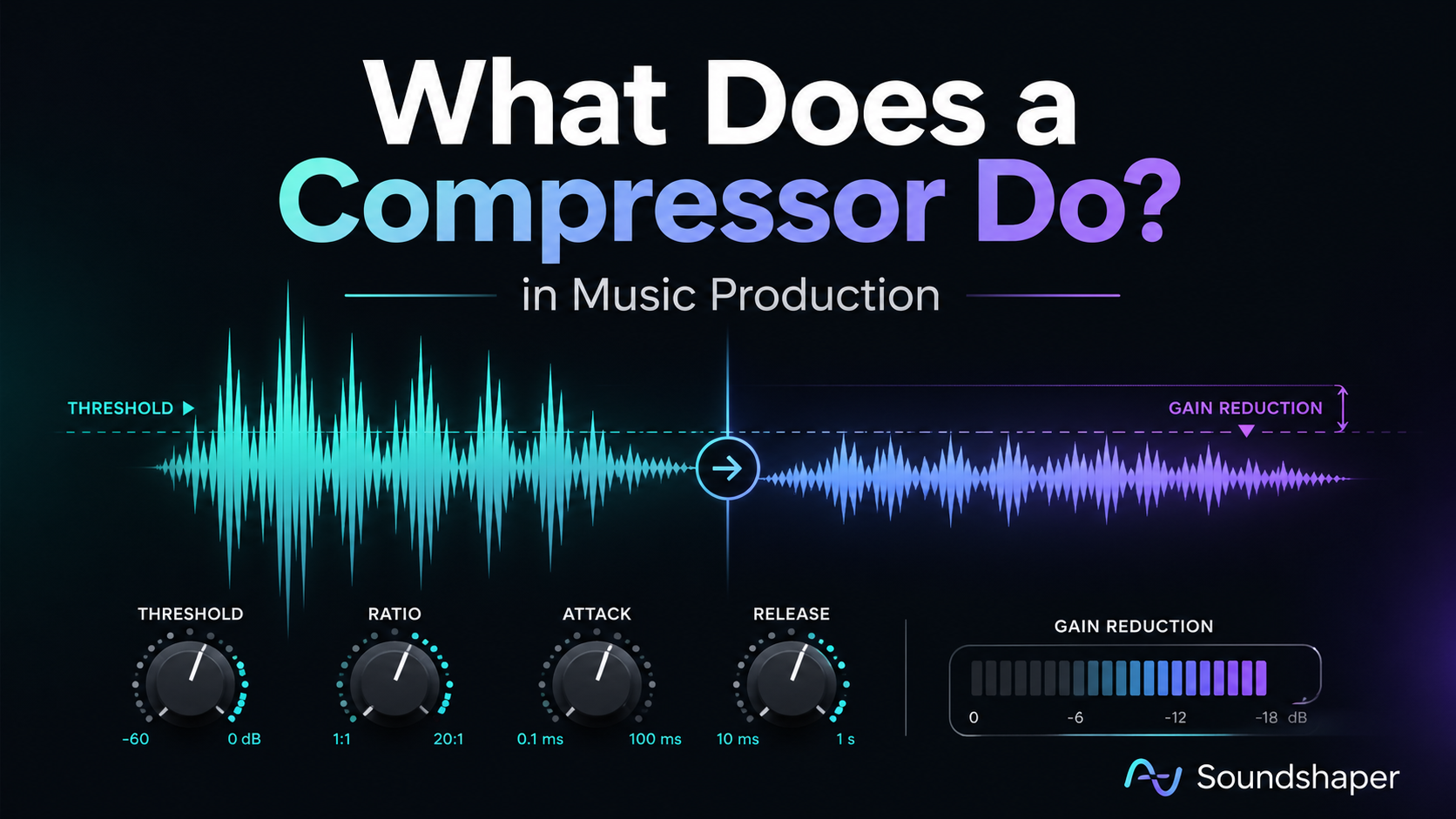
Understanding the role of a compressor is crucial for achieving a polished and professional sound. Whether you are a budding producer or a seasoned musician, knowing what a compressor does in music production can significantly enhance the quality of your mixes. Compressors are essential tools that help control the dynamic range of audio signals, ensuring that the loud and soft parts of a track are balanced effectively. This article will delve into the intricacies of compressors, exploring their purpose, strengths, limitations, and suitability for different types of users.
Compressors are often the unsung heroes of music production, quietly working behind the scenes to smooth out audio inconsistencies. They are indispensable in various stages of music creation, from recording to mixing and mastering. By understanding how compressors function, you can make informed decisions about when and how to use them in your projects. This comprehensive guide will provide you with a deep dive into the world of compressors, offering insights into their applications and helping you determine if they are the right tool for your specific needs.
We recently wrote a full review of the Waves CLA-2A, which is a popular compressor plugin used by many producers and mixing engineers. If you want to learn more about how this plugin works, what it sounds like and whether it is worth buying, feel free to check out the article.
A compressor is an audio processing tool used in music production to manage the dynamic range of audio signals. The dynamic range refers to the difference between the loudest and softest parts of an audio signal. Compressors work by reducing the volume of loud sounds and amplifying quieter sounds, resulting in a more balanced and cohesive audio output. This process helps to prevent distortion and ensures that all elements of a track can be heard clearly.
Compressors come in various forms, including hardware units and software plugins, each offering different features and functionalities. Despite their variations, all compressors share the same core purpose: to control dynamics. By adjusting parameters such as threshold, ratio, attack, and release, producers can tailor the compression effect to suit their specific needs. Understanding these parameters is essential for effectively using a compressor in your music production workflow.
In addition to their primary function of controlling dynamics, compressors can also add character and warmth to audio signals. Many compressors are designed to impart a certain tonal quality, often emulating the sound of vintage analog equipment. This characteristic can be particularly desirable in genres that benefit from a more organic and textured sound, such as rock, jazz, and blues.
The primary use of a compressor in music production is to manage the dynamic range of audio signals. By controlling the peaks and troughs of a track, compressors ensure that all elements are audible and balanced. This is especially important in complex mixes where multiple instruments and vocals compete for attention. Compressors help to glue these elements together, creating a cohesive and polished final product.
Compressors are also commonly used to enhance the punch and presence of specific instruments. For example, a compressor can be applied to a drum track to emphasize the attack of the kick drum, giving it more impact in the mix. Similarly, vocal tracks can benefit from compression to maintain consistent volume levels, ensuring that every word is clearly heard without being overshadowed by other elements.
Beyond their practical applications, compressors can also be used creatively to shape the sound of a track. By experimenting with different settings, producers can achieve unique effects that add character and depth to their music. This creative use of compression can help to define the sonic identity of a track, making it stand out in a crowded musical landscape.
One of the most significant strengths of a compressor is its ability to control dynamics effectively. By managing the dynamic range, compressors ensure that all elements of a track are balanced and cohesive. This results in a more polished and professional sound, which is crucial for commercial music production. The ability to control dynamics also helps to prevent distortion, ensuring that the final mix is clean and free from unwanted artifacts.
Another strength of compressors is their versatility. They can be used on a wide range of audio sources, from individual instruments and vocals to entire mixes. This flexibility makes them an essential tool in any producer's arsenal. Whether you are working on a delicate acoustic ballad or a high-energy electronic track, a compressor can help you achieve the desired sound.
Compressors also offer the ability to add character and warmth to audio signals. Many compressors are designed to emulate the sound of vintage analog equipment, imparting a unique tonal quality to the audio. This characteristic can be particularly desirable in genres that benefit from a more organic and textured sound. The ability to add warmth and character makes compressors a valuable tool for producers looking to create music with a distinct sonic identity.
While compressors are powerful tools, they do have limitations that producers should be aware of. One of the main challenges is the potential for over-compression, which can lead to a track sounding flat and lifeless. Over-compression occurs when the dynamic range is reduced too much, resulting in a lack of contrast between the loud and soft parts of a track. This can make the music sound unnatural and less engaging.
Another consideration is the learning curve associated with using compressors effectively. Understanding the various parameters and how they interact can be challenging for beginners. It requires practice and experimentation to develop an intuitive sense of how to use a compressor to achieve the desired effect. Producers must be willing to invest time in learning how to use compressors properly to avoid common pitfalls.
Additionally, compressors can introduce unwanted artifacts if not used carefully. For example, aggressive compression settings can lead to pumping and breathing effects, where the volume of the audio fluctuates unnaturally. These artifacts can be distracting and detract from the overall quality of the mix. Producers need to be mindful of these potential issues and adjust their compression settings accordingly.
The key parameters of a compressor include threshold, ratio, attack, release, and makeup gain. The threshold determines the level at which the compressor begins to act, while the ratio controls the amount of compression applied. Attack and release settings dictate how quickly the compressor responds to changes in the audio signal. Makeup gain is used to compensate for any loss in volume resulting from compression. Understanding these parameters is essential for effectively using a compressor in music production.
Yes, compression can be used creatively to shape the sound of a track. By experimenting with different settings, producers can achieve unique effects that add character and depth to their music. Creative compression can be used to emphasize certain elements, such as the attack of a drum or the presence of a vocal. It can also be used to create pumping effects, where the volume of a track fluctuates rhythmically. This creative use of compression can help to define the sonic identity of a track.
While both compressors and limiters are used to control dynamics, they serve different purposes. A compressor reduces the dynamic range by applying a variable amount of gain reduction, depending on the settings. A limiter, on the other hand, is a type of compressor with a very high ratio, often 10:1 or greater, designed to prevent the audio signal from exceeding a certain level. Limiters are typically used to prevent clipping and distortion, ensuring that the audio does not exceed a specified threshold. Understanding the distinction between these two tools is important for effectively managing dynamics in music production.
In conclusion, compressors are indispensable tools in music production, offering a wide range of applications and benefits. By understanding what a compressor does in music production, producers can make informed decisions about how to use them effectively. Whether you are looking to control dynamics, add character, or experiment with creative effects, compressors provide the flexibility and power needed to achieve your desired sound.
As with any tool, the key to successful compression lies in understanding its strengths and limitations. By taking the time to learn how compressors work and experimenting with different settings, producers can unlock their full potential and elevate the quality of their music. Whether you are a seasoned professional or a home studio enthusiast, compressors offer valuable opportunities to enhance your music production skills and achieve professional results.

![[team] image of team member (for a mobile gaming)](https://cdn.prod.website-files.com/68efa70811edd8e5af30a90d/690abaa8987a07a672c4cd2c_channels4_profile.jpg)
![[background image] image of recording equipment (for a musician & band)](https://cdn.prod.website-files.com/68efa70811edd8e5af30a90d/6aa35b3b03d3771388765f76_Main%20Image.png)
![[background image] image of recording equipment (for a musician & band)](https://cdn.prod.website-files.com/68efa70811edd8e5af30a90d/6aa35785b8608362620d46e3_Main%20Image.png)
![[background image] image of recording equipment (for a musician & band)](https://cdn.prod.website-files.com/68efa70811edd8e5af30a90d/6aa351f638777f809800a4ff_Main%20Image.png)