
The best VST plugins under 50 euros are the ones that solve a problem your current tools leave behind. Our shortlist covers six affordable effects for mixing: Duck 2, SlickEQ GE, MJUC, Bass Focus, SDRR and TENS.
For electronic producers, Duck 2 is our first pick for precise sidechain shaping. For affordable character compression, start with MJUC. If you mainly need an EQ, SlickEQ GE is the one to consider. Each costs less than €50 at the listed reference price; you do not need to buy all six.
This guide focuses on effects, rather than synth instruments or sample libraries. The choices cover different jobs, so the order is a buying shortlist rather than a claim that a reverb is “better” than an EQ.
Best VST plugins under €50 at a glance
| Plugin | Best suited to | EUR reference | USD reference |
|---|---|---|---|
| Devious Machines Duck 2 | Sidechain & volume shaping | €34.99 | US$39.99 |
| TDR VOS SlickEQ GE | Broad tonal EQ | €30 | Check local price |
| Klanghelm MJUC | Compression with character | €24 | EUR checkout |
| Devious Machines Bass Focus | Bass translation | €34.99 | US$39.99 |
| Klanghelm SDRR | Saturation & distortion | €23 | EUR checkout |
| Klanghelm TENS | Studio spring reverb | €24 | EUR checkout |
Prices checked on 1 November 2026. EUR references are developer-listed full-license prices, not upgrade offers. USD references are published US prices where verified, not currency conversions. Retailer pricing, tax treatment and promotions may differ; check the final checkout total. Klanghelm lists the products below in euros.
How we chose these affordable plugins
We checked current product documentation and listed prices, then selected tools with a clear use beyond simply adding another name to your plugin folder. The recommendations below are editorial buying advice based on those features and intended uses, rather than a claim that we have personally tested every plugin. Use the demos to check the sound, performance and compatibility in your own DAW.
1. Duck 2 — our pick for sidechain control
Listed price: €34.99 · Sidechain & volume shaping
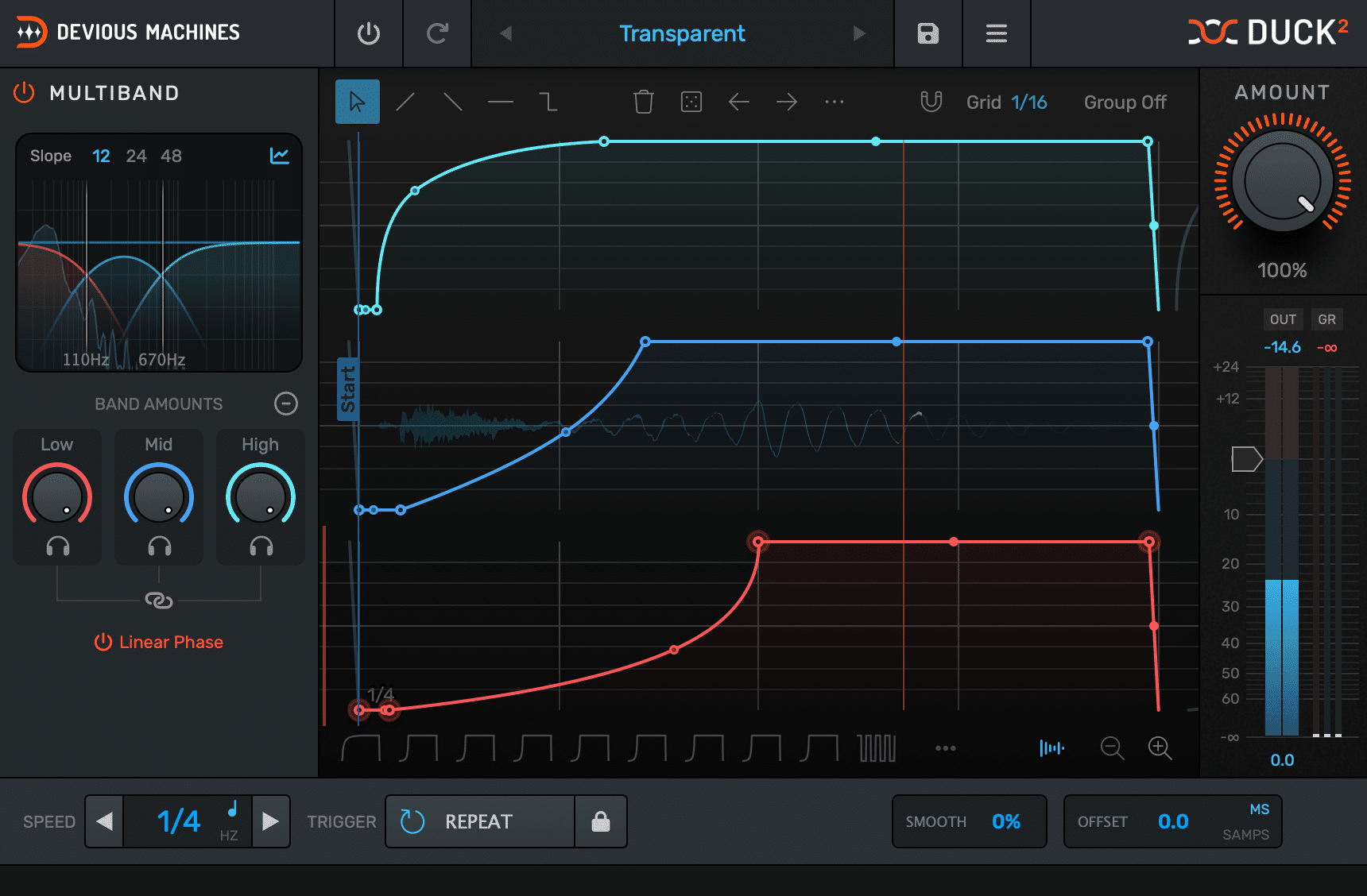
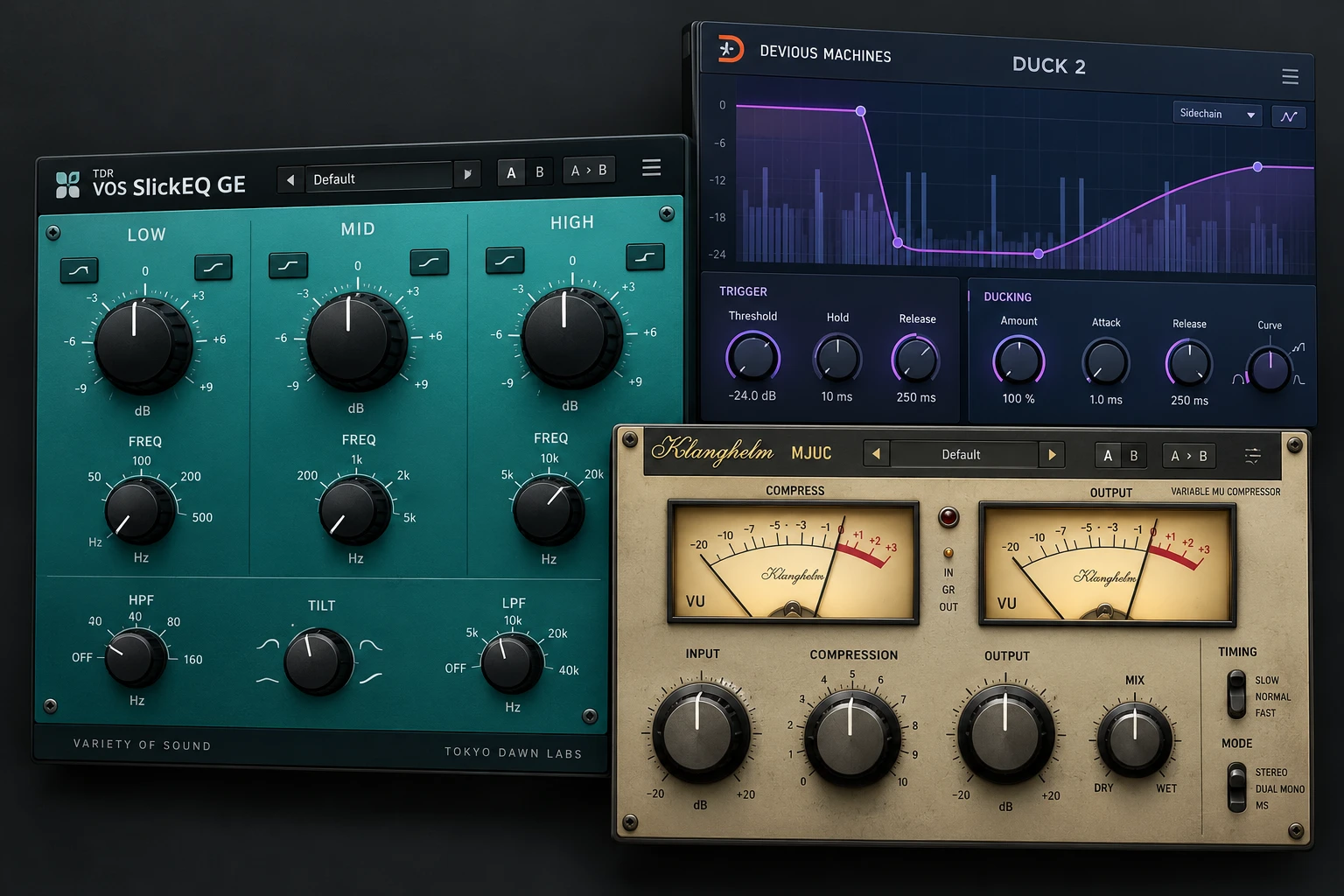
A bassline can be the right sound and still fight the kick. Duck 2 lets you draw the volume reduction and recovery directly, with tempo sync or MIDI and audio triggering. Its three-band mode lets you treat the low end differently from the rest of the sound.
The buying argument is control. A short dip can leave room for the kick without making the whole bassline disappear. A longer recovery becomes part of the groove. Before buying, try creating the same movement with your DAW’s volume automation: the difference you are paying for is how quickly you can shape, trigger and revise it.
Choose it if: you regularly make kick-heavy electronic music and want more control than a fixed pumping preset. Skip it if: simple stock sidechain compression already gives you the movement you need.
For a closer alternative, read our Kickstart 2 vs Duck 2 comparison.
2. TDR VOS SlickEQ GE — our pick for tonal shaping
Listed price: €30 · Broad tonal EQ
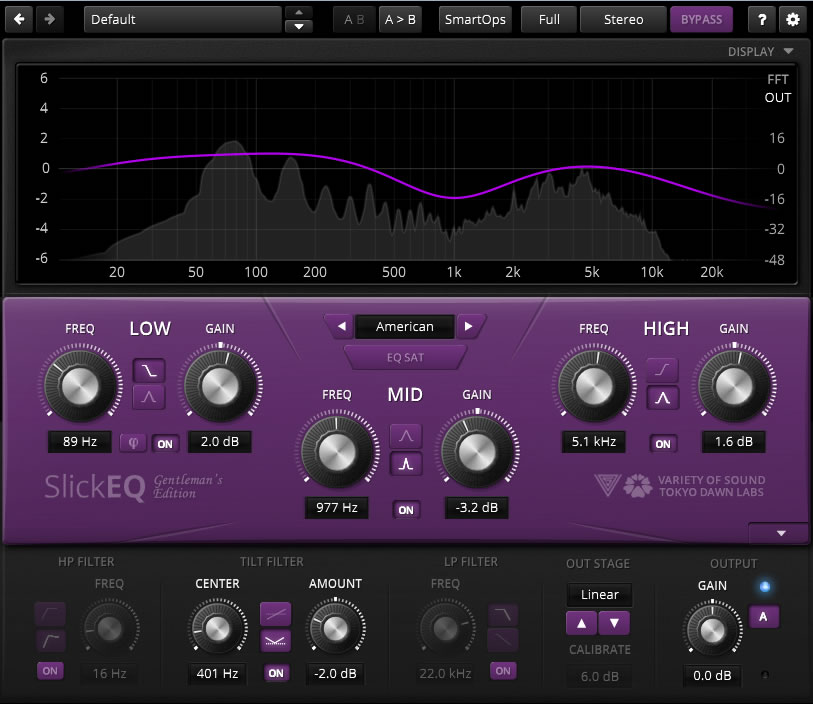
SlickEQ GE combines three semi-parametric bands with five EQ models, a tilt filter, high- and low-pass filters and selectable output stages. Automatic gain compensation helps reduce the temptation to prefer a setting simply because it is louder.
We would shortlist it for broad changes: making a dull synth brighter, giving a vocal more body or adjusting the balance of a drum bus. Those jobs often benefit from a few deliberate moves. If your existing EQ encourages endless narrow cuts, a different control layout can be useful.
Choose it if: you want a dedicated tone-shaping EQ with optional colour. Skip it if: your main problem is moving resonances or detailed dynamic correction. This is a different buying decision from a dynamic EQ.
Try the free SlickEQ first. If it already covers your needs, keep the €30. Our Pro-Q 4 vs TDR Nova guide explores a different EQ workflow.
3. Klanghelm MJUC — our pick for character compression
Listed price: €24 · Compression with character
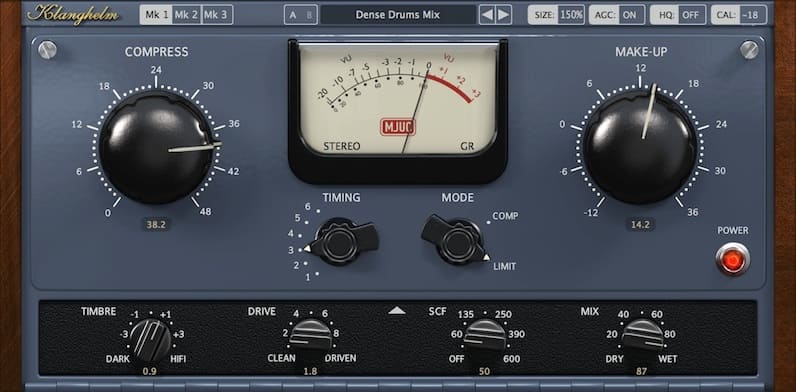
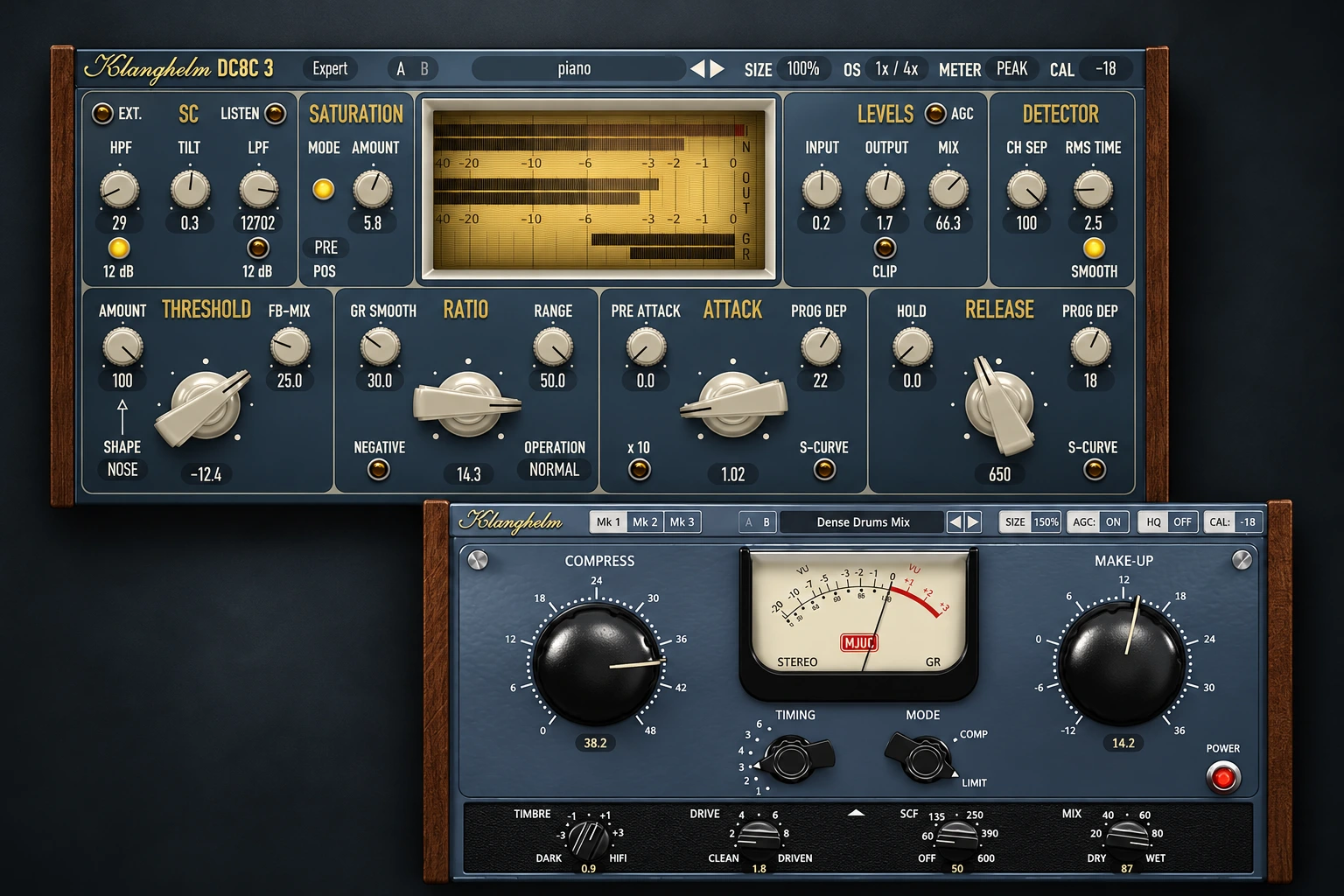
MJUC gives you three variable-tube compressor models, each with its own controls and signal path. Drive and Timbre controls add another way to shape the result beyond gain reduction alone.
That makes it an interesting €24 purchase if you want compression to contribute character. A useful demo exercise is to try it on a vocal or drum bus, then match the output level and compare it with your stock compressor. Listen to the way the phrase or groove moves, rather than assuming a thicker or louder result is automatically better.
Choose it if: you want several character-compression options in one inexpensive plugin. Skip it if: you mainly need invisible peak control and already have a compressor that handles it.
The free MJUC jr is a sensible starting point. If compression itself is still confusing, begin with what a compressor does in music production before buying another one.
4. Devious Machines Bass Focus — our pick for bass translation
Listed price: €34.99 · Bass translation

If an 808 is obvious on headphones but disappears on a phone speaker, adding more sub is not always the answer. Bass Focus generates higher harmonics from low-frequency material, giving you another way to make that part audible.
Its controls let you shape the harmonic contribution and balance it against the original signal. The useful buying question is whether this focused approach gets you there more easily than the saturation you already own.
Choose it if: bass translation is a repeated problem in your mixes. Skip it if: the bass is already audible and the real issue is masking, an unsuitable octave or a kick that occupies the same space. An enhancer cannot make those decisions for you.
During the demo, compare the same short section on headphones and a small speaker at matched levels. For the arrangement and balance side, see how to mix kick and 808.
5. Klanghelm SDRR — our pick for flexible saturation
Listed price: €23 · Saturation & distortion
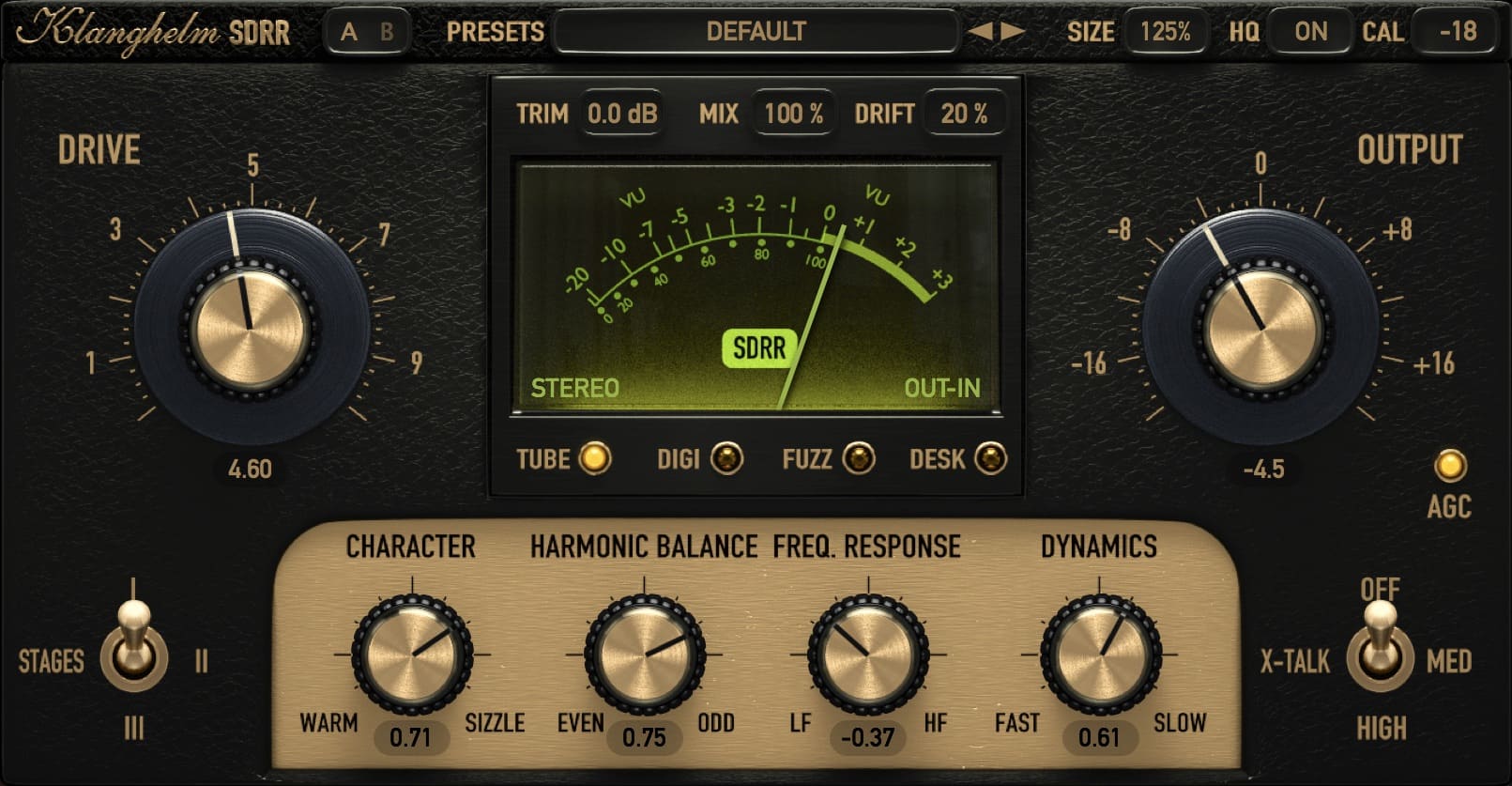
SDRR offers Tube, Digi, Fuzz and Desk modes. That range is the main reason it belongs on a budget shortlist: you can explore different approaches to saturation instead of buying several narrowly focused effects.
We would consider it for producers who want to learn how colour changes a sound. Try one mode on a bass or drum loop, lower the output to compensate for the extra level and compare it in the full mix. Then try another mode with a similar amount of drive. The useful result is the one that helps the part fit, even if it sounds less impressive by itself.
Choose it if: you want flexible character processing for €23. Skip it if: your stock distortion already covers your needs or you mainly want one specific tape effect.
Klanghelm’s free IVGI is worth trying before spending. For more expensive alternatives, our Decapitator vs Saturn 2 comparison explains where a larger budget might go.
6. Klanghelm TENS — our pick for a distinctive reverb
Listed price: €24 · Studio spring reverb
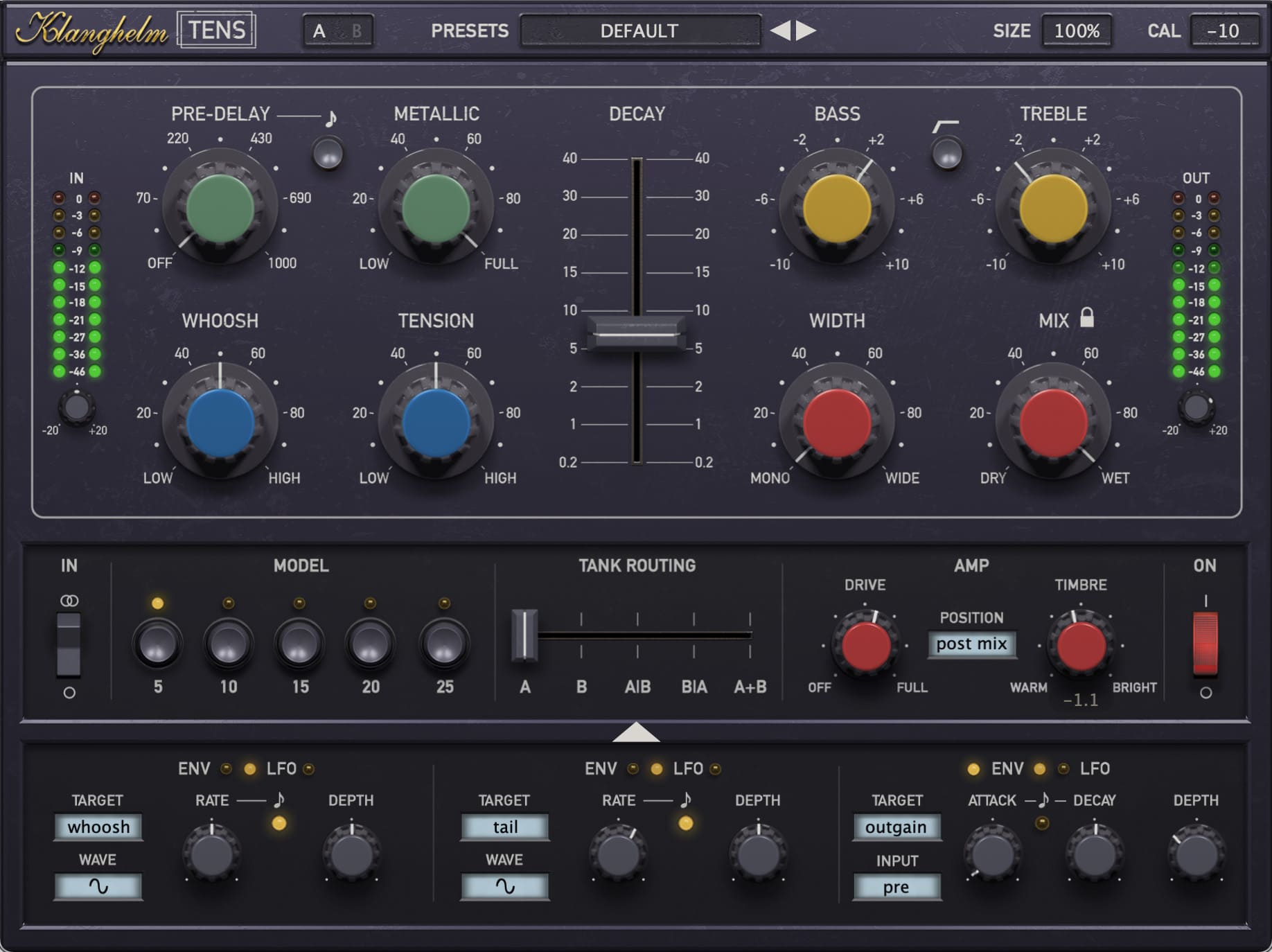
TENS models studio spring reverberation, a different starting point from a simple guitar-amp spring effect. It includes extensive decay control, ways to alter the tank character, optional saturation and modulation.
We would put it on a shortlist when a standard room or hall feels too predictable. A vocal throw, percussion return or sustained synth gives you a useful demo context. Start with the effect quietly behind the dry signal, then decide whether its texture adds something your existing reverb lacks.
Choose it if: you want an additional reverb character and room to experiment. Skip it if: your immediate need is a straightforward room simulation or an impulse-response loader. TENS serves a more specific purpose.
A €24 reverb can still be an unnecessary purchase if you already have a similar sound. Compare the demo with the options in our free reverb plugin guide before deciding.
SoundShaper opinion: where we would spend the money
Our first question would be: what held up your last three projects? If you cannot name a repeated problem, we would keep the money. A low price is useful when the tool has a job waiting for it.
For kick-heavy electronic music, Duck 2 would be our first demo. Drawing the recovery gives you a direct way to work on groove and separation together. But if you already own a volume shaper that does that comfortably, Duck 2 falls down the list immediately. A second interface is not automatically an upgrade.
For vocals, drums and general mixing, MJUC would be our starting point if character compression is the missing piece. SDRR becomes more interesting when you already have dynamics under control and want more options for colour. We would compare them on a real unfinished track, because “better in solo” is a weak reason to buy either.
SlickEQ GE is a different decision. Your stock EQ probably already covers basic cuts and boosts. We would pay for GE if its tone-shaping approach makes those decisions clearer or more enjoyable, rather than expecting the purchase alone to fix a muddy mix.
Bass Focus and TENS are the more specific purchases. The former addresses bass translation; the latter adds a particular kind of space. That specificity can make either excellent value, provided it matches what your music actually needs.
Our recommendation: demo one plugin, use it in a current project, match the output level and decide whether you would miss it if you removed it. That is a stronger buying test than collecting six affordable effects because they all fit the budget.
Before buying a VST plugin under €50
- Check the format and operating system. Your DAW must support the supplied plugin format and your computer must meet the requirements. Logic users need the Audio Units version, rather than a VST file.
- Select the full license. A cheaper upgrade, expansion or crossgrade can require another purchase you do not own.
- Demo inside a real project. Check automation, latency and CPU use alongside the sound.
- Compare at similar loudness. Extra output level can disguise whether the processing actually helps.
Frequently asked questions
Is €50 the price per plugin or for all six?
The limit applies to each individual plugin. This is a shortlist of separate purchases, not a six-plugin bundle costing €50 in total.
Are plugins under €50 also under $50?
Not automatically. Developers and retailers can set separate regional prices, and taxes can change the checkout total. The USD references above are published prices where verified; they are not a promise that €50 equals US$50.
Are free VST plugins enough for mixing?
Yes, free and stock tools can cover the essential jobs. A paid plugin becomes worthwhile when its workflow or sound gives you something useful beyond the tools you already have. Try free SlickEQ, MJUC jr or IVGI before buying their paid relatives.
Does an affordable plugin make a mix sound professional?
It can help with a specific job, but it cannot choose the arrangement or balance for you. If the mix lacks clarity, start with the source sounds, levels and competing parts. Our guide to fixing a muddy mix is a useful next step.
Final thoughts
Start with Duck 2 for sidechain shaping, MJUC for character compression or SlickEQ GE for tonal EQ. Choose Bass Focus, SDRR or TENS when bass translation, saturation or a distinctive reverb is the actual gap. One well-chosen plugin under €50 can be a better purchase than a folder full of cheap effects you rarely open.