

Keyscape is worth considering if acoustic pianos and vintage electric keyboards are central to your music. Spectrasonics combines a broad collection of sampled keyboards with controls tailored to the instrument you are playing. We would shortlist it for a producer who regularly writes piano, Rhodes-style and Wurlitzer-style parts; we would compare narrower alternatives if only one keyboard sound is missing.
This guide explains what Keyscape includes, its current official price, the practical demands of the library and where another instrument makes more sense. You will also find a SoundShaper verdict, real product images and specific production ideas.
Keyscape at a glance
What is Keyscape?
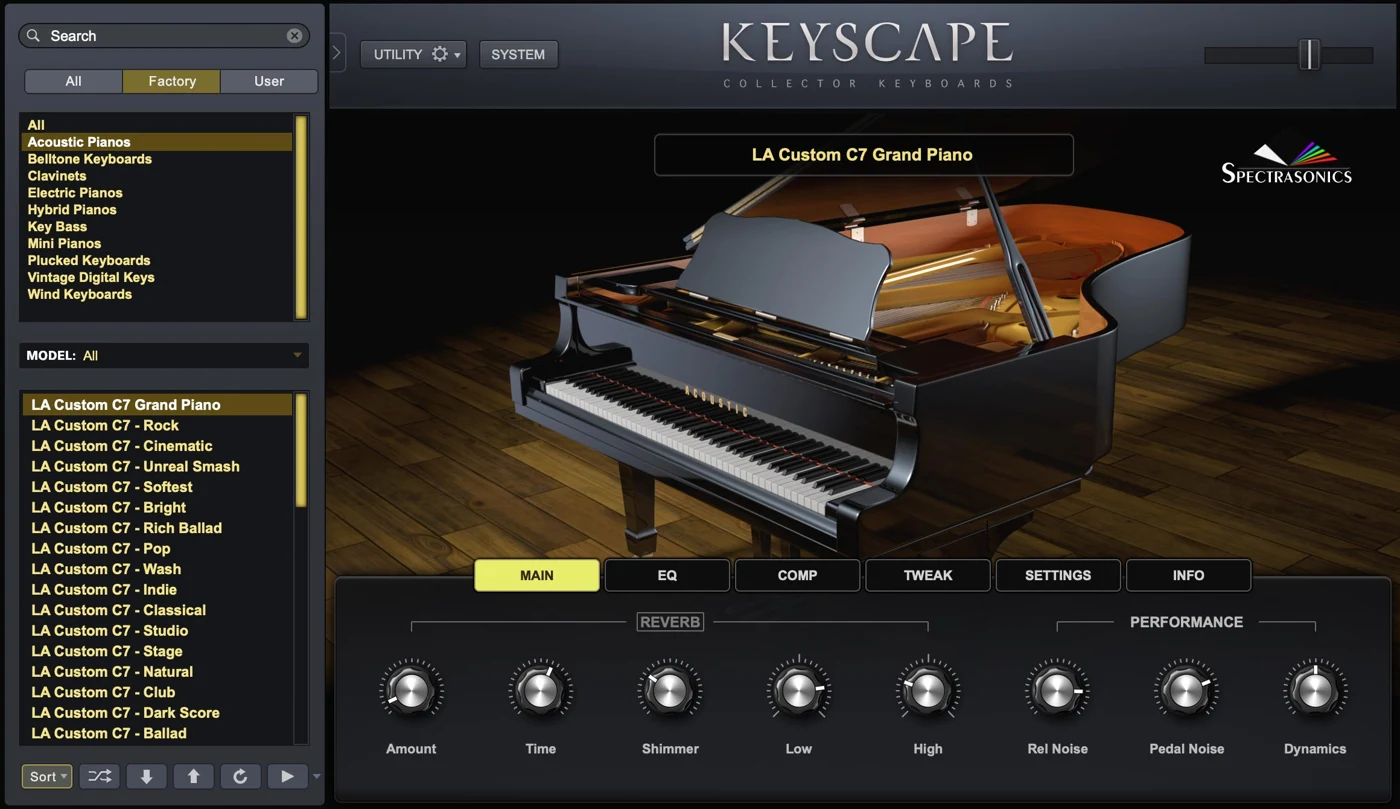
Keyscape is a virtual instrument built around recordings of acoustic and electric keyboards. Its sample-based sound sources run in Spectrasonics’ STEAM engine, with additional behavior modeling and processing. That distinction matters: Keyscape is not a purely physically modeled piano, and STEAM does not make every sustained chord continuously “morph” into a new recording.
Our interest in Keyscape is the range of keyboard identities available in one environment. A grand piano can carry a song, an electric piano can soften its harmony, and a short clavinet or belltone can supply rhythmic detail. If those are recurring jobs in your sessions, a collection becomes more useful than another isolated preset purchase.
It is also worth defining the scope before spending money. Keyscape is not a general-purpose library of orchestral instruments, acoustic drums and synthesizers. Its value depends on how much you use keyboards and whether you want the particular instruments in the collection.
What instruments are in Keyscape?
The official library includes acoustic pianos, electric pianos, clavinets, plucked keyboards, belltones, key basses and vintage digital keys. These examples help show the range without treating every variation as a separate grand piano:
The collection’s grand-piano centerpiece is the LA Custom C7. The included keyboard list is not a Steinway-and-Bösendorfer grand-piano anthology, and it is not a Hammond or Mellotron collection. Buy according to the actual library rather than a generic list of famous keyboard names.
Acoustic pianos: where we would start
For a song with an exposed piano part, we would begin with a relatively plain C7 patch and the arrangement itself. Listen to how the notes end, how sustained chords overlap and whether the instrument occupies too much space beneath a vocal. A more atmospheric preset can be inspiring, but it can hide decisions about voicing and pedal use.
Our take: the acoustic side makes Keyscape a practical songwriting option, but we would not buy the whole collection solely because we need one grand. If piano performance is the main job, compare a dedicated sampled piano with Pianoteq before deciding. Keyscape becomes easier to justify when the electric and character keyboards will also be used.
Production idea: write an eight-bar progression with one clear top note acting as a melody. Keep the lowest chord tones out of the bass line’s register, then add ambience only after the harmony works with drums and vocal.
Rhodes-style electric pianos: a strong reason to shortlist it
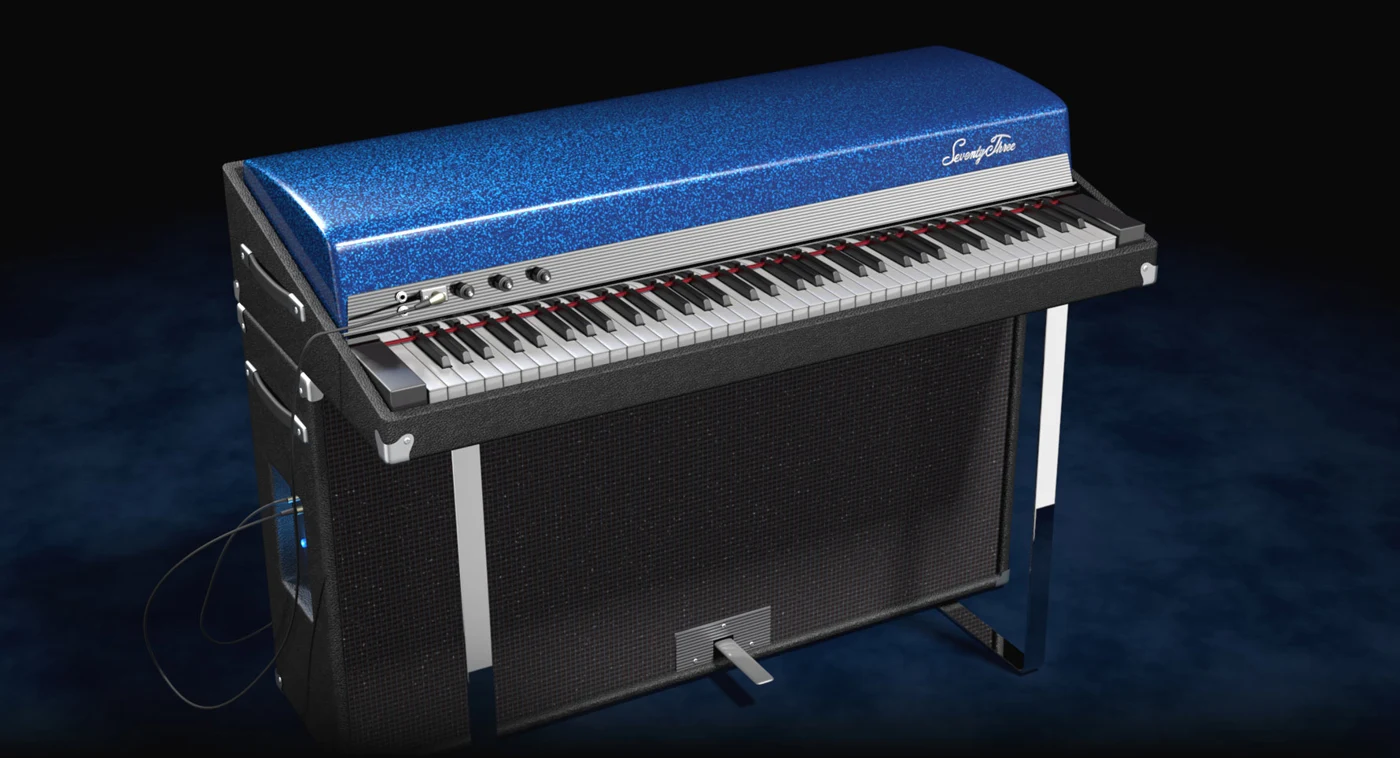
The collection includes a Classic Mark I and the modified LA Custom “E” Rhodes. Spectrasonics describes the latter as a sampled, modified Suitcase instrument with specific voicing and preamp changes. These are particular keyboard identities rather than a promise that any generic Rhodes preset will sound the same.
We would use electric piano when a part needs a softer attack than a bright grand, while still providing rhythmic definition. The decision is often about the arrangement: dense chords, a moving bass and a busy vocal may need fewer notes and a shorter release rather than another layer of chorus.
Our take: this is one of the more compelling reasons to buy Keyscape as a collection. For producers moving between piano-led pop and electric-piano-led R&B, the contrast is useful. If electric piano is your only requirement, Lounge Lizard EP-5 offers a more focused alternative with a very different modeling approach.
Production idea: build a mellow chord loop with a clear melody note on top. Vary note velocities deliberately and shorten the lower notes first if the harmony becomes muddy. Add a little movement only after the dry part has a defined rhythm.
Wurlitzer-style keys: rhythm before density
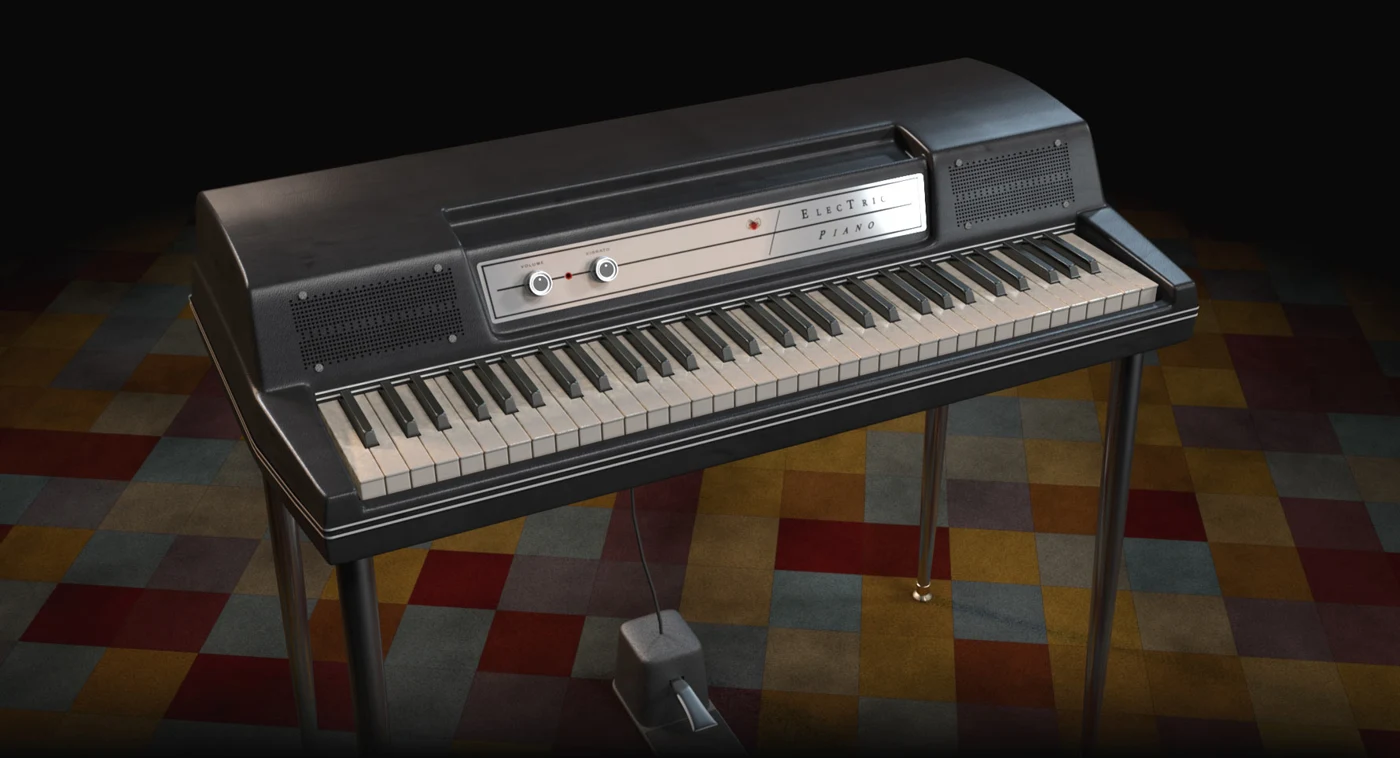
Keyscape includes both Wurlitzer 140B and 200A instruments. For the 140B, Spectrasonics documents direct output, internal speaker and recorded mechanical key sound. Those options are meaningful because the recording perspective and processing can alter the role the keyboard plays in an arrangement.
Our preference for a rhythmic electric-piano part would be to work on note length before chasing a more dramatic preset. Short chord stabs can leave room for the snare and vocal; long, heavily processed chords can blur that relationship. The useful question is whether the keyboard supplies harmony, rhythm or both.
Our take: having a contrasting electric-piano family adds more value than simply accumulating near-identical grand-piano presets. We would audition it alongside the Rhodes options using the same MIDI phrase and similar listening levels, then choose according to the groove.
Production idea: play short offbeat chords and leave one beat empty at the end of the phrase. Try a restrained tremolo treatment, then listen in mono to check that the rhythmic figure still reads clearly.
Character keyboards and Duo patches
Celeste, Dulcitone, clavinet-style instruments, small pianos and vintage digital keys provide alternatives to the usual grand-plus-pad arrangement. Keyscape also includes preset Duo combinations of two instruments.
We would treat these as sources of contrast. A quiet belltone playing only the end of a melody can add more identity than a thick layer running through the entire song. Likewise, a clavinet-like attack can become a rhythmic hook without competing with the main keyboard.
Our take: the unusual instruments help justify the collection for composers and producers who enjoy changing the character of a part. They offer less value if you only ever open one familiar piano preset. Find a genuine use for the range before making breadth your reason to buy.
Keyscape workflow: what matters in a real session
Set the velocity response before judging the instrument
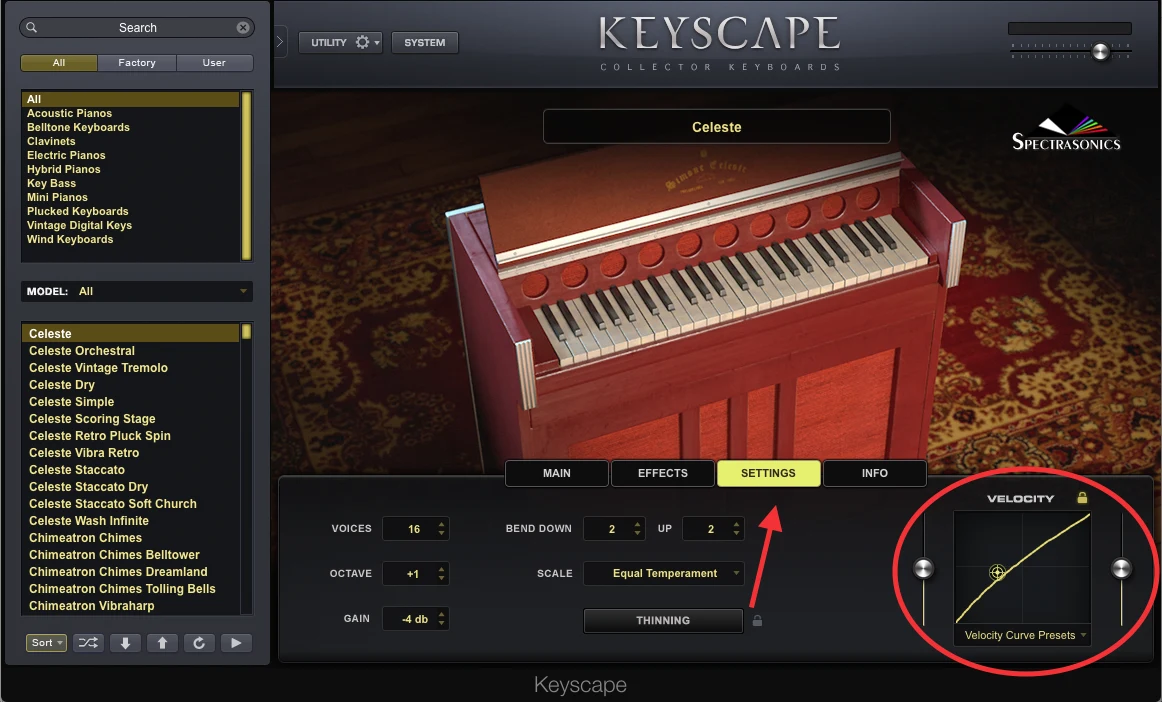
Keyscape includes adjustable velocity curves and controller presets. Spectrasonics places these settings in the lower-right area of each instrument’s Settings window. You can also lock the curve so the response remains consistent when switching patches.
This is the first setup task we would do. Play softly, at a normal intensity and firmly. If ordinary playing reaches the hardest sound too easily, adjust the response. If the instrument stays too restrained even with a strong touch, make the curve easier to reach. A detailed sample library cannot compensate for an unsuitable controller response.
If you draw notes in a piano roll, make intentional differences between melody, accompaniment and passing notes. Random velocity changes are not a substitute for a musical hierarchy. Keep the main phrase clear before adding small variations.
Choose the patch, then shape its role
Keyscape’s controls vary by patch. That is useful when the available adjustments relate to the instrument rather than forcing every keyboard into the same generic control panel.
Our workflow would be to choose the keyboard family first, audition a few suitable patches and stop browsing once one supports the song. Then adjust the part’s brightness, dynamics and ambience as needed. A beautifully processed preset may require fewer notes, while a dry patch may leave more room for your own effects.
Keep performance detail proportional to the mix
Mechanical, pedal and release detail can help an exposed keyboard part feel less sterile. In a busy beat, the same detail may only add clutter. We would keep more of it for sparse songwriting and reduce it when the instrument is supporting several other parts.
Use the whole mix as the judge. A keyboard that seems slightly plain alone may be the right choice once the vocal, bass and drums enter. Avoid assuming that the most detailed or widest preset is automatically the best one.
Does Keyscape need Omnisphere?
No. You can use Keyscape as its own plugin or standalone instrument. Omnisphere is an optional additional purchase.
For owners of both, Keyscape appears within Omnisphere as a satellite library. This adds routes into layering, splits and deeper synthesis. The separate Keyscape Creative library provides transformed sounds for that combined setup; it is not the same as the ordinary Keyscape keyboard collection.
Our take: if you already use Omnisphere regularly, integration makes Keyscape more flexible. We would not buy both instruments just to obtain a conventional piano part. Start with the instrument that solves the present job, then consider the combined system if sound design becomes part of that job.
For a broader synthesis comparison, see our Serum 2 vs Omnisphere 3 guide. Our synth VST shortlist also helps distinguish keyboard collections from instruments designed around synthesis.
Keyscape price: what does it cost?
At our 6 October 2026 check, Spectrasonics listed Keyscape Download at $399. Its buying page also listed the boxed edition at $399 / €349 through dealers. Treat those as the listed reference prices, not a guarantee of your local checkout total: taxes, currency, delivery and dealer offers can differ.
Omnisphere ownership does not make Keyscape included. Do not budget around an Omnisphere-owner discount unless a current authorized offer explicitly gives you one. Check the offer and its eligibility before assuming a reduced price.
Our buying advice is to compare the complete delivered price and the authorization requirements, not only the biggest advertised percentage. Spectrasonics sells downloads directly and directs boxed purchases through its authorized reseller network.
Storage, compatibility and the Full or Lite installation
Keyscape is a substantial sample library. Spectrasonics’ installation knowledgebase lists approximately 80 GB on Mac and 75 GB on Windows for Full, or 29 GB and 27 GB for Lite. The different figures reflect platform reporting and installation details; leave additional space for the installation process and normal drive use.
Lite is an installation option within Keyscape, not a separate budget license. It includes fewer keyboards while retaining the quality of the included samples. Choose Full if the unusual instruments and broader collection are part of your reason to buy; choose Lite only after checking that its instrument selection covers your needs.
The current official requirements list 64-bit hosts, macOS 10.15 or later, and Windows 10 or later, with VST3/VST2 and AAX formats plus AU on Mac. Spectrasonics lists native Apple Silicon support, recommends an SSD and recommends at least 8 GB of RAM. These are compatibility guidelines, not a guarantee of low-latency performance in every large session.
We would plan around the session, not just a minimum specification. Several sustained keyboard parts alongside other sample libraries can create a different workload from one simple piano. Keep the library on a reliable, fast drive, confirm the current requirements for your exact setup and render completed parts when further live editing is unnecessary.
Keyscape alternatives: what should you compare?
The alternatives below address different buying reasons. They are not interchangeable versions of Keyscape, and they do not all include the same instruments.
Lounge Lizard EP-5: compare it for electric piano
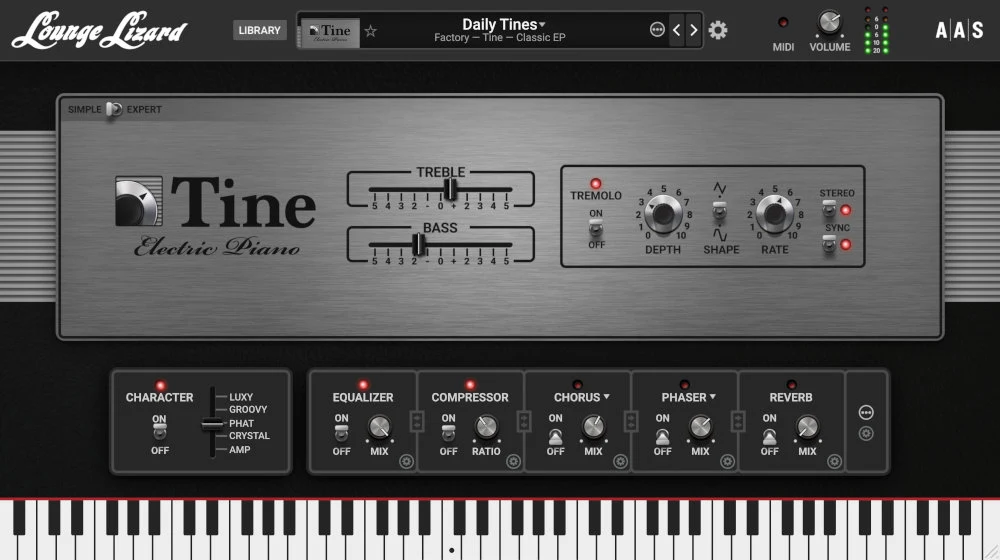
Lounge Lizard EP-5 uses physical modeling with dedicated tine-based and reed-based engines. It lets you work on the components that produce the electric-piano sound rather than selecting recordings from a large keyboard collection. Its compact installation and trial make it a practical alternative to audition.
SoundShaper verdict: we would compare it first if the actual requirement is Rhodes-style or Wurlitzer-style electric piano. A focused instrument is easier to justify than a collector library you will barely explore. Choose Keyscape if its specific sampled keyboard identities and acoustic instruments are equally important.
Production idea: create one dry electric-piano patch and adjust its touch response until soft chords and accented notes feel clearly different. Then add a subtle effect treatment rather than beginning with several effects at once.
Analog Lab Pro: compare it for broader preset variety
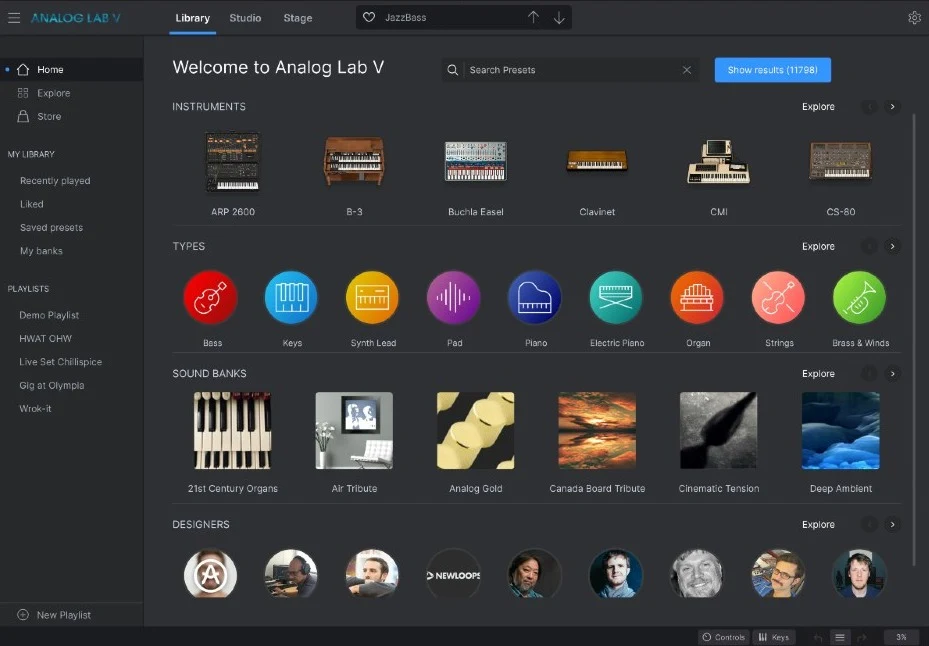
Analog Lab Pro brings keyboard, organ and synthesizer presets into one browser, with accessible controls and effects. It is a different proposition from a dedicated sampled collector-keyboard instrument. Arturia’s deeper preset editing depends on ownership of the corresponding instrument, so do not confuse Analog Lab with owning every full synth in V Collection.
SoundShaper verdict: this is the more relevant comparison when you need many kinds of sound for beat-making, not only a particular piano collection. We would prefer Keyscape for a keyboard-centered purchase and Analog Lab for broader preset browsing. Compare the sounds you actually need, rather than counting presets.
Production idea: use one keyboard preset for the chords and a contrasting synth preset only for the hook. Keep them in different registers so the broad library leads to a clearer arrangement instead of unnecessary layering.
If you are comparing preset environments more broadly, our Analog Lab vs UVI Workstation article covers their different roles.
Pianoteq 9: compare it for a piano-first purchase
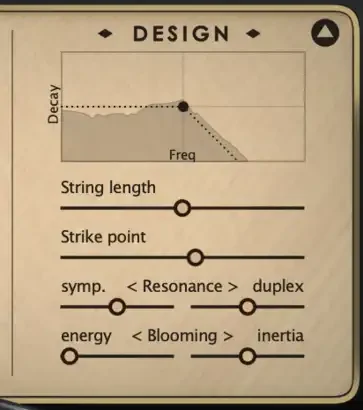
Pianoteq 9 generates instrument sound through physical modeling rather than a large sampled library. Modartt offers different editions and selectable instrument packs. The more detailed editing options vary by edition, so compare the package you would actually buy.
SoundShaper verdict: we would put it alongside a dedicated sampled piano when expressive piano playing, storage and model adjustment matter more than owning Keyscape’s specific collection. It is not a one-to-one replacement for every Keyscape keyboard. Its evaluation version gives you a useful way to assess the response with your own controller.
Production idea: play the same passage softly and firmly with minimal effects. Focus on whether the response supports your touch and phrasing before exploring more elaborate sound adjustments.
Is Keyscape worth it? Our verdict
We would shortlist Keyscape for producers who repeatedly move between acoustic piano, vintage electric piano and more unusual keyboard colors. The strongest reason to buy is that several parts of the collection solve recurring jobs, not that one famous preset appears in other producers’ sessions.
For a keyboard-led songwriter or an R&B producer who also uses acoustic piano, the collection has a clear purpose. For a composer who needs small, distinctive keyboard accents as well as conventional accompaniment, the less familiar instruments can add value. Owning Omnisphere can extend that usefulness, but it is an optional advantage.
We would hold off if the keyboard appears only occasionally, if storage is already tight or if one narrow sound is the actual need. Start with your existing DAW instruments and compare a specialist. Paying for a broad collection makes sense only when you use its breadth.
- Why buy: several distinct sampled keyboard families, patch-specific controls and optional Omnisphere integration.
- Why compare first: a large installation, a significant purchase and no downloadable pre-purchase demo.
- Our decision rule: identify three keyboard roles in your own music that the collection would cover. If you can only name one, audition a narrower alternative before buying.
Keyscape FAQ
Can I use Keyscape without Omnisphere?
Yes. It works independently as a plugin and standalone instrument. Omnisphere adds optional integration for owners of both; it is not required to play the regular Keyscape library.
Is Keyscape included with Omnisphere?
No. They are separate purchases. Their integration should not be confused with an included license.
Does Keyscape have a free trial?
Spectrasonics does not offer a downloadable Keyscape demo. It suggests contacting an authorized local dealer to arrange a demonstration. Our advice is to hear the instrument with the kinds of parts and touch response you actually use, whenever a dealer demonstration is available.
Is Keyscape sample-based or physically modeled?
Its core keyboard sounds are sample-based, with additional modeling for aspects such as mechanical behavior and processing. That differs from an instrument such as Pianoteq or Lounge Lizard, which generates its core instrument sound through physical modeling.
Does Keyscape work in FL Studio?
Yes, on a supported system using a compatible plugin format. Install and authorize it, add its location to FL Studio’s plugin search if necessary and rescan. Verify the current Spectrasonics requirements for your operating system and host version before buying.
Is Keyscape Lite a cheaper version?
No. Full and Lite are installation choices for the same product. Lite installs a smaller set of keyboards, rather than being a separately sold low-cost edition.
Can I install the library on an external SSD?
Yes. Spectrasonics supports installing the library on a secondary or external drive and recommends an SSD. Keep the drive connected and accessible when opening sessions that use the library.
How we researched this guide
This is a research-based editorial buying guide. We checked Spectrasonics’ current product, purchase and support pages and the official information for each alternative. The SoundShaper verdicts explain how we would make the buying decision; we do not claim that every instrument was personally tested or that we measured comparative latency, CPU load or audio quality. Production ideas are suggested exercises.
Images are developer or retailer product materials, including clearly labeled interface details and instrument artwork. They may show different versions or patches from your installation. Price information reflects our stated check date; follow the product links for current offers and requirements.
Sources: Keyscape overview and FAQ · keyboard library · official price · Full and Lite installation · velocity setup · Keyscape Creative · Lounge Lizard EP-5 · Analog Lab · Pianoteq 9.
![[background image] image of recording equipment (for a musician & band)](https://cdn.prod.website-files.com/68efa70811edd8e5af30a90d/6acd43b8998701bbde84e11a_Best%20Export%20Settings%20for%20FL%20Studio.png)
![[background image] image of recording equipment (for a musician & band)](https://cdn.prod.website-files.com/68efa70811edd8e5af30a90d/6acd3f9347bd0dd62b202621_ShaperBox%203%20vs%20Infiltrator%202.png)
![[background image] image of recording equipment (for a musician & band)](https://cdn.prod.website-files.com/68efa70811edd8e5af30a90d/6acd3d99fa68785e0f58960e_Kontakt%208%20vs%20Decent%20Sampler.png)