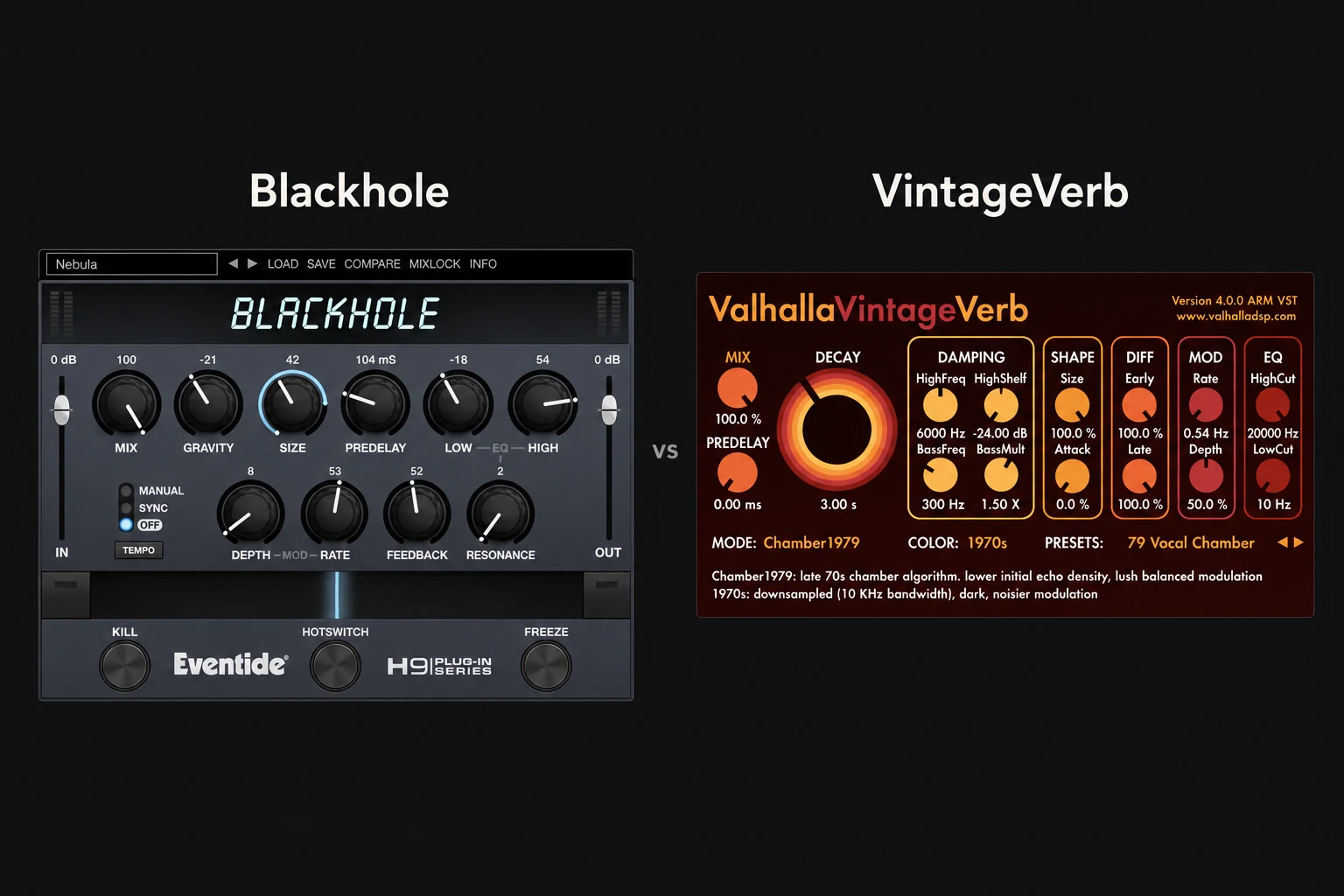

We would buy Valhalla VintageVerb first for a versatile reverb covering different mixing tasks. We would investigate Blackhole first when the reverb needs to become a distinct texture, swell or transition. VintageVerb offers a selection of reverb characters; Blackhole centres on shaping and performing its spatial effect.
That is a starting recommendation, not a strict limit. VintageVerb can make enormous ambient spaces, and Blackhole can be used quietly behind a source. The useful question is what you want to do with the tail.
This comparison covers the standard desktop Blackhole plugin, rather than Blackhole Immersive or the hardware pedal. It is based on documentation and suggested workflows, not a controlled listening or CPU test.
Which reverb fits your next purchase?
| Your main goal | Our first trial choice | What to evaluate |
|---|---|---|
| One reverb for vocals, drums, instruments and different room characters | VintageVerb | Compare its range of algorithms on your regular mix tasks. |
| A reverb that becomes a moving texture or transition | Blackhole | Investigate Gravity, performance controls and sustained effects. |
| Long ambient tails | Try either | Choose by the shape and movement you want, not just decay length. |
| You already have a versatile reverb | Blackhole may add a different workflow | Buy it for a repeatable creative role. |
| You mostly need a little depth behind a lead | Use your existing reverb first | A specialised effect is not automatically necessary. |
If you do not yet have a paid reverb, start with your everyday needs. If those are already covered, a second purchase should add a particular sound or way of working.
VintageVerb: choose a reverb character, then shape it
Valhalla lists 22 reverb algorithms and three Color settings: 1970s, 1980s and Now. The algorithm choices include halls, plates, rooms, chambers and more unusual spaces. Color changes the era-related tonal behaviour rather than simply changing the interface palette.
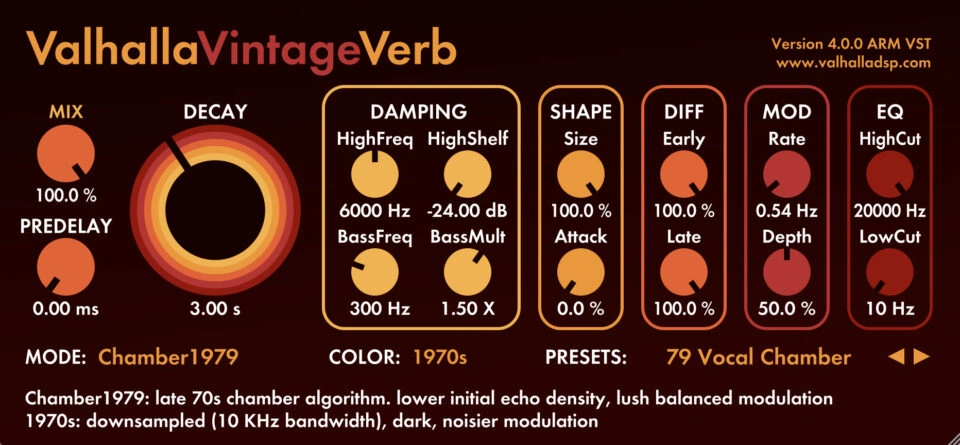
We would start here when a session needs several kinds of ambience: a restrained vocal space, a different treatment for a snare and a longer wash behind a synth.
Pick an algorithm for the job before spending a long time adjusting individual controls. Compare a few candidates with the same phrase and a similar wet level. Then refine the one that leaves the source where you want it in the mix.
For a lead vocal, our first question would be whether the words stay clear. For a snare, it would be whether the effect supports the groove without filling every gap. The algorithm with the most impressive solo tail is not necessarily the best choice.
Our VintageVerb vs Room comparison looks at another buying decision within Valhalla's range.
Blackhole: make the reverb part of the arrangement
Blackhole combines Size, Gravity, modulation and feedback with Freeze, Kill, a Ribbon and Hot Switch. Eventide describes Gravity as changing the decay's direction, while the performance controls let you change combinations of parameters together. Mix Lock keeps the wet/dry balance fixed while browsing presets.
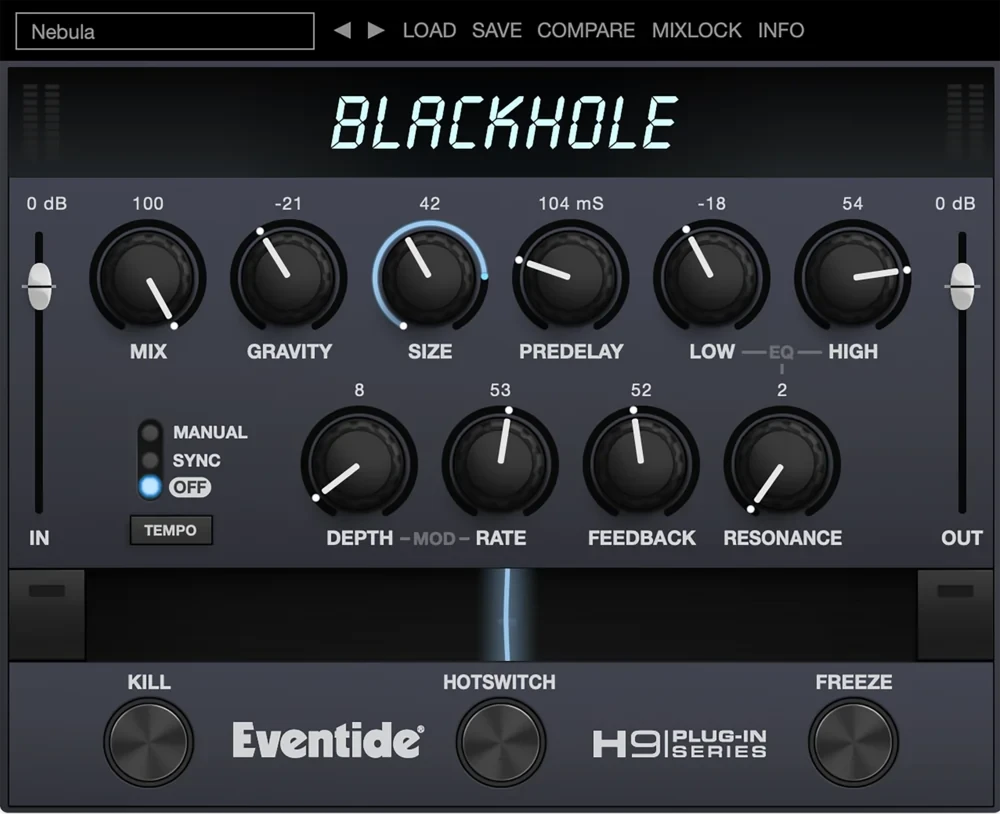
That gives us a reason to try Blackhole for a transition rather than another static ambience. Imagine the final chord of a verse expanding into the gap before a chorus. The effect has an active role: it needs to develop, then leave room for the next section.
We would choose two useful states and compare the movement between them. Keep the beginning controlled and make the destination deliberate. Changing every parameter constantly can distract from the musical build.
For a sustained texture, introduce a small amount of source material and listen to what the tail contributes. Do not keep sending a dense arrangement into the effect simply because the resulting wash sounds large.
Read our Blackhole review for more on its creative buying case.
Ambient music: either can be the right choice
We would not choose Blackhole solely because the project is ambient. A long reverb is one ingredient; the source, harmony, movement and arrangement determine whether the texture remains interesting.
With VintageVerb, we would compare a few algorithms on one sustained sound and listen for the character of the decay. With Blackhole, we would spend more of the evaluation on shaping and changing the space over time.
Render a short passage from each and listen without watching the interfaces. Does the tail support the chord change? Does it create a useful sense of movement, or simply continue beyond the moment where you wanted a new section?
Choose the one that helps you control those decisions. There is no need for a universal ambient winner.
Vocals and drums: keep the dry source's job clear
For an everyday vocal reverb, VintageVerb would be our first recommendation to investigate because of its selection of conventional and characterful spaces. We would still try Blackhole if we wanted a separate effect throw, a swell or an unusually diffuse backing layer.
A practical test is the end of a lyric followed by the next line. Listen to the consonants of the new phrase while the previous tail continues. Reduce the wet level, alter the timing or shorten the source sent to the effect if the words become less clear.
For drums, preserve the rhythm as your reference. An expansive treatment on one hit may add contrast; the same treatment on the whole kit can make the groove harder to read.
We would compare a short snare passage, then a full chorus. The result should work in context before it earns a permanent place in the project.
Using either reverb on a send in FL Studio
A send gives you a separate place to control the reverberated layer. Route audio from the source's Mixer track to another track containing the reverb, and use the send amount and return level to balance it.
For a conventional parallel setup, make the reverb return fully wet so the original dry signal stays on the source track. Avoid routing the return back into itself unless you deliberately intend a feedback setup and understand the routing.
Start with one source. Once it works, decide whether other parts should share the same ambience. Separate sends may make more sense when a vocal space and a dramatic transition need independent control.
These are general routing suggestions, not a claim that either plugin requires send use. Inserts are also useful when you want to process the whole source directly.
A two-task comparison that reveals the difference
Task one: restrained support. Use a clean phrase and create a modest sense of space. Compare at a similar wet level and check that the phrase remains clear.
Task two: an arranged effect. Use a single chord or vocal ending to create a transition into a new section. The effect should develop and resolve at an intentional point.
After each task, make a revision: less brightness, a quieter tail or a different sense of movement. Notice which controls make those changes straightforward for you.
We would judge the purchase by both tasks, rather than comparing only the largest presets. If your current reverb already handles the first task, the second may explain why you want Blackhole.
Price, demos and choosing the right product
Valhalla lists VintageVerb at $50 USD. Check the final checkout total for currency and tax. For Blackhole, compare the current full-plugin price with the offers available to you; do not confuse the standard plugin with Immersive, an iOS purchase or the pedal.
Both developers provide demo options. Eventide currently lists a 14-day Blackhole demo and requires an iLok account, with no physical dongle necessary. Review the current activation instructions for your setup.
Check each developer's latest operating-system and plugin-format requirements before purchasing. We have not measured CPU use, so test a representative project if you expect to use several long reverbs at once.
Price and product information were checked on 27 October 2026. The cheaper checkout is not automatically the better buy if you need the other product's workflow.
SoundShaper opinion
VintageVerb would be our first purchase recommendation for someone building a small collection of versatile mixing tools. It gives you several reverb characters to evaluate across different sources.
Blackhole would be our first recommendation to investigate when ordinary reverb duties are covered and you want to perform the space. Its controls give that second purchase a defined creative role.
We would not buy both just to cover “normal” and “huge.” Each can work beyond that simple division. Buy the second when a specific task or way of controlling the tail makes it useful.
Conclusion
Choose VintageVerb first for a broad selection of reverb characters. Choose Blackhole first for a focused spatial-effect workflow built around shaping and movement.
Try the same source in both, then compare how easily you can revise the result inside the song. That is the more useful buying test.
Sources
Checked on 27 October 2026 against Eventide's Blackhole product and compatibility information, Valhalla DSP's VintageVerb information and the linked Plugin Boutique listing. Product images: Eventide and Valhalla DSP. Listening tasks, routing suggestions and buying recommendations are SoundShaper's editorial advice.