


Battery 4 and Atlas 2 are both built for drum samples, but they solve different problems. Battery 4 is a deep cell-based sampler for producers who already know which sounds they want and need serious per-sample editing, layering, effects and routing. Atlas 2 is built for producers whose sample library has become too large to browse efficiently and who want visual sample discovery connected directly to a drum sequencer.
My short answer: choose Battery 4 if your main job is shaping and mixing a drum kit. Choose Atlas 2 if your main job is finding the right samples and turning them into a beat quickly.
The price comparison is more interesting than it first looks. Battery 4 costs $199 standalone, but Komplete Select Beats currently costs $99 and includes Battery 4 plus several other Native Instruments and iZotope tools. Atlas 2 also costs $99. So for a new buyer, the smart comparison is effectively $99 vs $99.
| Decision | Battery 4 | Atlas 2 |
|---|---|---|
| Best for | Deep drum sampling, layering, effects and routing | Visual sample discovery, kit generation and beat sequencing |
| Smartest purchase route | Komplete Select Beats at $99 | Atlas 2 at $99 |
| Standalone price | $199 | $99 |
| Sample discovery | Traditional browser with tags and text search | AI-assisted visual Sample Maps |
| Sequencer | No dedicated built-in pattern sequencer | Full drum sequencer with MIDI/audio export |
| Per-sample editing | Deeper | Good, but more workflow-focused |
| Effects / routing | Excellent cell, group, bus and master processing | More focused on kit building and beat creation |
| Factory ecosystem | NI kits, Expansions and Komplete content | Optional 1,500-sample map + Atlas expansions |
| Trial | 30 minutes per session with selected kits | 14 days with all features unlocked |
| My pick if your library is chaotic | — | Atlas 2 |
| My pick if you already know your sounds | Battery 4 | — |
Battery 4 vs Atlas 2: the quick verdict
Battery 4 is the better sampler. Its 128-cell grid, seven sample modes, Time Machine Pro stretching, choke groups, velocity behavior, effects, buses and separate outputs give you much more control over what happens after the sample is loaded.
Atlas 2 is the better sample-finding and beat-making tool. It analyzes your one-shots, creates visual maps, helps generate kits and includes a sequencer that can export MIDI or rendered stems.
The decision becomes very easy when you identify the bottleneck. If your problem is “I cannot find the right kick,” Atlas solves more. If the problem is “I found the kick, but I need to tune, layer, shape and route it properly,” Battery solves more.
Why Battery 4 is still the deeper drum sampler
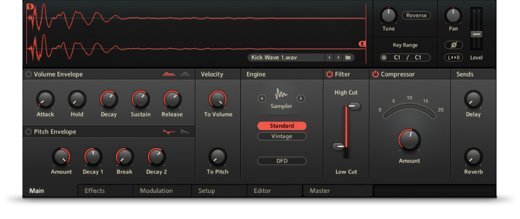
Battery 4 is built around cells. Each cell can hold a drum sound and be shaped independently. You can adjust sample start and end points, envelopes, tuning, velocity response and playback behavior without creating new audio files.
The seven sample modes include classic sampler and groovebox-style behavior, while Time Machine Pro handles stretching. Layering is also a natural part of the workflow: stack a transient-heavy kick with a deeper body layer, or combine a snare with a clap and process them as part of one kit.
My take: Battery makes the most sense when I already have a shortlist of sounds and want to turn them into a polished instrument. It is less exciting for browsing, but stronger once the creative choice has already been made.
Read our full Battery 4 review for the detailed sampler, effects and buying breakdown.
Why Atlas 2 is better when your sample library is the problem
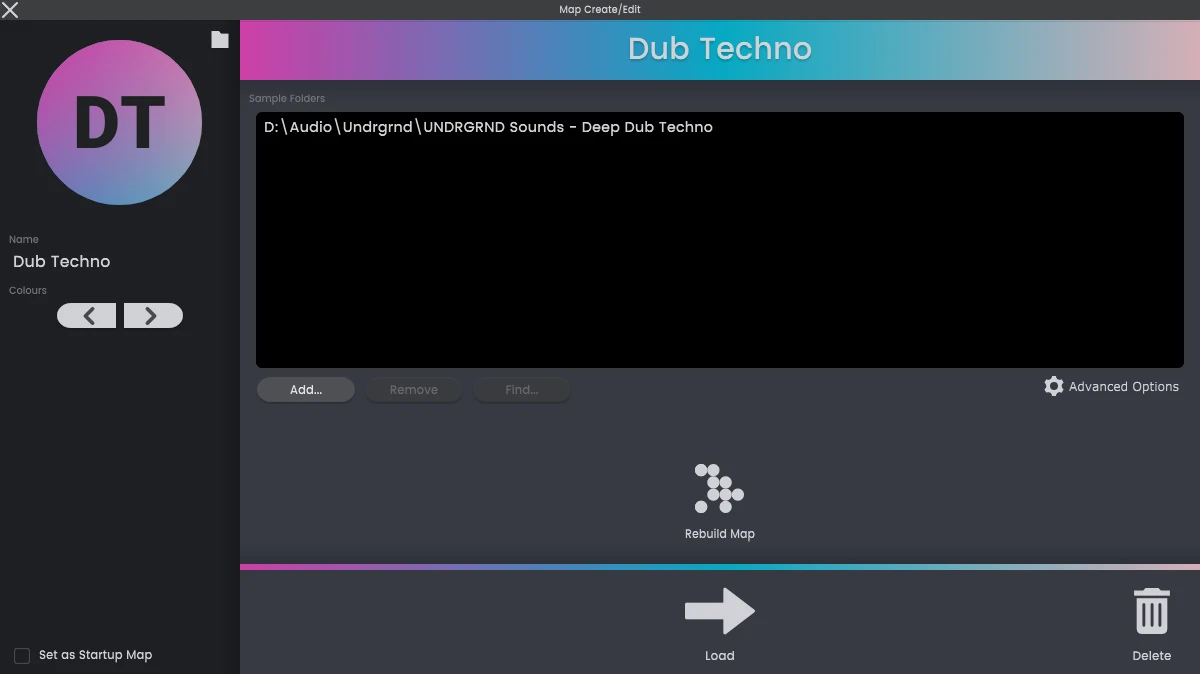
Atlas 2 attacks the opposite side of the workflow. Instead of expecting you to know which WAV file you want, it analyzes the collection and groups related sounds visually.
This becomes genuinely useful once sample folders stop being manageable. A few hundred one-shots are easy to browse manually. Tens of thousands of vaguely named samples across several drives are not.
You can create multiple maps, so one project can use a focused techno collection while another map holds your complete archive.
My take: Atlas is worth buying when your existing samples are good but inaccessible. The product earns its money by making things you already own useful again.
Read our full Atlas 2 review for the Sample Map, kit and sequencer workflow.
Sample editing: Battery 4 wins
Atlas includes practical controls for reversing, pitching, filtering and shaping a sample. That is enough to make a chosen kick or snare fit the kit without immediately leaving the plugin.
Battery goes much further. It is designed as a full drum sampler rather than a discovery system with editing attached. The waveform editor, multiple playback modes, velocity behavior, cell rendering and deeper control make it better for detailed sample manipulation.
If you treat drum one-shots as raw material for sound design, I would choose Battery.
Effects and routing: Battery 4 wins again
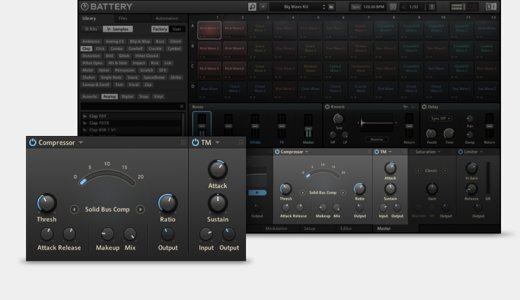
Battery includes tools such as Solid EQ, Solid Bus Comp, Transient Master, tape saturation, LoFi processing and convolution reverb. Effects can be placed on cells, groups and buses, and separate outputs let you send sounds into the DAW for a full mix.
That is a major advantage if Battery is the center of the drum-production workflow.
Atlas is more about getting from sample selection to a complete groove. I would expect to do more of the final mix in the DAW rather than treating Atlas as the final drum-processing environment.
Sequencing: Atlas 2 wins by default
Battery 4 does not include a traditional internal pattern sequencer. You trigger the cells from your DAW, controller or another MIDI source.
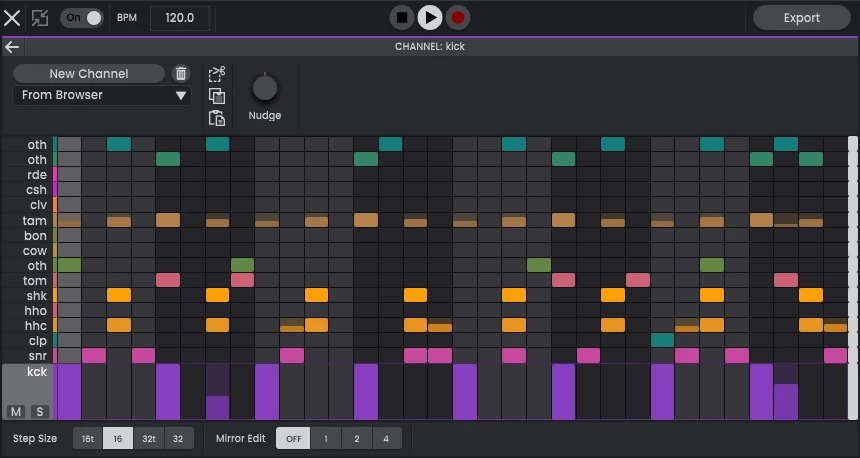
Atlas 2 includes a sequencer designed specifically around drums. It combines step-sequencer speed with more piano-roll-like flexibility, supports MIDI import and recording, different timing resolutions, polyrhythms, variations and MIDI out.
It can also export a sequence as MIDI or rendered audio, including separate stems.
My take: if your DAW already has a drum sequencer you love, Battery's missing sequencer may be irrelevant. If you want sample discovery and groove creation to happen in the same plugin, Atlas is much more complete.
Kit generation and happy accidents: Atlas 2 wins
Atlas can generate kits from the samples in your maps and lets you lock sounds you already like while changing the rest. That makes it useful for finding combinations you would not have built manually.
Battery is more deliberate. You load the samples you want into cells and construct the kit yourself.
Neither method is better musically. Atlas is stronger for inspiration and discovery. Battery is stronger when the producer already has a clear idea.
Your own samples: both are excellent
Both products are designed to work with your own one-shot library rather than forcing you into a closed factory ecosystem.
Battery can load your samples directly into cells, map them to MIDI and save complete custom kits. Atlas can scan your folders, classify the samples and turn them into maps and kits.
The difference is the first step: Battery asks, “which sample do you want?” Atlas asks, “what kind of sample are you looking for?”
Factory content and ecosystems
Battery 4 has a large factory library aimed especially at electronic and urban styles, and Native Instruments Expansions can provide additional Battery kits, loops and one-shots. If you own Komplete, you may already have a substantial Battery ecosystem available.
Atlas includes an optional 1,500-sample map plus free kits, sequences and loops. Algonaut also sells premium expansions containing editable kits, sequences and additional samples.
My take: buy neither primarily for factory content. Both products are most useful when they improve how you work with samples over time.
Price: Battery 4 is $199 — but buying it standalone makes little sense
Battery 4 currently costs $199 standalone at Native Instruments and Plugin Boutique.
The smarter route for a new buyer is currently Komplete Select Beats for $99. That bundle includes Battery 4 plus Massive X Player, Empire Breaks, Duets, Cloud Supply, Latin Trap, Dirt, Bite, Freak, Supercharger GT, Transient Master, Ozone Elements and additional content.
Atlas 2 also costs $99.
| Purchase | Price checked | My view |
|---|---|---|
| Battery 4 standalone | $199 | Poor value while the $99 bundle exists |
| Komplete Select Beats | $99 | The sensible Battery 4 purchase route |
| Atlas 2 | $99 | Straightforward one-product purchase |
That means price should not decide Battery vs Atlas right now. At the smart purchase routes, both cost $99. Choose the workflow.
Trials: Atlas is easier to evaluate properly
Atlas 2 offers a 14-day trial with all features unlocked. That is enough time to scan a real sample library, create several maps and finish a few grooves.
Battery 4's demo lets you work with selected kits for 30 minutes per session. It is useful for judging the interface and editing workflow, but the Atlas trial gives you much more time to evaluate the product in normal sessions.
I would test both with the same ten or twenty drum samples and one real song. In Battery, build and process a kit. In Atlas, import the folder and build the beat from the map. The difference becomes obvious very quickly.
Which one is better for hip-hop, trap and electronic music?
Both fit these genres well because they are fundamentally one-shot drum tools.
I would choose Battery 4 for detailed hip-hop and trap kit construction when I already have specific one-shots in mind and want to layer, process and route them carefully.
I would choose Atlas 2 when I have thousands of kicks, snares, hats and percussion sounds and want the plugin to help surface useful combinations faster.
Genre matters less than how you currently choose your samples.
Which one should you choose?
| Choose Battery 4 if... | Choose Atlas 2 if... |
|---|---|
| You already know which samples you want | Your sample library is difficult to browse |
| You want deeper per-cell sample editing | You want visual sample discovery |
| You layer and process drums heavily | You want a built-in drum sequencer |
| You need detailed effects, buses and separate outputs | You want automatic kit generation and variations |
| You already use Native Instruments / Komplete | You want a standalone sample organization workflow |
| You prefer sequencing in your DAW | You want discovery and sequencing inside one plugin |
Does it make sense to own both?
Yes — more than it might seem. Atlas can be the sample-discovery tool and Battery can be the deeper sampler that receives the final sounds.
You could use Atlas to find the right kick, snare and percussion combination, then drag those samples into Battery for more detailed processing and routing.
I would not buy both immediately, but they solve different enough problems that the combination is not redundant.
Final verdict: Battery 4 or Atlas 2?
Choose Battery 4 if you want the stronger sampler. Its cell workflow, sample modes, effects and routing still make it excellent for building detailed custom drum kits.
Choose Atlas 2 if you want the stronger creative workflow. The visual maps and built-in sequencer solve two problems Battery leaves to your file browser and DAW.
And because Komplete Select Beats and Atlas 2 both currently cost $99, the buying decision is unusually clean: Battery for control, Atlas for discovery.
For the full product-specific breakdowns, read our Battery 4 review and Atlas 2 review.
Frequently asked questions
Is Atlas 2 better than Battery 4?
Atlas 2 is better for sample discovery and sequencing. Battery 4 is better for deep per-sample editing, layering, effects and routing.
How much does Battery 4 cost?
Battery 4 costs $199 standalone. Komplete Select Beats currently costs $99 and includes Battery 4, making that bundle the better purchase route for most new buyers.
How much does Atlas 2 cost?
Algonaut currently lists Atlas 2 at $99.
Does Battery 4 have a sequencer?
No dedicated internal drum pattern sequencer. Battery is designed to be triggered by your DAW, controller or another MIDI source.
Does Atlas 2 edit samples?
Yes. Atlas includes useful sample shaping controls, but Battery 4 goes deeper as a dedicated sampler.
Can both use my own drum samples?
Yes. Both are excellent with personal one-shot collections. Atlas specializes in organizing and discovering those sounds; Battery specializes in loading and processing them.
Which has the better trial?
Atlas 2 offers a full 14-day trial. Battery 4's demo works in 30-minute sessions with selected kits.
Should I buy Battery 4 standalone?
Not at the current listed prices. Komplete Select Beats costs $99 and includes Battery 4, while Battery 4 alone is listed at $199.
Research notes and official references
Prices and product details were checked on October 6, 2026. Recommendations are editorial judgments about workflow and value.
Sources: Native Instruments Battery 4, Battery 4 at Plugin Boutique, Komplete Select Beats at Plugin Boutique, Algonaut Atlas 2 and Atlas 2 trial and downloads.
![[background image] image of recording equipment (for a musician & band)](https://cdn.prod.website-files.com/image-generation-assets/a2fb530f-98f2-4866-a298-1562ce19496d.avif)
![[background image] image of recording equipment (for a musician & band)](https://cdn.prod.website-files.com/68efa70811edd8e5af30a90d/6ad51b453ad0e932c58d82a6_Vintage%20Audio%20Plugins%20Comparison.png)
![[background image] image of recording equipment (for a musician & band)](https://cdn.prod.website-files.com/68efa70811edd8e5af30a90d/6ad51aedbbd6c56e894f3b7b_Kickstart%202%20vs%20Duck%202%20Plugins.png)