

A parallel layer can make a drum loop feel fuller, but the choice gets harder when you want more sustain and a separate amount of grit. Baby Audio IHNY-2 makes sense when you want to tune one compressed copy in detail and blend it under the dry track. Parallel Aggressor gives compression and saturation their own faders, so you can change one without turning the other up. For drums with a specific recovery time we’d try IHNY-2 first, while Parallel Aggressor is our starting point for adding bass or vocal texture independently.
The comparison uses Baby Audio’s manuals and Plugin Boutique’s U.S. prices checked November 10, 2026. The settings below are starting points to try on the same tracks in your DAW.
IHNY-2 vs Parallel Aggressor Quick Comparison
| Mix decision | IHNY-2 | Parallel Aggressor |
|---|---|---|
| Internal routing | Dry path and one compressed path | Dry, compressed Spank and saturated Heat paths |
| Setting compression | XY pad plus Attack, Release and Ratio in Tweak | Spank amount, separate level and selectable styles |
| Adding grit | Harmonics responds to gain reduction on the compressed path | Heat is a separate saturation path with its own level and filters |
| Keeping the low end in place | Lo-Preserve reduces compression below the chosen point | Spank’s Sidechain Filter and Heat’s high-pass affect different paths |
| Regular U.S. price | $99 | $69 |
IHNY-2 shapes one compressed layer in detail

The left-to-right movement on IHNY-2’s pad changes compression intensity. The bottom-to-top movement changes the balance between dry and wet. Build the processed sound with Solo or a high wet blend first, then lower the node until the dry attack is back in front. That gives you a clearer idea of what the compressor is doing than moving both axes at once.
Open Tweak when the main pad gets you close and the wet signal still needs a particular adjustment. Attack and Release let you shape the front of a hit and its recovery. Punch emphasizes transients on the compressed path. Harmonics follows gain reduction, so its effect can change when you drive the compressor harder. Use it when the grit should rise and fall with the processed layer.
Use AGR to recall the behavior of a setting on the same track. It reflects compression and the dry/wet balance together. A change in AGR after moving only the blend is expected. Use Output to match bypass and listen to the transient and sustain separately when you compare IHNY-2 with another processor.
Parallel Aggressor blends three paths with separate faders
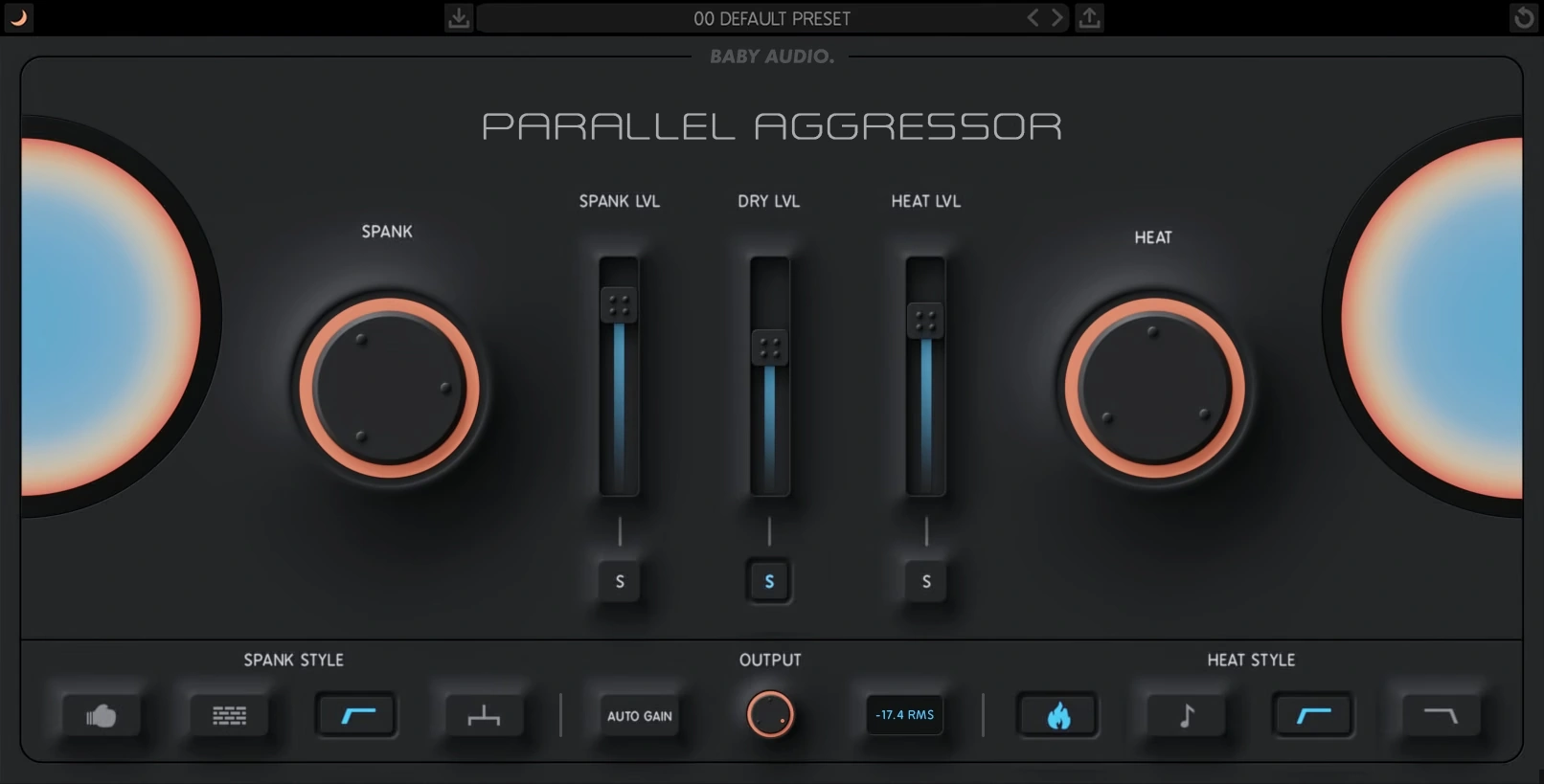
Dry is your original track, Spank is the compressed copy and Heat is the saturated copy. The two big knobs change how hard the processors work. The Spank Lvl and Heat Lvl faders change how much of each result you hear. Turn a fader down when you like the texture and want less of it. Turn the corresponding big knob down when the texture itself is too strong.
Spank has style switches such as Extra Punch and Extra Smack. Start with the style switches off while judging the faders. Add Extra Punch if the wet drum attack needs more definition or try Extra Smack when you want a more obvious effect. Heat has its own controls, including Extra Hot for a dirtier distortion sound and HP Filter and LP Filter to shape the processed path. The dry signal keeps its original tone through that branch.
Use the S buttons under the faders to listen to one path at a time. Auto Gain gives you a starting point for overall level. Use Output to match the whole blend against bypass before making a final judgment.
Try both on a drum loop with a loud room sound
Use a four-bar loop with a kick, a clear snare and a room or open hi-hat after the hit. Load the two processors on separate copies or tracks and listen to one at a time. Aim for a similar increase in room and sustain, then match the final output levels. Use what you hear between hits to compare the settings. The two plugins give you different meters and different ways of blending the result.
IHNY-2 lets you time the recovery between snare hits
Move the node right until the room is audible in Solo. Keep Shape and Harmonics neutral on the first pass. Adjust Release while listening to what happens just before the next snare. If the room stays pinned down, try a slightly faster release. If it swells on every kick and distracts from the groove, move back toward a slower setting and lower the wet blend. Turn Solo off and use the vertical position to put the dry snare back out front.
If the kick sounds flattened only after you add the parallel layer, bring in a little Lo-Preserve and check the bottom of the kick with the bass playing. The useful result is a steady bottom under a denser room. If the kick becomes too dominant, ease back the preservation or the whole wet blend.
Parallel Aggressor lets you bring up the room and add texture separately
Keep Dry Lvl at its starting position, bring Heat Lvl down, and start with Spank only. Use the large Spank knob to get the compressed layer sounding right, then use its fader to put it under the dry groove. If the kick makes the wet room dip more than you want, try the Sidechain Filter on Spank. Once the room and kick feel right, bring up Heat Lvl a little and listen for whether it gives the snare more body or just brings the cymbals forward.
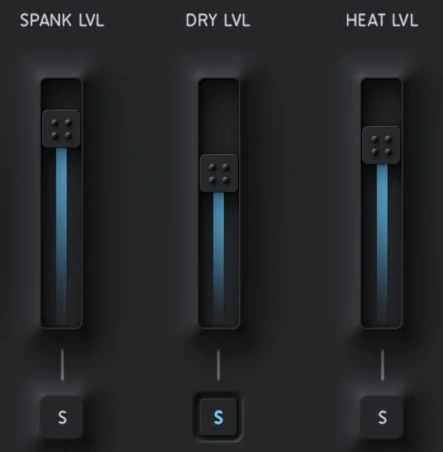
If the drum balance improves when you lower Heat while leaving Spank where it is, that separate path is doing something useful for you. If you still need to fine-tune how the compression releases around the next snare, IHNY-2 gives you a dedicated timing control for that job.
Try the same bass line with and without a separate saturation layer
Choose a bass part with one sustained note that disappears on small speakers and a sharper note that already cuts through. In Parallel Aggressor, keep Spank Lvl down and build a little Heat. Try Heat’s HP Filter to remove low end from the saturated branch. The dry path still carries the original bottom. Bring Heat in until the sustained note is easier to follow, then add Spank only if the part also needs more density.
On the same part in IHNY-2, use a small wet blend and moderate compression. Add a little Harmonics and compare the quiet note with the stronger one. Since Harmonics follows gain reduction, the two notes can gain different amounts of texture. That can suit a performance where the harder notes should sound more colored. If you want to raise the gritty layer while keeping the amount of compression where it is, compare that result with Parallel Aggressor’s separate Heat fader.
Check the same choice on a backing vocal
Loop a backing vocal with a held vowel and a loud S. In IHNY-2, build a modest wet layer and bring it in low while the lead plays. Try adjusting Release so the vowel carries into the gap and the consonant stays behind the lead. Leave Shape neutral during that comparison. If the stack gains enough body with compression alone, use that as the reference.
On Parallel Aggressor, make a similar blend using Spank. Raise Heat only until the words become a little easier to pick out. If that layer makes the S jump, try the LP Filter on Heat or reduce Heat Lvl while holding Spank steady. Check the level after each change. If you consistently want one layer for sustain and one for edge, the three-fader workflow is the reason to choose Parallel Aggressor.
Check the balance when you bring the rest of the mix back
Keep an eye on the center of a wide drum loop
Parallel Aggressor can make the Spank path mono. On a wide drum loop, try that switch with Heat low and the dry path still audible. Listen to whether the room layer now supports the center while the dry cymbals keep their width. If the dry kit starts to feel narrower than you want, lower Spank Lvl or return it to stereo. The decision is about where you want the extra sustain to sit in the mix.
For different send amounts from kick, snare and room, use a separate DAW return. Set IHNY-2 to its fully processed path there, or turn Parallel Aggressor’s Dry Lvl fully down and blend Spank and Heat. Otherwise the return also adds another dry copy, changing the source balance before compression contributes anything. Keep the source tracks routed normally and adjust the return level to blend the effect.
Conclusion
Choose IHNY-2 for control over a compressed layer
We’d buy IHNY-2 if we regularly tune the attack and release of a parallel drum sound, or want to use Punch and Lo-Preserve without building another return. Plugin Boutique listed $99 regular and $39 through December 9, 2026 when checked on November 10. The full Baby Audio IHNY-2 review goes further into the XY pad and working with a stock compressor on an aux.
Choose Parallel Aggressor for separate control of grit and density
We’d start with Parallel Aggressor if we frequently want to add saturation to bass or vocals and keep a different amount of compression on the same track. Plugin Boutique listed $69 regular and $29 through December 9, 2026 on the same check. Use the drum and bass examples to decide which workflow solves the problem you encounter most. For other choices, see our compressor plugins under $100 guide.
Baby Audio’s control documentation
XY pad, AGR and Tweak controls. IHNY-2 manual
Spank, Heat, level faders and the three-path signal flow. Parallel Aggressor manual


