
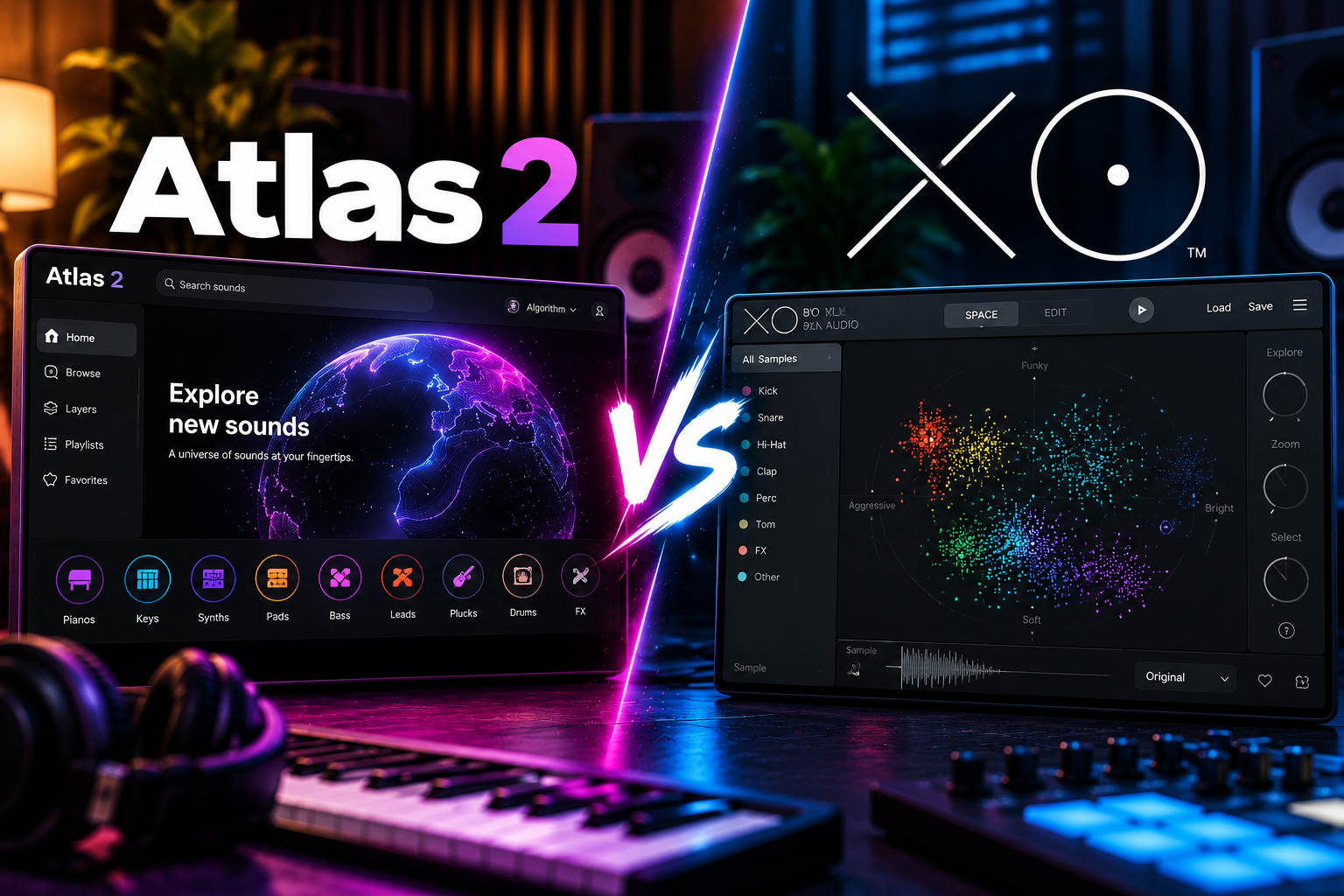

Atlas 2 and XLN Audio XO are two of the strongest tools for producers who are tired of digging through folders full of drum samples. Both analyze your one-shot library, place similar sounds close together visually and connect sample discovery to beat creation. But the workflow is not identical.
My short answer: choose Atlas 2 if your own sample library is the main thing you want to organize and you want a more flexible drum-kit and sequencing workflow around it. Choose XO if you want the more polished all-in-one experience with a large factory library, Groove Templates, Accentuator and a very fast eight-slot beat workflow.
Price makes the decision unusually close today. On October 6, 2026, Atlas 2 is $99. XO normally costs $149, but XLN Audio is currently running a 40% sale that puts XO at $89.40 through October 6. After the sale, Atlas is the cheaper option again.
| Decision | Atlas 2 | XLN Audio XO |
|---|---|---|
| Best for | Large personal sample libraries, custom kits and flexible sequencing | Fast beat making, polished workflow and strong included factory content |
| Regular price | $99 | $149 |
| Current price | $99 | $89.40 through Oct. 6, 2026 |
| Trial | 14 days, all features unlocked | 10 days |
| Factory content | Optional 1,500-sample map plus free kits, sequences and loops | 8,700+ one-shots and 240+ editable beat presets |
| Sample organization | AI-assisted visual maps with multiple maps | XO Space sorts samples visually by similarity |
| Sequencer | Flexible drum sequencer with MIDI import/export, polyrhythms and custom layouts | Fast beat sequencer with Groove Templates, Accentuator, Nudge and Playground |
| Kit workflow | Configurable pad layouts and broader drum-kit control | Focused eight-slot beat workflow |
| Best reason to choose | You want your own samples to become the center of a flexible drum instrument | You want the quickest polished path from browsing to a finished beat |
Atlas 2 vs XO: the quick verdict
Atlas 2 gives you more control over the drum instrument itself. You can build multiple visual maps, configure pad layouts, generate kits, edit individual samples, sequence detailed patterns and export MIDI or rendered audio. It feels like a sample browser, drum sampler and sequencer combined.
XO feels more streamlined and immediate. The XO Space is extremely easy to understand, the factory library is much larger, and the groove tools are designed around getting an eight-part beat moving quickly.
Neither product wins because its visual map looks better in screenshots. The real test is how fast you can go from “I need a kick and snare” to “this groove belongs in the track.”
Why Atlas 2 is better for large personal sample libraries
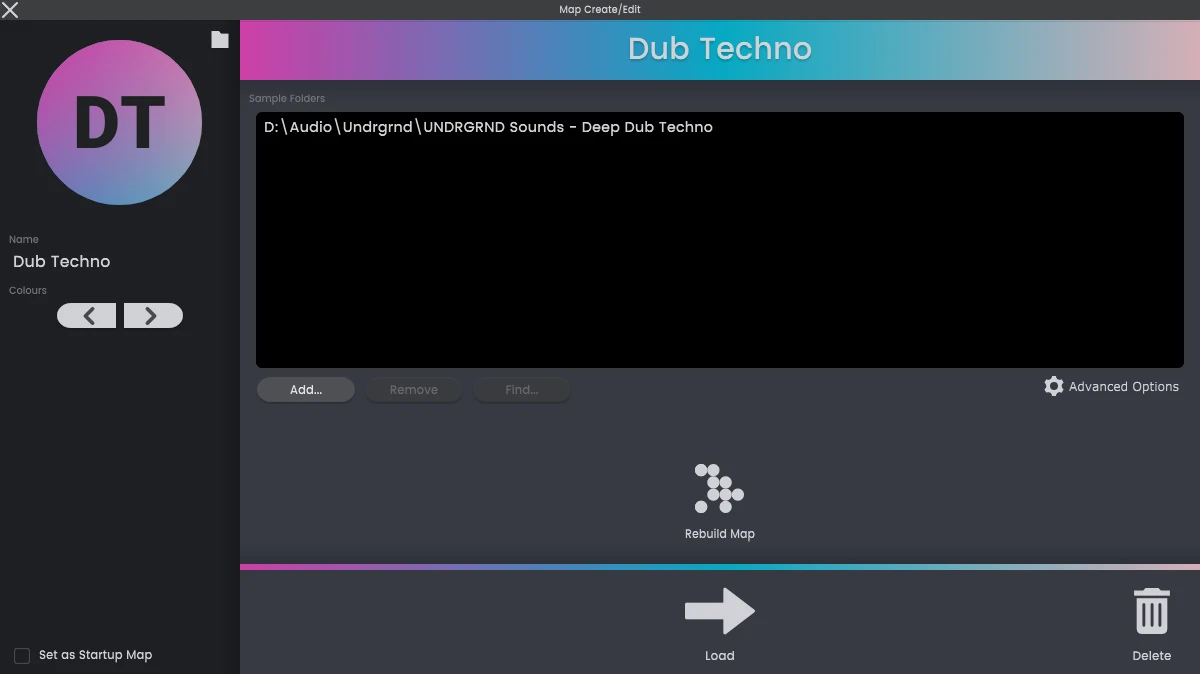
Atlas 2 is built around the idea that your existing sample collection is already valuable — the problem is finding the right sound inside it. Its Sample Map analyzes the files and groups similar sounds together so you can navigate by sonic character instead of filenames.
The ability to create multiple maps is useful. I would keep one large map for the full collection and smaller maps for favorite packs, genres or specific projects. That keeps the visual search useful instead of turning the entire drive into one giant cloud.
My take: if you have collected drum samples for years and regularly forget what is on your drives, Atlas 2 has a very clear purpose. It turns old sample folders back into usable creative material.
Read our full Atlas 2 review for the detailed map, kit and sequencing workflow.
Why XO feels faster for instant beat making
XO also organizes your own samples by similarity, but the rest of the product is designed around a very immediate beat workflow. XLN Audio gives you 8,700+ factory one-shots and 240+ editable beat presets before you import anything yourself.
The sequencer includes Groove Templates, Nudge and Accentuator. Groove Templates give a pattern a timing feel, Nudge can move the rhythm forward or backward, and Accentuator adds dynamic variation. Playground makes it easy to explore new variations without manually rebuilding the beat.
My take: XO is the one I would show to somebody who wants to make a beat five minutes after installing the plugin. Atlas can be just as fast once your maps are ready, but XO feels more curated from the beginning.
Sample discovery: both are excellent
This is the area where Atlas 2 and XO overlap most. Both tools solve the same ugly real-world problem: vague sample names, duplicates and folders scattered across several drives.
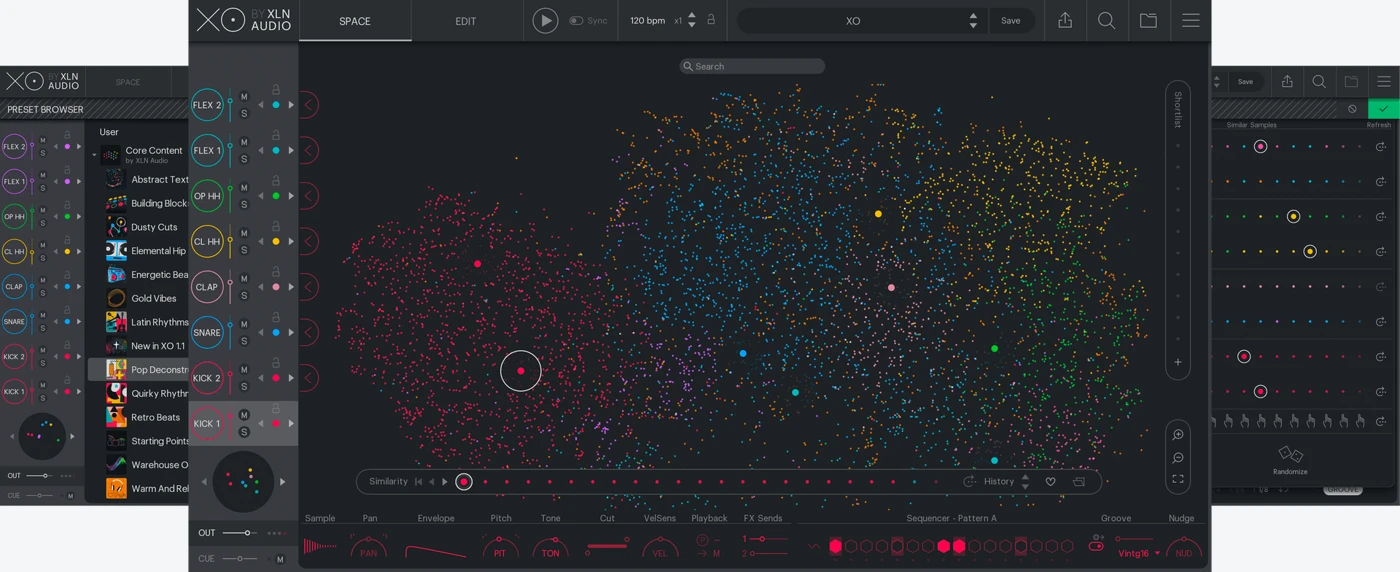
In XO, the visual environment is called XO Space. Move through the map and neighboring points represent sonically similar samples. If the kick you selected is almost right, nearby options often provide the quickest route to a better one.
Atlas uses its own Sample Map and also lets you control map scope through multiple maps and filtering. The result is similar: stop relying on filenames and start searching by what the samples sound like.
I would call this a draw in concept. The better implementation depends on which interface makes sense to you faster.
Factory sounds: XO wins easily
XLN Audio ships XO with more than 8,700 one-shot samples plus more than 240 fully editable beat presets. That means XO is useful even if your own drum library is small.
Atlas 2 is much more centered on your personal collection. Algonaut offers an optional 1,500-sample map plus free kits, sequences and loops, but the included content is not the main reason to buy Atlas.
If you are starting from almost no drum samples, XO is the stronger package. If you already own terabytes of sample packs, the factory-content advantage matters much less.
Sequencing: Atlas 2 gives you more freedom
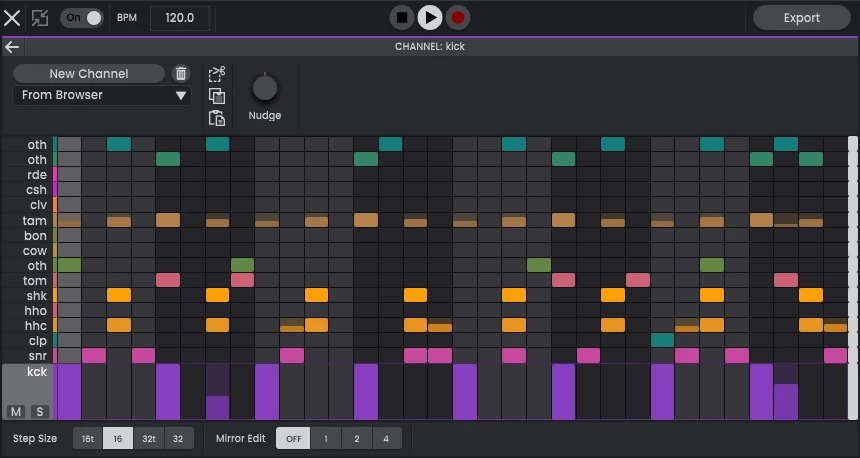
Atlas 2's sequencer sits somewhere between a classic step sequencer and a drum-focused piano roll. It supports MIDI recording and import, different timing resolutions, velocity editing, polyrhythmic ideas and MIDI output to other instruments or hardware.
XO's sequencer is faster and more opinionated. Its groove tools are excellent for quickly making a pattern feel less static, but the whole system is built around a compact eight-slot beat.
My take: choose Atlas if you enjoy building a more detailed custom drum instrument. Choose XO if you want fewer decisions and a fast path to a finished loop.
Kit building: Atlas is more flexible, XO is simpler
Atlas lets you configure drum-pad layouts, lock individual sounds while generating new kit combinations and use analysis information to help balance newly loaded samples.
XO keeps the kit deliberately compact. Eight slots are enough for a kick, snare, hats, clap and percussion in most electronic grooves, and the limitation helps keep the interface extremely clear.
I would not call eight slots a weakness unless you regularly build larger percussion kits inside one plugin. Simpler tools often win because you actually finish the beat.
Export and DAW workflow
Both products understand that the internal sequencer does not have to become the final arrangement environment.
XO lets you drag individual samples, complete kits, stems, full beats and MIDI into your DAW. You can choose processed or raw material depending on whether you want to keep XO's sound shaping.
Atlas can export MIDI and render audio, including individual stems. It can also send MIDI out to other software or hardware.
For either plugin, my preferred workflow is to use the visual map and sequencer to solve the creative problem, then move the material into the DAW once the arrangement needs more detail.
Expansions: XO has the larger commercial ecosystem
XLN Audio now sells a growing range of XO expansions with genre and artist-focused content. The current XO product page also offers bundles with multiple expansions and a Complete package.
Atlas has its own Expansion Manager with free and premium content packs. Algonaut's premium expansions include maps, drum kits, sequences and bonus samples.
The difference is emphasis. XO feels more like a content ecosystem. Atlas still feels more like a tool for making your own existing library easier to use.
Price: $99 vs $149 — except today
Atlas 2 normally wins on price. Algonaut lists it at $99, while XO's regular price is $149.
But on October 6, 2026, XLN Audio and Plugin Boutique are running an Autumn Sale that reduces XO to $89.40. The sale is scheduled to end on October 6.
If the $89.40 deal is still active when you read this, XO is an unusually strong buy. You are getting the full sample browser, sequencer, 8,700+ one-shots and 240+ presets for less than Atlas 2.
After the promotion ends, the calculation changes. At $99 vs $149, Atlas is the better pure-value purchase if you primarily want to organize your own library.
Trials: test both with the same folders
Atlas 2 offers a 14-day trial with all features unlocked. After the trial expires, it can still output audio but the interface becomes unavailable for editing until you activate a license.
XO offers a 10-day free trial. XLN Audio states that projects, presets and files you create in the trial remain available if you purchase afterward.
My recommendation: install both and point them at the same sample folders. Build three beats in each. Do not spend the trial comparing feature lists — compare how quickly each tool gets you to a groove you actually want to keep.
Which one is better for beginners?
XO is easier to recommend to a beginner with a small sample collection. The factory library is large, the eight-slot structure is easy to understand and the groove tools help make a pattern feel musical quickly.
Atlas is easier to recommend to someone who already has a huge sample library. Its value becomes obvious the moment you can finally see and explore years of forgotten one-shots in one map.
Which one should you choose?
| Choose Atlas 2 if... | Choose XO if... |
|---|---|
| Your own sample library is the main reason you are buying the plugin | You want a strong factory library immediately |
| You want multiple maps and flexible kit layouts | You prefer a very polished eight-slot workflow |
| You want deeper MIDI and sequencer flexibility | You want Groove Templates, Nudge and Accentuator |
| You want the lower regular price | You can catch the current $89.40 sale |
| You like configuring your own drum instrument | You want the fastest route from sample discovery to a complete beat |
| You need Linux support as well as Mac/Windows | You are already invested in XLN Audio's ecosystem and expansions |
Does it make sense to own both?
There is more overlap here than in many plugin comparisons. Both are trying to organize one-shot samples visually and turn those sounds into beats.
I would only own both if the workflows serve genuinely different roles for you. For example, you might prefer Atlas for a huge personal archive but use XO for its factory content and fast groove tools.
For most producers, I would trial both and keep the one that feels faster. Owning two visual sample browsers does not automatically make your sample library easier to use.
Final verdict: Atlas 2 or XO?
At regular prices, Atlas 2 is my better-value pick for producers with a large existing sample collection. It costs $99, gives you multiple maps, flexible drum kits and a strong sequencer, and the 14-day trial makes it easy to test.
XO is my pick for the smoother all-in-one beat-making experience. The 8,700+ factory sounds, 240+ beat presets and groove tools mean it feels complete before you import your first folder.
And right now there is one exception to the normal pricing logic: while XO is $89.40, I would seriously consider XO first. It is temporarily cheaper than Atlas and includes much more factory content.
Once the sale ends, choose based on workflow rather than screenshots. Your winner is the plugin that gets you from sample chaos to a usable beat faster.
For the full Atlas breakdown, read our Atlas 2 review.
Frequently asked questions
Is Atlas 2 better than XO?
Atlas 2 is more flexible for custom maps, drum-kit layouts and detailed sequencing. XO is more streamlined and includes much more factory content. Neither is universally better.
How much does Atlas 2 cost?
Algonaut lists Atlas 2 at $99 and an eligible Atlas 1 upgrade at $19.
How much does XO cost?
XO normally costs $149. On October 6, 2026 it is on sale for $89.40, with the promotion scheduled to end that day.
Does XO organize my own samples?
Yes. XO scans your one-shot folders and places similar sounds close together in XO Space regardless of their original folder locations.
Does Atlas 2 come with samples?
Yes, but it is less factory-content-focused than XO. Algonaut offers an optional 1,500-sample map plus free kits, sequences and loops.
Which has the better sequencer?
Atlas 2 is more flexible for detailed sequencing and custom drum-kit workflows. XO's sequencer is simpler and particularly strong for fast groove shaping.
How long are the trials?
Atlas 2 offers 14 days with all features unlocked. XO offers a 10-day free trial.
Which one is better if I have thousands of samples?
I would start with Atlas 2 because its multiple maps and library-focused workflow are especially useful for large personal collections. XO is also excellent at visual sample organization and may win if you prefer its interface.
Research notes and official references
Prices and product details were checked on October 6, 2026. The XO sale is time-limited, so verify the live price before purchasing.
Sources: Algonaut Atlas 2, Atlas 2 trial and downloads, XLN Audio XO and XO at Plugin Boutique.
![[background image] image of recording equipment (for a musician & band)](https://cdn.prod.website-files.com/68efa70811edd8e5af30a90d/6acd43b8998701bbde84e11a_Best%20Export%20Settings%20for%20FL%20Studio.png)
![[background image] image of recording equipment (for a musician & band)](https://cdn.prod.website-files.com/68efa70811edd8e5af30a90d/6acd3f9347bd0dd62b202621_ShaperBox%203%20vs%20Infiltrator%202.png)
![[background image] image of recording equipment (for a musician & band)](https://cdn.prod.website-files.com/68efa70811edd8e5af30a90d/6acd3d99fa68785e0f58960e_Kontakt%208%20vs%20Decent%20Sampler.png)