
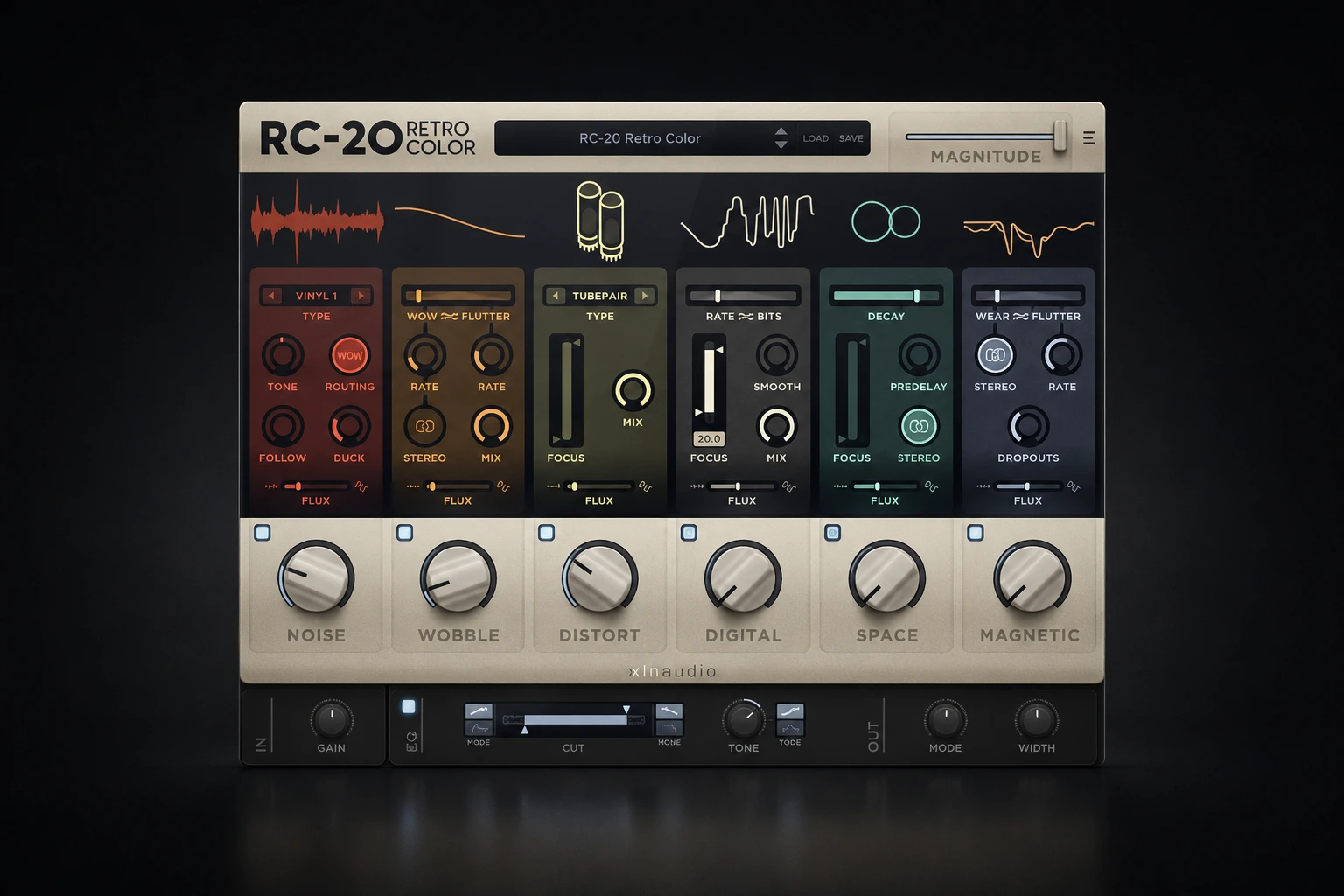

RC Retro has become one of the most recognizable lo-fi plugins in music production. Officially called XLN Audio RC-20 Retro Color, it is designed to make clean digital sounds feel warmer, older and more characterful with very little effort.
That simplicity is a big part of its appeal. RC-20 Retro Color can add subtle texture to a piano, bring more personality to drums or turn a clean synth into something much more worn and nostalgic. It can be used lightly or pushed into obvious lo-fi territory, depending on the sound you want.
But RC-20 has been around for years, and there are now plenty of newer and cheaper alternatives. So the real question is whether the RC 20 plugin is still worth buying in 2026.
In this RC 20 review, we’ll look at how RC Retro sounds, how useful it is in real productions, where it falls short and whether it still deserves a place in your plugin collection.
RC-20 Retro Color Comparison Table
Here is a quick overview of what RC-20 Retro Color offers before we take a closer look at its sound and features.
RC Retro stands out as an all-in-one creative effect rather than a single-purpose lo-fi tool. Its six modules cover everything from subtle texture and pitch movement to distortion and more obvious degradation, making it useful across a wide range of sounds.
What Is RC-20 Retro Color?
RC-20 Retro Color is a creative multi-effect plugin from XLN Audio designed to add vintage character, movement and imperfections to digital sounds. Rather than recreating one specific piece of analog gear, RC Retro combines several types of processing that can make a sound feel warmer, rougher, older or more unstable.
The RC 20 plugin is built around six modules: Noise, Wobble, Distort, Digital, Space and Magnetic. Each targets a different part of the sound, from background texture and pitch movement to saturation, digital degradation, ambience and tape-style dropouts.
Because these effects can be mixed together in different amounts, XLN Audio RC-20 can cover much more than the obvious dusty lo-fi sound it is known for. It can add a small amount of character to an otherwise clean instrument, or completely reshape a sample into something far more degraded and atmospheric.
How Does RC-20 Retro Color Sound?
The sound of RC-20 Retro Color is best described as warm, imperfect and full of movement. It is particularly good at taking sounds that feel too clean or static and giving them a more lived-in character.
At lower settings, RC Retro can be surprisingly subtle. A small amount of pitch movement, saturation or degradation can soften a digital sound without making the effect obvious. This works well when you want more character but still want the original instrument or sample to stay clearly recognizable.
Push the processing further and RC-20 becomes much more obvious. You can create unstable pitch, grit, noise, dropouts and heavily worn textures that immediately push a sound into lo-fi territory.
One thing to keep in mind is that RC 20 Retro Color has a fairly recognizable character. That is part of its appeal, but using extreme settings on too many elements can make a mix start to sound overly processed. Used with some restraint, though, RC Retro is very effective at adding personality without taking over the sound.
The 6 RC-20 Effects Explained
The heart of RC-20 Retro Color is its six effect modules. Each one adds a different type of character, and you can switch them on or off depending on how subtle or extreme you want the result to be.
Noise
Noise adds background textures such as vinyl crackle, tape hiss and other mechanical or electrical noise. It works well for giving clean samples, keys and drums a more aged feel without changing their core sound.
Wobble
Wobble creates the pitch instability associated with old tape machines and vinyl. Subtle settings add gentle movement, while higher amounts create the warped, unstable sound that has become closely associated with RC Retro.
Distort
Distort adds anything from light saturation to heavier grit. It is useful for giving drums more weight, making synths feel less polished or adding extra edge to samples without needing a separate distortion plugin.
Digital
Digital introduces bit-depth and sample-rate degradation. Compared with the warmer character of Distort, this module can sound rougher and more obviously digital, making it useful for old-sampler-style textures and more aggressive lo-fi effects.
Space
Space adds ambience through reverb and resonance. It is not meant to replace a dedicated reverb plugin, but it works well for pushing processed sounds further back in the mix or giving them a more atmospheric character.
Magnetic
Magnetic recreates some of the instability of worn tape, including volume fluctuations and dropouts. Used lightly, it adds extra movement. At stronger settings, it can create much more dramatic broken-tape effects.
The real strength of RC 20 Retro Color is how these modules interact. You might only need a little Wobble and Distort for subtle character, while combining several modules can completely transform the original sound. That flexibility is what makes the RC 20 plugin useful for both everyday processing and more creative sound design.
Using RC Retro in a Real Mix
Where RC Retro really becomes useful is inside an actual mix. The plugin works on almost any source, but some instruments benefit from its character more than others.
RC-20 on Drums
RC-20 Retro Color works especially well on drums. A little saturation can add weight, while Noise or Wobble can make clean digital samples feel less rigid and more natural.
It also works well on a drum bus when you want the whole kit to share the same texture. In that case, subtle settings usually work better than pushing every module hard.
RC-20 on Piano and Keys
Pianos and keys are one of the easiest places to hear what RC Retro can do. Small amounts of Wobble and Noise can make a clean piano feel softer, older and more nostalgic without losing its original tone.
This is especially useful for lo-fi, hip-hop and sample-based productions where overly clean keys can sometimes feel out of place.
RC-20 on Synths
Modern synths can sound very polished, which is not always what a track needs. RC 20 Retro Color can add movement and texture without completely changing the patch.
Distort and Digital work well for roughening up leads and basses, while Wobble can give pads and chords a more organic feel.
RC-20 on Vocals
RC-20 can also be useful on vocals, especially when you want a more creative effect rather than transparent processing.
On a lead vocal, subtle settings can add texture. On background vocals, ad-libs or vocal samples, you can push RC Retro Color much harder to create a distant, degraded or nostalgic sound.
RC-20 on Guitars
Guitars already have plenty of natural character, so RC-20 usually works best here in smaller amounts. Light saturation, noise or pitch movement can soften a clean guitar and make it feel more aged.
For more obvious lo-fi guitar parts, you can push the processing further and use RC Retro as part of the sound design rather than just a finishing effect.
The main takeaway is that RC-20 does not have one “correct” use. Its value comes from being flexible enough to add subtle character on one track and completely transform another, depending on what the mix needs.
RC-20 Presets and Workflow
One of the best things about RC-20 Retro Color is how quickly you can find a useful sound. The preset browser gives you plenty of starting points, ranging from subtle coloration to much heavier lo-fi effects, so you do not always need to build a setting from scratch.
The presets are especially useful for learning how the different modules work together. Once you find something close to what you want, it is easy to adjust individual effects and make the sound fit your track rather than simply leaving the preset untouched.
A particularly useful part of the RC Retro workflow is the Magnitude control. This lets you increase or reduce the overall intensity of the processing without changing every module individually. You can start with an exaggerated setting and simply pull the effect back until it sits naturally in the mix.
The interface itself is also easy to understand. Each module has its own section and can be turned on or off independently, making it simple to see exactly what is affecting the sound.
Overall, the workflow is one of the strongest parts of the RC 20 plugin. It is quick enough for experimenting during the creative process, while still giving you enough control to shape the final result once you know what direction you want to take.
What I Like About RC-20 Retro Color
The biggest strength of RC Retro is how easy it makes creative processing. You can take a sound that feels too clean, add a few small imperfections and immediately give it more personality without losing the original idea.
What I like most about RC-20 Retro Color is that it rarely feels complicated. The plugin gives you enough control to shape the result, but it does not force you into endless tweaking before something sounds good.
That balance is important. XLN Audio RC-20 feels more like a creative tool than a technical one, which makes it especially useful when you are producing quickly and want to make decisions based on sound rather than settings.
For producers who regularly want warmer, rougher or more nostalgic textures, that simplicity is a major part of what makes the RC 20 plugin so easy to keep using.
What Could Be Better?
RC-20 Retro Color is easy to use and sounds great, but it also has a few limitations that are worth knowing before you buy it.
The biggest thing to watch out for is overusing RC Retro. Its sound has a clear identity, and that is part of what makes it appealing, but putting strong settings on too many elements can make a mix start to feel overly processed.
It is also important to see RC-20 Retro Color for what it is: a creative multi-effect. If you want extremely detailed tape emulation, advanced reverb control or highly precise distortion shaping, a dedicated plugin can usually go further.
For most producers, these are not major dealbreakers. The RC 20 plugin is designed to get you to an interesting sound quickly, and it does that very well. The limitations mainly matter if you prefer deep technical control over a fast, creative workflow.
Is RC-20 Still Worth It in 2026?
Yes, RC-20 Retro Color is still worth it in 2026 if you want one plugin that can quickly add warmth, movement and vintage character to a wide range of sounds.
The main reason RC Retro still holds up is not because it does something no other plugin can do. There are now plenty of lo-fi effects that can add tape wobble, noise, saturation or digital degradation. What makes RC-20 attractive is how well those ideas are combined into one simple workflow.
That makes the RC 20 plugin especially useful for producers who work with samples, keys, synths, drums or vocals and regularly want to make clean digital sounds feel less polished. Instead of reaching for a different effect every time, RC-20 gives you a fast way to shape the overall character of a sound.
It is probably less valuable if you already own several dedicated tape, saturation and degradation plugins and prefer building your own chains. In that case, you may already have most of the tools needed to create a similar result.
But if you want a single creative effect that is easy to use, flexible and useful across many projects, RC 20 Retro Color still makes a lot of sense. For the right producer, it is the kind of plugin that can become a regular part of the workflow rather than something you only open occasionally.
RC-20 Retro Color Price: Is It Good Value?
RC-20 Retro Color has a regular price of $99, but it is often available for less during sales. At the time of writing, Plugin Boutique lists RC-20 at around $59, while XLN Audio is running a similar discount at $59.40.
At the full $99 price, RC Retro is not cheap enough to be an impulse purchase, especially with so many affordable lo-fi plugins available. However, it becomes much easier to recommend when discounted. Around the $59 mark, you are getting a versatile creative effect that can be used across many different projects rather than a plugin with only one specific purpose.
For that reason, I would check the current price before buying. Plugin Boutique regularly runs deals, and purchases can also qualify for its rotating free-plugin offers.
If you can pick up RC 20 Retro Color for around $59, it offers very good value. At $99, it is still a solid plugin, but waiting for a sale makes the purchase much easier to justify.
Who Should Buy RC-20?
RC Retro makes the most sense for producers who want character quickly and expect to use the plugin across different sounds rather than for one very specific job.
The biggest reason to buy RC-20 Retro Color is versatility. It is not tied to one instrument or one style of processing, which makes it easier to get regular use out of than a more specialized effect.
For producers who often want to make clean digital sounds feel warmer, older or more interesting, the RC 20 plugin fits naturally into that workflow. You can use it lightly when a sound only needs a little texture or push it much harder when you want RC Retro to become part of the creative identity of the track.
If that sounds like the way you produce, RC 20 Retro Color is much easier to justify as a long-term purchase rather than another plugin that ends up sitting unused.
Final Verdict: Is RC Retro Worth Buying?
RC Retro is still an easy plugin to recommend in 2026 for producers who want fast, creative ways to add warmth, movement and vintage character to their sounds.
RC-20 Retro Color is not the most detailed tape or degradation plugin available, and it is not the cheapest either. What it does very well is bring several useful effects together in a workflow that is quick to understand and easy to use across different projects.
That combination makes XLN Audio RC-20 especially strong for producers working with samples, drums, synths, keys and other clean digital sounds. You can use it subtly to add a little texture or push it much harder when you want a more obvious lo-fi effect.
SoundShaper Rating: 9/10
If you like the RC Retro sound and know you will use it regularly, RC 20 Retro Color is a strong buy. It is especially good value when you can pick it up during a sale, and the speed and versatility make it much more likely to become part of your regular workflow than a plugin you only use once or twice.
![[background image] image of recording equipment (for a musician & band)](https://cdn.prod.website-files.com/68efa70811edd8e5af30a90d/6acd43b8998701bbde84e11a_Best%20Export%20Settings%20for%20FL%20Studio.png)
![[background image] image of recording equipment (for a musician & band)](https://cdn.prod.website-files.com/68efa70811edd8e5af30a90d/6acd3f9347bd0dd62b202621_ShaperBox%203%20vs%20Infiltrator%202.png)
![[background image] image of recording equipment (for a musician & band)](https://cdn.prod.website-files.com/68efa70811edd8e5af30a90d/6acd3d99fa68785e0f58960e_Kontakt%208%20vs%20Decent%20Sampler.png)