


Valhalla VintageVerb is our first pick under $100 if you want a reverb you can use across a lot of projects. For synths, TAL-U-NO-LX is the easy choice for quick analog-style sounds, while u-he ACE makes sense if you want to learn patching. If your kick and bass already fight in every mix, Duck 2 is the more useful first purchase.
The 15 plugins below cover different jobs, from shaping a vocal space to building a modulated effect rack. The table uses U.S. full-license reference prices, not a live lowest-price ranking. Regional totals and tax can differ; the editorial review was updated November 17, 2026. Temporary discounts can lower the total. Check the current listing or browse the VST plugin deals page when you’re ready to buy.
Compare the best VST plugins under $100
| Plugin | Best for | USD |
|---|---|---|
| TAL-U-NO-LX | Fast analog-style pads and bass | $69 |
| u-he ACE | Learning modular signal flow | $69 |
| KV331 Audio SynthMaster One | Affordable wavetable movement | $49 |
| Valhalla VintageVerb | Character reverb with room to grow | $50 |
| Valhalla Delay | Echoes that change the arrangement | $50 |
| sonible pure:verb | A quick, source-aware reverb starting point | $39 |
| sonible pure:EQ | Quick tonal balance on individual tracks | $39 |
| TDR Kotelnikov GE | Clear bus compression | $50 |
| Devious Machines Multiband X6 | Controlling one troublesome range | $99.99 |
| UrsaDSP Boost | Bringing out quiet detail | $79 |
| Devious Machines Duck 2 | Making bass clear around the kick | $39.99 |
| Devious Machines Texture | Adding a layer that follows the source | $84 |
| Devious Machines Pitch Monster | Creative vocal doubles and pitch effects | $99.99 |
| Kilohearts Snap Heap | Building reusable modulated effects | $29 |
| Baby Audio TAIP | Tape-style saturation and softening | $99 |
Each pick includes a short exercise to try with your own material. The recommendations come from the linked product documentation and buying options.
Synths
TAL-U-NO-LX
$69 at Plugin Boutique · Fast analog-style pads and bass
Start here if you want to get from a blank patch to a playable sound in a few minutes. TAL’s Juno-style layout gives you a direct path from oscillator and sub to filter, envelope and chorus. The dedicated sub is useful when a bass patch needs weight without a second synth.
Try it in a project
Start with a saw, bring in the sub quietly and close the filter until the part sits behind your kick. For a pad, lengthen the attack and audition the chorus against the dry sound. Keep the chorus version only if the center of the mix still feels clear.
Who should buy it?
Buy this for fast, classic subtractive sounds. Choose SynthMaster One if the sound needs to change shape as a wavetable moves, or ACE if you want to patch the modulation yourself.
u-he ACE
$69 at Plugin Boutique · Learning modular signal flow
ACE puts real patch points on a compact synth. A beginner can play a preset or use the default signal path, then learn what one patch cable changes. That makes it easier to connect a routing decision to what you hear.
Try it in a project
Start with a short pluck. Patch an LFO to a filter modulation input, set the amount low and lengthen the notes until you can hear the movement. Disconnect the cable and compare. Only then try speeding the LFO up or routing it to another target.
Who should buy it?
Buy ACE if learning and experimenting with routing is part of the appeal. TAL-U-NO-LX is the quicker choice when you mostly need to put a good pad or bass into an arrangement.
KV331 Audio SynthMaster One
$49 at Plugin Boutique · Affordable wavetable movement
SynthMaster One suits producers who want evolving basses, plucks and leads in a single-screen instrument. The wavetable engine gives you a second way to change tone alongside the filter, and the onboard arp and sequencer can turn a held note into a pattern.
Try it in a project
Write a short bass phrase. Keep its waveform position fixed for the verse, then assign an envelope to move the position on each note for the chorus. Keep the filter, MIDI and output level the same for the first comparison.
Who should buy it?
Buy it if you want a compact paid wavetable workflow. If you already move quickly in Vital or Serum, check whether the layout or factory sounds solve anything you regularly miss.
Reverb and delay
Valhalla VintageVerb
$50 at Valhalla DSP · Character reverb with room to grow

VintageVerb is the reverb we’d start with if the space itself should have a sound. Its modes and color settings cover a lot of ground, from a short, bright plate to the darker tail of an older digital reverb. You can keep the interface simple by working from one return.
Try it in a project
Put a plate on a vocal send, keep the reverb wet and start with a decay short enough to clear the next line. Add a little pre-delay if the words soften. Then switch the color setting and compare how much high-frequency detail stays in the tail.
Who should buy it?
Buy VintageVerb if you like making these choices and want one reverb for several kinds of tracks. Try pure:verb if you’d rather have the processor suggest a starting point.
Valhalla Delay
$50 at Valhalla DSP · Echoes that change the arrangement

Valhalla Delay is useful when the character of the repeats is part of the arrangement. Tape, BBD and digital-style modes give you different textures. A clean stock delay may already cover the simple repeats you use for depth.
Try it in a project
Create a send and automate a little delay on the last word of a line. Start with a quarter-note repeat and just enough feedback to hear two or three repeats. Compare a cleaner mode with Tape at the same return level, then listen to the space before the next vocal line.
Who should buy it?
Buy it for repeat color, feedback effects and motion. Spend the $50 on VintageVerb first if what you’re missing is a continuous space behind a sound.
sonible pure:verb
$39 at Plugin Boutique · A quick, source-aware reverb starting point
pure:verb analyzes the source to give you a starting reverb. Its simpler workflow is useful when you need to get a rough vocal or guitar sitting in the mix and keep moving. Size and the amount of synthetic character still give you decisions to make.
Try it in a project
Use the same vocal as in the VintageVerb exercise. Let pure:verb learn from a representative phrase, then adjust the size and return level until the tail clears the next line. Compare the two sends with the dry vocal unchanged and both returns at similar loudness.
Who should buy it?
Buy it if analysis gets you to a usable space sooner. VintageVerb offers a better fit when you want to audition several algorithm styles and choose their character yourself.
Mixing and dynamics
sonible pure:EQ
$39 at Plugin Boutique · Quick tonal balance on individual tracks
pure:EQ listens to the input and proposes a broad tonal adjustment. It is most useful when a source is generally dull, bright or uneven and you want a sensible first pass. The Balance control lets you ease back the suggested adjustment.
Try it in a project
Learn from an actual chorus passage on a keyboard or guitar, then pull the correction back until the track fits the mix. If you can point to one narrow frequency that rings on only a few notes, solve that separately with your DAW’s parametric or dynamic EQ.
Who should buy it?
Buy pure:EQ for a repeatable first pass across tracks. For narrow cuts, detailed detector settings or mastering EQ, start with the dedicated under-$100 EQ guide. Compare EQ plugins under $100.
TDR Kotelnikov GE
$50 at Plugin Boutique · Clear bus compression
Kotelnikov GE is the clean bus option here. Its separate peak and RMS release controls give you a way to handle fast peaks and longer changes in level. The GE edition also adds frequency-dependent ratio control and other options for refining the action.
Try it in a project
Put it on a drum or mix bus and start with a low ratio and a threshold that gives roughly 1–2 dB of gain reduction at the loudest points. Match output level and check whether the groove holds together without making the snare feel smaller. Touch the separate releases only after you can hear which part of the recovery needs changing.
Who should buy it?
Try the free Kotelnikov first. Buy GE if you can name a paid control you’d use. Multiband X6 is the more targeted purchase if only one frequency range needs compression.
Devious Machines Multiband X6
$99.99 at Plugin Boutique · Controlling one troublesome range
Multiband X6 lets you process up to six ranges independently, but one active band is often the fastest way to solve a problem. Automatic threshold can help you find a starting point. Listen to the actual gain reduction before accepting it.
Try it in a project
On a bass or drum bus where the low end jumps on a few hits, isolate that low range and start with modest compression. Leave the upper bands alone. Match the bypass level and check whether the snare and cymbals retain the same feel while the low end gets steadier.
Who should buy it?
Buy X6 if you repeatedly need frequency-specific dynamics and your current tool slows you down. Use Kotelnikov GE for whole-bus movement, or try dynamic EQ first if the issue is a narrow ring.
UrsaDSP Boost
$79 at Plugin Boutique · Bringing out quiet detail
Boost is an upward limiter: it raises quieter details while controlling the output ceiling. Ghost notes and room sound can become easier to hear, but noise and cymbal wash can also rise. Its role is not identical to a conventional downward peak limiter.
Try it in a project
Duplicate a short percussion passage and add a little Boost to one version. Match playback level and listen specifically to the ghost notes and tails. If those details come forward while the groove remains clear, you have a reason to keep the processor. Back off if the gaps start sounding busy.
Who should buy it?
Buy Boost when low-level detail is the goal. Compare it with a conventional limiter for transient control and with parallel compression for bus density; the upward action may solve a different problem even when the output peaks look similar.
Devious Machines Duck 2
$39.99 at Plugin Boutique · Making bass clear around the kick
Duck 2 is a volume shaper. You draw the reduction and recovery, which makes the ducking contour predictable. Sync works for regularly spaced kicks. Audio or MIDI triggering is useful when the kick pattern has gaps or syncopation.
Try it in a project
Put Duck 2 on the bass, start the dip on the kick and set a short return. At 120 BPM, an eighth note lasts 250 ms, so try a recovery shorter than that and adjust against the kick’s actual tail. Listen to the first bass note after the kick. If it seems late or hollow, bring the curve back sooner.
Who should buy it?
Buy it if you spend time adjusting kick-and-bass separation across projects. Keep your DAW’s sidechain compressor if it already gets you there quickly.
Creative effects and saturation
Devious Machines Texture
$84 at Plugin Boutique · Adding a layer that follows the source
Texture generates an extra sound in response to the input. It can add a little noise or other texture to a track while following its rhythm. The envelope and filtering are what make this useful when you want the layer tied to the performance.
Try it in a project
Try it on a thin snare. Pick a restrained texture, shorten the envelope and filter the added layer so it stays out of the hi-hat’s range. Compare against layering one ordinary sample on the same hits. Decide which version follows the changing dynamics with less cleanup.
Who should buy it?
Buy Texture when you want source-following detail across many tracks. A layered sample is usually enough if you’re replacing or strengthening a few predictable hits.
Devious Machines Pitch Monster
$99.99 at Plugin Boutique · Creative vocal doubles and pitch effects
Pitch Monster offers granular, formant and vocoder approaches for turning a voice or sample into a new part. It makes the most sense when the altered sound is supposed to be heard as an effect, such as an octave layer on the last line of a hook.
Try it in a project
Duplicate a dry vocal phrase and leave the lead untouched. Add a low octave or an altered formant on the duplicate, then bring it up until you notice it in the chorus. Cut low end from the layer if it competes with the bass. Check the consonants in solo and again in the mix.
Who should buy it?
Buy it for intentional transformations or a quick harmony effect. Use a dedicated tuning tool if the job is precise pitch correction on a lead performance.
Kilohearts Snap Heap
$29 at Kilohearts · Building reusable modulated effects
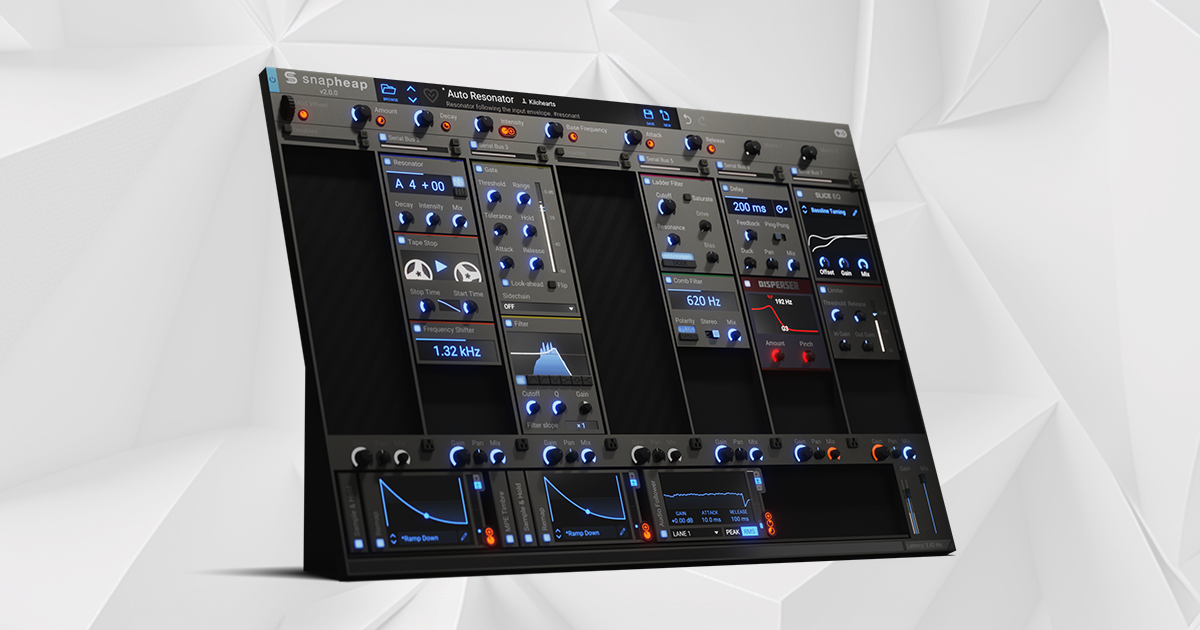
Snap Heap hosts Snapins in serial or parallel lanes and lets you modulate their controls together. Kilohearts Essentials gives you effects to start with. Some additional Snapins are separate purchases, so check which modules a setup uses.
Try it in a project
Put a filter and delay in series on a synth, then map one macro to open the filter and increase delay feedback gradually. Keep a dry version to compare, and save the rack only if you’d use that same gesture again.
Who should buy it?
Buy it for reusable movement and effect combinations. If you only need custom kick ducking, Duck 2 gets you to that result with fewer controls.
Baby Audio TAIP
$99 at Plugin Boutique · Tape-style saturation and softening
TAIP is the saturation pick for someone who wants a tape-style color on drums, vocals or a bus. A small drive change can be enough, and the right amount depends on how bright and compressed the source already is.
Try it in a project
Put it on an individual drum bus before trying it on a whole mix. Raise Drive until the sound becomes obviously thicker, then dial it back and match the output with bypass. Check whether the kick’s leading edge is still clear and whether the hats become too soft.
Who should buy it?
Buy TAIP if this particular color earns a place in more than one project. Start with stock saturation if you only need to add a little audibility to the bass.
Conclusion
For recording and mixing vocals
Put $50 toward VintageVerb if you need a better sense of space. If finding a workable tonal balance is what slows you down, pure:EQ adds a separate job and brings the pair to $89. Try the reverb return and the EQ one at a time so you can tell which purchase is earning its place.
For making electronic beats
SynthMaster One and Duck 2 cost $88.99 together. The synth gives you a way to build a moving bass patch, while Duck 2 helps you place that bass around the kick. If you already use a wavetable synth, keep it and start with ducking only if the stock method keeps slowing you down.
For polishing a nearly finished mix
Try the free Kotelnikov and your stock EQ first. If the entire bus needs to move more consistently, evaluate Kotelnikov GE at matched loudness. If one range jumps while the rest of the mix sounds good, evaluate a single band of Multiband X6. You can make this decision on one loud eight-bar section.
License and compatibility checks
Is the $100 limit for one plugin or the whole list?
Each plugin has a regular full-license price below $100 in US dollars. The list also includes examples of two-plugin combinations under that budget before tax. Upgrade prices, subscription rates and limited-time discounts are separate from the price used to qualify a plugin.
Can I use these in FL Studio, Ableton Live or Logic Pro?
Check the exact product’s format and system requirements before buying. For Logic Pro on Mac, look for an Audio Units build. FL Studio and Ableton Live can use supported VST3 plugins. Your operating system, processor and authorization setup still matter.


